Is McDonald's Cheeseburger Safe During Pregnancy? (Updated 2026 Guide)
Updated September 9, 2026
McDonald's Cheeseburger
Mcdonalds
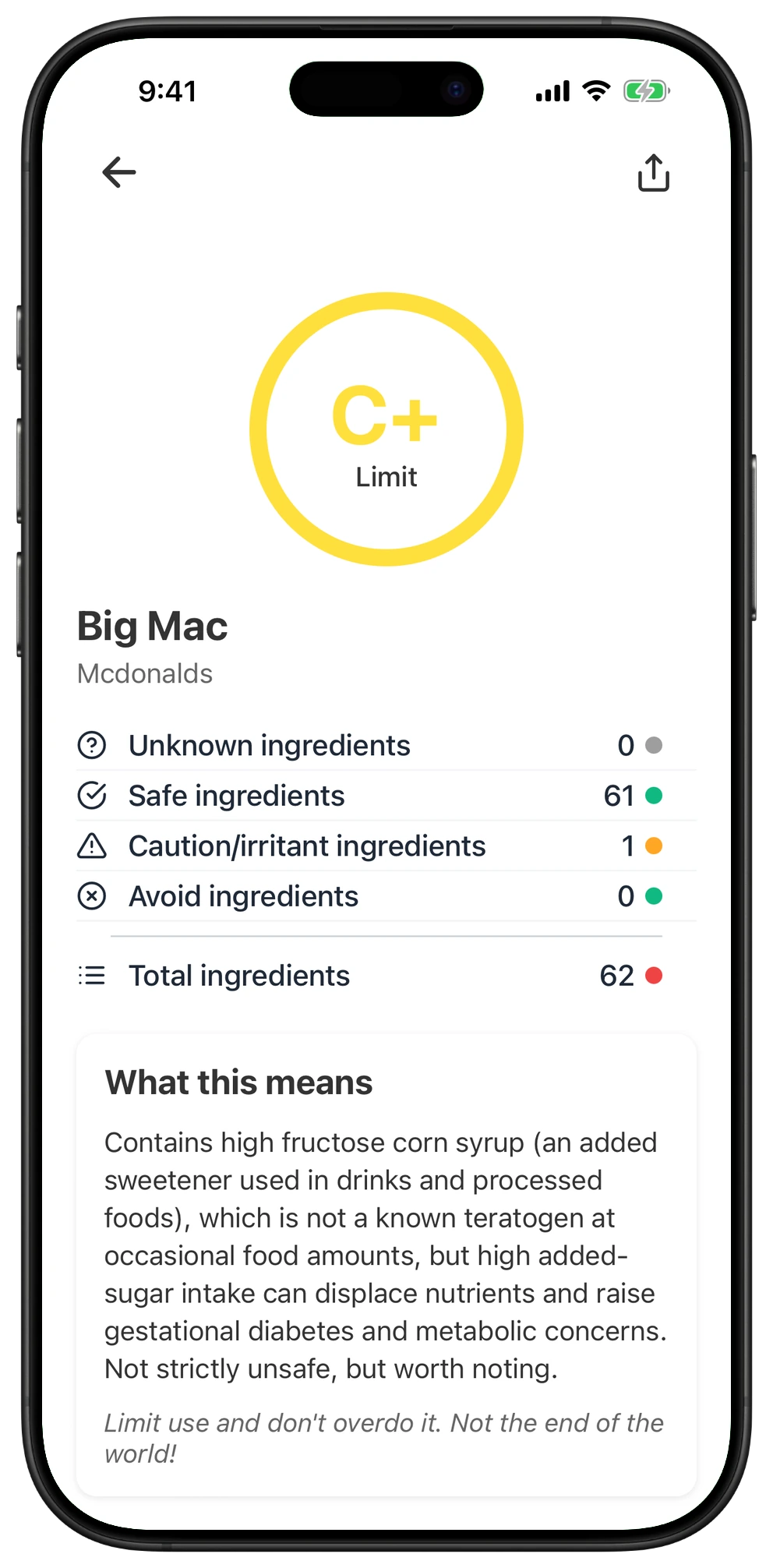
A McDonald's Cheeseburger can be an occasional pregnancy meal when fully cooked and properly handled, but its C+ grade makes it a choice to moderate rather than an everyday staple. The ingredient based grade reflects caution around high fructose corn syrup and the likely safe rating for polysorbate 80—not evidence that eating one burger harms your baby.
You can use this, but maybe don't make it your everyday go to. Not the end of the world if you've used it. Consult your OBGYN or midwife if you have concerns.
Pregnancy Safe is 100% independent and research driven. No companies pay to promote or sponsor products.
Stress Less This Pregnancy
Check your sandwich in the app

What Ingredients Are in McDonald's Cheeseburger?
McDonald's Cheeseburger has 52 ingredients. We flagged 1 ingredient to use with caution.
high fructose corn syrup
CAUTION
High fructose corn syrup is a sweet, liquid sweetener made from corn starch, commonly used in processed foods and beverages. High fructose corn syrup warrants moderation during pregnancy because frequent high added sugar intake raises nutritional and metabolic concerns, not because occasional food amounts are a known teratogen.
polysorbate 80
LIKELY SAFE
Polysorbate 80 is a nonionic surfactant and emulsifier commonly used in cosmetics and pharmaceuticals to stabilize mixtures of oil and water. Polysorbate 80 is likely safe at ordinary dietary exposure during pregnancy despite limited direct human pregnancy data, and injectable medicine exposure is a separate context.
ascorbic acid
SAFE
Ascorbic acid is a natural antioxidant commonly known as vitamin C, used to enhance immune function and preserve food freshness. Ascorbic acid is compatible with pregnancy at normal food amounts, unlike high dose vitamin C supplementation.
calcium chloride
SAFE
Calcium chloride is a chemical compound commonly used as a food additive, de icing agent, and in water treatment to control pH and remove impurities. Calcium chloride is generally compatible with pregnancy at normal food additive amounts, which differ from concentrated chemical or supplemental exposure.
cheese cultures
SAFE
Cheese cultures are beneficial microorganisms used to ferment milk and develop the flavor, texture, and characteristic qualities of various cheeses. For cheese cultures in dairy foods, the pregnancy relevant guidance concerns pasteurization and safe handling rather than a demonstrated risk from the cultures themselves.
citric acid
SAFE
Citric acid is a natural organic acid commonly used as a preservative and flavor enhancer in food and beverages. Citric acid is low concern at ordinary food amounts during pregnancy, although acidic foods may worsen reflux.
corn starch
SAFE
Corn starch is a fine, powdery carbohydrate derived from corn used as a thickening agent in cooking and baking. Corn starch is compatible with pregnancy as a normal food carbohydrate or thickener, with individual blood sugar and allergy considerations.
corn syrup
SAFE
Corn syrup is a thick, sweet syrup made from processed corn starch, commonly used as a sweetener and thickening agent in various recipes. The corn derived evidence is mainly about topical cosmetics and does not directly establish pregnancy safety for eating corn syrup.
dextrose
SAFE
Dextrose is a simple sugar, also known as glucose, commonly used as a sweetener and energy source in food and beverages. Dextrose is compatible with pregnancy at ordinary food amounts, while gestational diabetes calls for individualized carbohydrate management.
enriched flour
SAFE
Enriched flour is refined wheat flour that has been fortified with added nutrients such as iron and B vitamins to restore some of the vitamins lost during processing. Enriched flour is compatible with pregnancy when baked into the bun, while raw flour or dough can carry foodborne pathogens.
folic acid
SAFE
Folic acid is a synthetic form of vitamin B9 essential for DNA synthesis and cell growth. Folic acid at normal food fortification amounts is appropriate during pregnancy, but this burger does not replace your recommended prenatal supplementation.
iron
SAFE
Iron is a vital mineral essential for the formation of hemoglobin and the transport of oxygen throughout the body. Iron at normal food amounts supports pregnancy needs, while high dose supplements or iron overload conditions require clinician guidance.
malted barley flour
SAFE
Malted barley flour is a finely ground flour made from malted barley, known for its rich, sweet, and nutty flavor that enhances baked goods and brewing processes. Malted barley flour is compatible with pregnancy when cooked into the bun, unlike raw flour or dough.
milk
SAFE
Milk is a nutritious, white liquid produced by mammals, commonly used as a beverage and in cooking and baking. Milk is compatible with pregnancy when pasteurized, whereas raw milk can carry pathogens that threaten pregnancy.
modified food starch
SAFE
Modified food starch is a processed starch used as a thickening, stabilizing, or gelling agent in various food products. Modified food starch is compatible with pregnancy at regulated food use levels, with individual carbohydrate and allergen considerations.
monoglycerides
SAFE
Monoglycerides are emulsifying agents derived from glycerol and fatty acids, commonly used to stabilize food products and improve texture. Food additive reviews report no reproductive or developmental toxicity concern at expected oral uses of glycerides, although direct pregnancy evidence is limited.
niacin
SAFE
Niacin, also known as vitamin B3, is a water soluble vitamin essential for energy metabolism and maintaining healthy skin and nerves. Niacin is compatible with pregnancy at normal food and fortification amounts, unlike high dose therapeutic supplements.
potassium sorbate
SAFE
Potassium sorbate is a widely used food preservative that inhibits mold, yeast, and bacteria growth to extend shelf life. The evidence concerns dietary potassium rather than potassium sorbate specifically, so it offers only indirect support for assessing this preservative during pregnancy.
riboflavin
SAFE
Riboflavin is a water soluble B vitamin (vitamin B2) essential for energy production and the metabolism of fats, proteins, and carbohydrates. Riboflavin is compatible with pregnancy at normal food and fortification amounts, while high dose supplements are generally unnecessary without clinician guidance.
salt
SAFE
Salt is a mineral essential for flavor enhancement and preserving food. Salt is compatible with pregnancy in normal dietary amounts, while very high intake or extreme restriction warrants attention to your medical context.
sodium citrate
SAFE
Sodium citrate is a salt commonly used as a food additive and buffering agent to regulate acidity and stabilize emulsions. Evidence on citric acid and citrate salts supports low pregnancy concern at ordinary food additive amounts of sodium citrate.
soy lecithin
SAFE
Soy lecithin is a natural emulsifier derived from soybeans that helps blend and stabilize ingredients in food products. Soy lecithin is low concern during pregnancy at normal food additive levels, with allergy and high dose supplement use considered separately.
soybean oil
SAFE
Soybean oil is a versatile, plant based oil extracted from soybeans, commonly used for cooking, frying, and as an ingredient in processed foods. Soybean oil is compatible with pregnancy at normal food amounts, with individual allergy and oil freshness considerations.
sugar
SAFE
Sugar is a sweet, crystalline substance derived from plants like sugarcane or sugar beets, commonly used to sweeten and enhance the flavor of foods and beverages. Sugar is compatible with pregnancy at ordinary food amounts, while frequent high added sugar intake can worsen diet quality and blood glucose management.
thiamine mononitrate
SAFE
Thiamine mononitrate is a synthetic form of vitamin B1 used as a dietary supplement and food additive to support energy metabolism. Thiamine mononitrate supplies vitamin B1 and is compatible with pregnancy at normal food fortification amounts.
turmeric
SAFE
Turmeric is a vibrant yellow orange spice derived from the root of the Curcuma longa plant, known for its earthy flavor and potent anti inflammatory properties. Turmeric is generally compatible with pregnancy at culinary or food color amounts, which are distinct from concentrated supplement doses.
water
SAFE
Water is a clear, tasteless, and essential liquid that sustains all known forms of life. Water from a safe treated source is compatible with pregnancy, while contamination is a separate concern.
wheat flour
SAFE
Wheat flour is a finely ground powder made from milling wheat grains, commonly used as a primary ingredient in baking and cooking. Wheat flour is compatible with pregnancy when baked into the bun, while raw flour or dough should be avoided because of pathogen risk.
alum
SAFE
Alum is a crystalline compound commonly used as a pickling agent, a natural astringent, and a mordant in dyeing processes. Alum is unflagged here, but that does not establish pregnancy specific safety for the amount used in this food.
beef
SAFE
Beef is the flavorful meat from cattle, commonly used in a variety of savory dishes worldwide. During pregnancy, eat the beef patty fully cooked and properly handled to reduce foodborne illness risk. CDC food safety
canola oil
SAFE
Canola oil is a light, mild tasting vegetable oil derived from the seeds of the canola plant, commonly used for cooking and baking. Canola oil is unflagged in this food, rather than individually confirmed safe through pregnancy specific review.
cream
SAFE
Cream is a rich, smooth dairy product made by skimming the fat from milk, often used to add richness and texture to dishes. Cream is unflagged here, but this does not confirm its pasteurization or establish pregnancy specific safety.
cucumbers
SAFE
Cucumbers are crisp, refreshing vegetables with a mild flavor, often used in salads and as a hydrating snack. Cucumbers are unflagged here, which is not a pregnancy specific review or a guarantee of safe food handling.
distilled vinegar
SAFE
Distilled vinegar is a clear, acidic liquid made from fermented grain or alcohol, commonly used for cooking, pickling, and cleaning. Distilled vinegar is unflagged in this food, but no ingredient specific pregnancy safety conclusion is established here.
enzymes
SAFE
Enzymes are biological catalysts that speed up chemical reactions in living organisms. The unspecified enzymes are unflagged, but their identity and pregnancy specific safety are not established here.
faba
SAFE
The entry faba lacks enough detail for pregnancy specific advice, and its unflagged status is not a safety confirmation.
maltodextrin
SAFE
Maltodextrin is a white, powdery carbohydrate derived from starch, commonly used as a thickener, filler, or energy source in processed foods. Maltodextrin is unflagged in this food, but that status does not represent an ingredient specific pregnancy safety review.
mustard seed
SAFE
Mustard seed is a small, round spice known for its pungent flavor and versatility in both cooking and condiment preparations. Mustard seed is unflagged at its food use here, but no ingredient specific pregnancy safety review is established.
natural flavors
SAFE
Natural flavors are derived from plant or animal sources and used to enhance the taste of food and beverages. Natural flavors are unflagged, but the broad label does not establish the pregnancy safety of each flavoring substance.
onions
SAFE
Onions are versatile bulbs with a pungent flavor that add depth and aroma to a wide variety of dishes. Onions are unflagged in this food, rather than individually confirmed safe through pregnancy specific review.
paprika
SAFE
Paprika is a vibrant red spice made from ground dried peppers, known for its sweet, smoky, or spicy flavor and colorful appeal in dishes. Paprika is unflagged in this food, but this does not establish pregnancy safety for concentrated extracts or supplements.
pea
SAFE
A small, round green legume known for its sweet flavor and versatility in various dishes. Pea is unflagged here, which does not amount to an ingredient specific pregnancy safety assessment.
potato
SAFE
A versatile starchy vegetable with a mild flavor, commonly used as a staple food in many cuisines worldwide. Potato is unflagged in this food, rather than individually confirmed safe through pregnancy specific review.
red ripe tomatoes
SAFE
Juicy, vibrant red tomatoes bursting with sweet, tangy flavor. Red ripe tomatoes are unflagged here, which is not a pregnancy specific review or a guarantee of safe food handling.
rice
SAFE
Rice is a versatile staple grain that serves as a primary source of carbohydrates in many cuisines worldwide. Rice is unflagged here, but that status does not establish pregnancy specific safety or assess preparation and storage.
spice extractive
SAFE
A concentrated flavor obtained by extracting essential oils and aromatic compounds from spices to enhance culinary dishes. Spice extractive is unflagged, but its unspecified composition limits pregnancy specific assessment.
sunflower oil
SAFE
Sunflower oil is a light, mild tasting vegetable oil extracted from sunflower seeds, commonly used for cooking and frying. Sunflower oil is unflagged in this food, rather than individually confirmed safe through pregnancy specific review.
tomato concentrate
SAFE
Tomato concentrate is a thick, flavorful paste made from cooked and reduced tomatoes, used to enhance the richness and depth of dishes. Tomato concentrate is unflagged in this food, but no ingredient specific pregnancy safety review is established here.
vegetable proteins
SAFE
Vegetable proteins are plant based sources of protein derived from legumes, grains, nuts, and seeds, commonly used as nutritious, plant based alternatives to animal proteins. Vegetable proteins are unflagged, but this broad ingredient name does not establish a pregnancy specific assessment of each source.
vinegar
SAFE
Vinegar is a tangy, acidic liquid commonly used in cooking, pickling, and as a condiment to add flavor and preserve foods. Vinegar is unflagged at its food use here, rather than individually confirmed safe through pregnancy specific review.
wheat gluten
SAFE
Wheat gluten is a protein rich, elastic substance derived from wheat that is commonly used as a meat substitute or thickening agent in various vegetarian and vegan dishes. Wheat gluten is unflagged here, but this is not an ingredient specific pregnancy review or an assessment of your dietary restrictions.
yeast
SAFE
Yeast is a microorganism used in baking and brewing to ferment sugars, producing carbon dioxide and alcohol. Yeast is unflagged in this food, but that status does not establish pregnancy safety for other forms or supplemental doses.
Answering Your Questions
How much McDonald's Cheeseburger is safe during pregnancy?
Start with one regular cheeseburger and add fruit or vegetables if you want a more balanced meal; this is a portion suggestion, not a medical safety limit. Choose water rather than a sugary drink to avoid adding more sugar to the meal.
Can you use McDonald's Cheeseburger daily while pregnant?
Keep it occasional rather than making it your daily default, while varying your meals across the week. There is no established pregnancy specific weekly limit for this burger; if you have gestational diabetes, fit it into your care team's carbohydrate plan.
Why does McDonald's Cheeseburger receive a C+ grade?
Its C+ comes from ingredient based scoring: high fructose corn syrup is rated caution, and polysorbate 80 is rated likely safe. The sweetener concern relates to frequent high added sugar intake, while polysorbate 80 has limited direct pregnancy data but low concern at ordinary food exposure. The grade does not measure how safely an individual burger was cooked or handled.
Can I eat McDonald's Cheeseburger while breastfeeding?
Generally, yes, as part of a varied diet, unless you have a specific dietary restriction. Breastfeeding does not usually require avoiding particular foods; follow individualized advice if your clinician has recommended an elimination diet. CDC breastfeeding diet guidance
What is a better alternative during pregnancy?
A homemade burger lets you choose a whole grain bun, add vegetables, and use condiments without added sugar. Use fully cooked meat and pasteurized cheese; these selection criteria are not a separate reviewed product endorsement.
Is it safe to eat McDonald's burgers during pregnancy?
A fully cooked, properly handled burger can fit into pregnancy eating, but this cheeseburger's assessment does not cover every menu item. Avoid undercooked ground beef and choose pasteurized dairy ingredients. CDC pregnancy food safety
What is the McDonald's rule in pregnancy?
Use ordinary pregnancy food safety principles rather than a special brand rule: choose thoroughly cooked meat, pasteurized dairy, and properly handled food. A familiar restaurant name does not guarantee the preparation of your particular order. CDC pregnancy food safety
What should I order with a cheeseburger while pregnant?
Water is a practical drink choice, and fruit or vegetables can add variety if available. Consider the whole meal rather than the burger alone, especially added sugars and your individual carbohydrate needs.
Should I worry about high fructose corn syrup or polysorbate 80 in one burger?
Occasional food amounts of high fructose corn syrup are not treated as a known cause of birth defects; the concern is a pattern of high added sugar intake. Polysorbate 80 is considered low concern at ordinary dietary exposure despite limited direct pregnancy research. Neither assessment establishes a product specific safe dose or means one burger is expected to harm your pregnancy.
What Are Pregnancy Safe Alternatives to McDonald's Cheeseburger?
Here are some solid alternatives. Everything below has an A or B grade, meaning no flagged ingredients in our database.
| Grade | Product | Brand | Type |
|---|---|---|---|
| A | Uncrustables | Smucker'S | sandwich |
| A | Peanut Butter & Strawberry Jam Sandwich | Smucker'S Uncrustables | sandwich |
| A | Peanut Butter & Grape Jelly Sandwich | Smucker'S Uncrustables | sandwich |
| A | Crispy Grilled Cheese On Sourdough | Starbucks | sandwich |
Are Other Mcdonalds Products Safe During Pregnancy?
We looked at 12 other Mcdonalds products. 5 are pregnancy safe (A or B grade), while 7 need a closer look.
| Grade | Product | Type |
|---|---|---|
| C | Chicken Mcnuggets® (4 Piece) | chicken nugget |
| C+ | Big Mac | sandwich |
| A | Apple Slices | fruit |
| A | Bacon Double Cheeseburger New York | sandwich |
How Does McDonald's Cheeseburger Compare to Other Sandwiches?
We graded 2,975 Sandwiches for pregnancy safety. Here's how they stack up:
McDonald's Cheeseburger earns a C+ grade, placing it among the top of Sandwiches. Only 21% of products in this category get an A grade, so it pays to choose carefully.
How Do We Score Products for Pregnancy Safety?
We analyze each product's ingredients and category to flag known risks and provide cautionary notices for general category safety concerns.
A - Safe
Excellent choice! All ingredients are considered safe during pregnancy.
What to do: Use with confidence.
B - Likely Safe
Pretty much safe with very minimal risk. Some ingredients may have limited pregnancy studies, but no significant safety concerns have been identified.
What to do: Use with confidence.
C - Limit
Contains ingredients with some pregnancy considerations. Research shows these ingredients may have limited safety data, potential for minor hormonal effects, or require caution based on animal studies.
What to do: Use sparingly and consider safer alternatives when available.
D - Caution
Similar to C grade but contains multiple cautionary ingredients. The combination increases overall concern.
What to do: Try to avoid if that makes you feel better. If you've already used it, no need to panic.
F - Avoid
Contains an ingredient Pregnancy Safe recommends avoiding during pregnancy. This may reflect an established risk or a precaution based on limited evidence; check the ingredient guidance and exposure context.
What to do: Do not use during pregnancy. If you've already used it, don't worry - contact your OBGYN if concerned.
People Also Checked
References
- https://cdn.realfood.gov/DGA.pdf
- https://www.dietaryguidelines.gov/sites/default/files/2021-12/DGA_Pregnancy_FactSheet-508c.pdf
- https://www.acog.org/womens-health/faqs/healthy-eating-during-pregnancy
- https://www.cdc.gov/nutrition/php/data-research/added-sugars.html
- https://www.cdc.gov/diabetes/about/gestational-diabetes.html
- https://www.who.int/publications/i/item/9789241549028
- https://nesr.usda.gov/2025-dietary-guidelines-advisory-committee-systematic-reviews/dietary-patterns_gestational-diabetes
- https://pmc.ncbi.nlm.nih.gov/articles/PMC13151592/
- https://www.ecfr.gov/current/title-21/chapter-I/subchapter-B/part-172/subpart-I/section-172.840
- https://www.cir-safety.org/sites/default/files/PSorba_062015_FR_0.pdf
- https://www.ema.europa.eu/en/polysorbates-scientific-guideline
- https://www.ema.europa.eu/en/documents/scientific-guideline/information-package-leaflet-regarding-polysorbates-used-excipients-medicinal-products-human-use_en.pdf
- https://www.fda.gov/drugs/drug-approvals-and-databases/inactive-ingredients-database-download
- https://link.springer.com/article/10.1186/s40780-021-00208-9
- https://ods.od.nih.gov/factsheets/VitaminC-HealthProfessional/
- https://ods.od.nih.gov/factsheets/Pregnancy-HealthProfessional/
- https://www.who.int/tools/elena/review-summaries/vitaminsec-pregnancy--vitamin-c-supplementation-in-pregnancy
- https://pubmed.ncbi.nlm.nih.gov/26415762/
- https://mothertobaby.org/fact-sheets/vitamin-c/
- https://www.ecfr.gov/current/title-21/chapter-I/subchapter-B/part-184/subpart-B/section-184.1193
- https://hfpappexternal.fda.gov/scripts/fdcc/index.cfm?id=CALCIUMCHLORIDE&set=FoodSubstances
- https://pubmed.ncbi.nlm.nih.gov/32626371/
- https://efsa.onlinelibrary.wiley.com/doi/10.2903/j.efsa.2019.5751
- https://apps.who.int/food-additives-contaminants-jecfa-database/chemical.aspx?chemID=458
- https://ods.od.nih.gov/factsheets/Calcium-HealthProfessional/
- https://www.cdc.gov/food-safety/foods/pregnant-women.html
- https://www.fda.gov/food/people-risk-foodborne-illness/food-safety-moms-be
- https://www.fda.gov/food/health-educators/listeria-food-safety-moms-be
- https://www.foodsafety.gov/people-at-risk/pregnant-women
- https://hfpappexternal.fda.gov/scripts/fdcc/index.cfm?id=CITRICACID&set=FoodSubstances
- https://www.ecfr.gov/current/title-21/chapter-I/subchapter-B/part-184/subpart-B/section-184.1033
- https://apps.who.int/food-additives-contaminants-jecfa-database/chemical.aspx?chemID=3594
- https://www.inchem.org/documents/jecfa/jeceval/jec_436.htm
- https://pmc.ncbi.nlm.nih.gov/articles/PMC7448088/
- https://www.fao.org/fileadmin/user_upload/jecfa_additives/docs/monograph16/additive-135-m16.pdf
- https://www.hfpappexternal.fda.gov/scripts/fdcc/index.cfm?id=STARCHFOODMODIFIED&set=FoodSubstances
- https://www.ecfr.gov/current/title-21/chapter-I/subchapter-B/part-172/subpart-I/section-172.892
- https://pubmed.ncbi.nlm.nih.gov/32625282/
- https://www.fda.gov/regulatory-information/search-fda-guidance-documents/cpg-sec-578100-starches-common-or-usual-names
- https://www.fda.gov/consumers/consumer-updates/flour-raw-food-and-other-safety-facts
- https://journals.sagepub.com/doi/pdf/10.1177/1091581811403832
- https://pubmed.ncbi.nlm.nih.gov/21772025/
- https://www.cir-safety.org/ingredient/zea-mays-corn-starch
- https://www.ecfr.gov/current/title-21/chapter-I/subchapter-D/part-347
- https://www.hfpappexternal.fda.gov/scripts/fdcc/index.cfm?id=CORNSTARCH&set=FoodSubstances
- https://www.fda.gov/food/people-risk-foodborne-illness/dietary-advice-and-during-pregnancy
- https://pubmed.ncbi.nlm.nih.gov/40984809/
- https://www.ncbi.nlm.nih.gov/books/NBK560599/
- https://www.nationalacademies.org/read/25841/chapter/3
- https://www.acog.org/womens-health/faqs/gestational-diabetes
- https://diabetesjournals.org/care/article/49/Supplement_1/S321/163918/15-Management-of-Diabetes-in-Pregnancy-Standards
- https://diabetes.org/living-with-diabetes/hypoglycemia-low-blood-glucose/symptoms-treatment
- https://www.cdc.gov/food-safety/foods/no-raw-dough.html
- https://www.fda.gov/food/food-additives-petitions/fortifying-corn-masa-flour-products-folic-acid
- https://www.cdc.gov/mmwr/preview/mmwrhtml/mm5931a2.htm
- https://www.uspreventiveservicestaskforce.org/uspstf/recommendation/folic-acid-for-the-prevention-of-neural-tube-defects-preventive-medication
- https://www.cdc.gov/folic-acid/about/intake-and-sources.html
- https://www.cdc.gov/folic-acid/hcp/clinical-overview/index.html
- https://ods.od.nih.gov/factsheets/Folate-HealthProfessional/
- https://www.who.int/tools/elena/interventions/folate-periconceptional
- https://www.who.int/tools/elena/interventions/daily-iron-pregnancy
- https://www.cdc.gov/mmwr/preview/mmwrhtml/00051880.htm
- https://ods.od.nih.gov/factsheets/Iron-HealthProfessional/
- https://www.uspreventiveservicestaskforce.org/uspstf/document/RecommendationStatementFinal/iron-deficiency-anemia-in-pregnant-women-screening-and-supplementation
- https://www.acog.org/womens-health/faqs/listeria-and-pregnancy
- https://www.fda.gov/food/buy-store-serve-safe-food/dangers-raw-milk-unpasteurized-milk-can-pose-serious-health-risk
- https://www.fda.gov/food/buy-store-serve-safe-food/raw-milk-misconceptions-and-danger-raw-milk-consumption
- https://pubmed.ncbi.nlm.nih.gov/36189772/
- https://pubmed.ncbi.nlm.nih.gov/37751399/
- https://pubmed.ncbi.nlm.nih.gov/15513825/
- https://www.ecfr.gov/current/title-21/chapter-I/subchapter-B/part-184/subpart-B/section-184.1505
- https://pubmed.ncbi.nlm.nih.gov/32625340/
- https://pubmed.ncbi.nlm.nih.gov/34765031/
- https://ods.od.nih.gov/factsheets/Niacin-HealthProfessional/
- https://ods.od.nih.gov/factsheets/Niacin-Consumer/
- https://www.ncbi.nlm.nih.gov/books/NBK114304/
- https://www.ncbi.nlm.nih.gov/books/NBK548176/
- https://www.ncbi.nlm.nih.gov/books/NBK557728/
- https://ods.od.nih.gov/factsheets/Potassium-HealthProfessional/
- https://www.ncbi.nlm.nih.gov/books/NBK545428/
- https://wicworks.fns.usda.gov/resources/eye-nutrition-potassium
- https://www.fda.gov/food/nutrition-facts-label/daily-value-nutrition-and-supplement-facts-labels
- https://dailymed.nlm.nih.gov/dailymed/lookup.cfm?setid=41ff55cf-4af3-487e-bd78-09703d310780
- https://www.kidney.org/kidney-topics/hyperkalemia-high-potassium
- https://ods.od.nih.gov/factsheets/Riboflavin-HealthProfessional/
- https://ods.od.nih.gov/factsheets/Riboflavin-Consumer/
- https://www.ncbi.nlm.nih.gov/books/NBK114322/
- https://www.ncbi.nlm.nih.gov/books/NBK114310/
- https://pmc.ncbi.nlm.nih.gov/articles/PMC11270530/
- https://pmc.ncbi.nlm.nih.gov/articles/PMC6946899/
- https://www.who.int/publications/i/item/9789241504836
- https://www.ncbi.nlm.nih.gov/books/NBK610895/
- https://hfpappexternal.fda.gov/scripts/fdcc/index.cfm?id=LECITHIN&set=FoodSubstances
- https://www.ecfr.gov/current/title-21/section-184.1400
- https://efsa.onlinelibrary.wiley.com/doi/10.2903/j.efsa.2017.4742
- https://pubmed.ncbi.nlm.nih.gov/32625454/
- https://ods.od.nih.gov/factsheets/Choline-HealthProfessional/
- https://hfpappexternal.fda.gov/scripts/fdcc/index.cfm?id=SOYBEANOILHYDROGENATED&set=FoodSubstances
- https://ods.od.nih.gov/factsheets/Omega3FattyAcids-HealthProfessional/
- https://lpi.oregonstate.edu/mic/other-nutrients/essential-fatty-acids
- https://pmc.ncbi.nlm.nih.gov/articles/PMC2621042/
- https://www.ecfr.gov/current/title-21/chapter-I/subchapter-B/part-184/subpart-B/section-184.1854
- https://www.fda.gov/files/food/published/Guidance-for-Industry--Ingredients-Declared-as-Evaporated-Cane-Juice-%28PDF%29.pdf
- https://www.cdc.gov/maternal-infant-health/pregnancy-diabetes/index.html
- https://pubmed.ncbi.nlm.nih.gov/30501650/
- https://pubmed.ncbi.nlm.nih.gov/35483873/
- https://pubmed.ncbi.nlm.nih.gov/34666569/
- https://ods.od.nih.gov/factsheets/Thiamin-HealthProfessional/
- https://www.ncbi.nlm.nih.gov/books/NBK482360/
- https://pmc.ncbi.nlm.nih.gov/articles/PMC10158844/
- https://www.nccih.nih.gov/health/turmeric
- https://www.aesan.gob.es/AECOSAN/docs/documentos/seguridad_alimentaria/evaluacion_riesgos/informes_cc_ingles/CURCUMIN_FOOD_SUPPLEMENTS.PDF
- https://apps.who.int/food-additives-contaminants-jecfa-database/Home/Chemical/1355
- https://www.acog.org/womens-health/experts-and-stories/ask-acog/how-much-water-should-i-drink-during-pregnancy
- https://www.cdc.gov/healthy-weight-growth/water-healthy-drinks/index.html
- https://www.cdc.gov/heat-health/hcp/clinical-overview/heat-and-pregnant-women.html
- https://www.cdc.gov/drinking-water/about/index.html
- https://www.cdc.gov/yellow-book/hcp/family-travel/pregnant-travelers.html
- https://www.epa.gov/privatewells/protect-your-homes-water
- https://www.fda.gov/consumers/consumer-updates/bottled-water-everywhere-keeping-it-safe
- https://www.nationalacademies.org/read/10925/chapter/6