Is Coca-Cola Zero Sugar Safe During Pregnancy? (Updated 2026 Guide)
Updated September 9, 2026
Coca-Cola Zero Sugar
Coca-Cola Zero
Coca Cola Zero Sugar can fit into pregnancy in moderation, but its C+ grade makes it a drink to limit rather than your main source of hydration. Caffeine is the main caution: keep your total from all sources below 200 mg a day, and avoid or restrict its aspartame if you have phenylketonuria (PKU).
You can use this, but maybe don't make it your everyday go to. Not the end of the world if you've used it. Consult your OBGYN or midwife if you have concerns.
Pregnancy Safe is 100% independent and research driven. No companies pay to promote or sponsor products.
Stress Less This Pregnancy
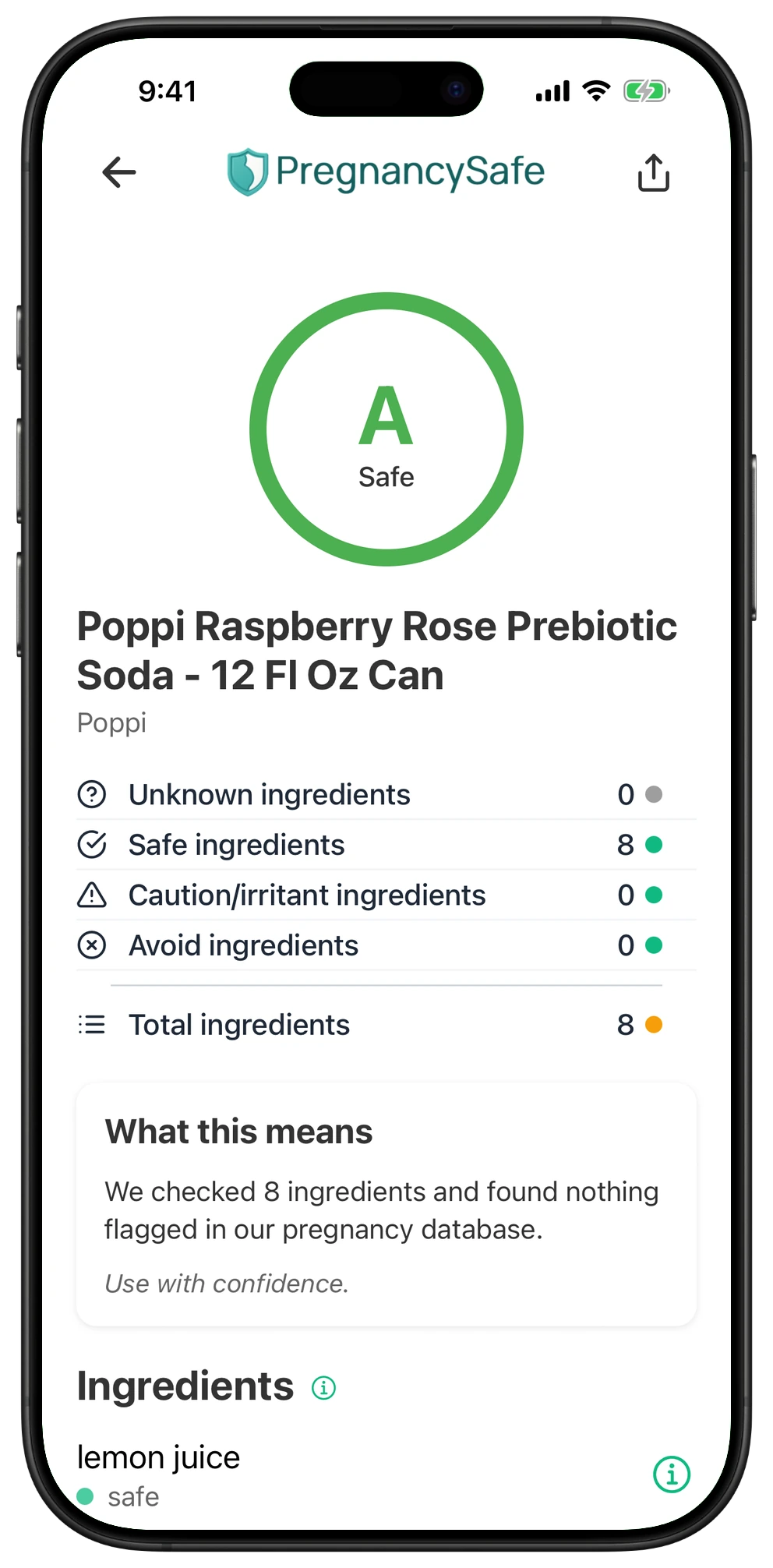
Check your soda in the app
What Ingredients Are in Coca-Cola Zero Sugar?
Coca-Cola Zero Sugar has 9 ingredients. We flagged 1 ingredient to use with caution.
aspartame
LIKELY SAFE
Aspartame is a low calorie artificial sweetener commonly used to sweeten foods and beverages. Aspartame is considered acceptable within established dietary intake limits during pregnancy for most people, but requires avoidance or restriction if you have PKU.
phosphoric acid
LIKELY SAFE
Phosphoric acid is a colorless, odorless acid commonly used as a food additive and acidity regulator in beverages and processed foods. Phosphoric acid is generally low concern at normal food amounts during pregnancy; high dose phosphate products and kidney disease require separate medical guidance.
potassium benzoate
LIKELY SAFE
Potassium benzoate is a preservative commonly used to inhibit the growth of bacteria, yeast, and molds in food and beverage products. Potassium benzoate is generally low concern at regulated food additive amounts during pregnancy, although direct human pregnancy evidence is limited.
acesulfame potassium
SAFE
Acesulfame potassium is a calorie free artificial sweetener commonly used to enhance the sweetness of food and beverages. The supporting evidence concerns dietary potassium rather than acesulfame potassium specifically, so it does not establish this sweetener's pregnancy safety.
carbonated water
SAFE
Carbonated water is water infused with carbon dioxide gas, creating a fizzy, bubbly sensation. Water from a safe treated source supports normal pregnancy hydration, although evidence about plain water does not assess the whole soda.
potassium citrate
SAFE
Potassium citrate is a salt used as a dietary supplement and medication to help prevent kidney stones and regulate pH levels in the body. Normal dietary potassium exposure is compatible with pregnancy, while concentrated supplementation or kidney disease requires separate medical guidance.
caramel color
SAFE
Caramel color is a widely used food additive that imparts a rich, brown hue to beverages and processed foods. Caramel color is unflagged here, but that does not establish pregnancy safety at every dietary intake.
natural flavors
SAFE
Natural flavors are derived from plant or animal sources and used to enhance the taste of food and beverages. Natural flavors are unflagged here, but the unspecified flavor mixture does not have an established pregnancy specific safety assessment.
Answering Your Questions
How much Coca-Cola Zero Sugar is safe during pregnancy?
Choose a small portion and check the caffeine amount for the bottle size you are drinking rather than assuming every bottle equals one serving. Count coffee, tea, chocolate and caffeinated medicines toward your pregnancy total of below 200 mg daily. ACOG
Can you use Coca-Cola Zero Sugar daily while pregnant?
Keep it an occasional drink rather than your default beverage throughout the day. Choose water most often, and skip the caffeinated soda when other drinks or medicines have already used up your daily caffeine allowance.
Why does Coca Cola Zero Sugar receive a C+ grade?
The C+ comes from ingredient based scoring, with caffeine rated CAUTION and aspartame, phosphoric acid and potassium benzoate rated LIKELY_SAFE. Caffeine is the main reason to watch your intake; the grade does not mean an occasional drink is known to harm your pregnancy.
Can I drink Coca Cola Zero Sugar while breastfeeding?
Caffeine passes into breast milk, so count this soda alongside your other caffeine sources. Low to moderate intake usually does not adversely affect breastfed babies, but breastfeeding guidance is separate from this product's pregnancy grade. CDC
What can I drink instead during pregnancy?
Plain water or unsweetened, caffeine free sparkling water avoids both caffeine and sweeteners. If you want cola, choosing a caffeine free version removes the caffeine concern, but check its ingredients rather than assuming it has the same formula or a particular pregnancy grade.
Are zero sugar drinks automatically safe during pregnancy?
No zero sugar does not mean caffeine free or suitable without limits. Aspartame is considered acceptable within established intake limits for most people, but you need to avoid or restrict it if you have PKU.
Can I have Coca Cola Zero Sugar with gestational diabetes?
Its zero sugar identity does not replace checking the total carbohydrate content on your bottle or following your gestational diabetes meal plan. Ask your diabetes care team how it fits your plan, and continue counting its caffeine toward your pregnancy total.
How many bottles can I drink while pregnant?
There is no single bottle allowance that works for everyone because bottle sizes and your other caffeine sources matter. Check the caffeine amount for your exact bottle and keep your combined daily intake below 200 mg; that ceiling is not a target to reach. ACOG
What Are Pregnancy Safe Alternatives to Coca-Cola Zero Sugar?
Here are some solid alternatives. Everything below has an A or B grade, meaning no flagged ingredients in our database.
| Grade | Product | Brand | Type |
|---|---|---|---|
| A | Poppi Cranberry Fizz Prebiotic Soda | Poppi | soda |
| A | Poppi Cherry Lime Prebiotic Soda - 4Pk/12 Fl Oz Cans | Poppi | soda |
| A | Poppi Raspberry Rose Prebiotic Soda | Poppi | soda |
| B+ | Sprite Zero Lemon-Lime Soda 6Pk | Sprite Zero | soda |
Are Other Coca-Cola Zero Products Safe During Pregnancy?
We looked at 10 other Coca-Cola Zero products. 1 are pregnancy safe (A or B grade), while 9 need a closer look.
| Grade | Product | Type |
|---|---|---|
| B+ | Caffeine Free Zero Calorie Cola, Caffeine Free | cola |
| C | Coca-Cola Creations Limited Edition - 10Pk/7.5 Fl Oz Mini Cans | soft drink |
| C+ | Calorie Free Cola | cola |
| C+ | Cherry Flavor Calorie Free Cola, Cherry | cola |
How Does Coca-Cola Zero Sugar Compare to Other Sodas?
We graded 3,107 Sodas for pregnancy safety. Here's how they stack up:
Coca-Cola Zero Sugar earns a C+ grade, placing it among the majority of Sodas. Only 13% of products in this category get an A grade, so it pays to choose carefully.
How Do We Score Products for Pregnancy Safety?
We analyze each product's ingredients and category to flag known risks and provide cautionary notices for general category safety concerns.
A - Safe
Excellent choice! All ingredients are considered safe during pregnancy.
What to do: Use with confidence.
B - Likely Safe
Pretty much safe with very minimal risk. Some ingredients may have limited pregnancy studies, but no significant safety concerns have been identified.
What to do: Use with confidence.
C - Limit
Contains ingredients with some pregnancy considerations. Research shows these ingredients may have limited safety data, potential for minor hormonal effects, or require caution based on animal studies.
What to do: Use sparingly and consider safer alternatives when available.
D - Caution
Similar to C grade but contains multiple cautionary ingredients. The combination increases overall concern.
What to do: Try to avoid if that makes you feel better. If you've already used it, no need to panic.
F - Avoid
Contains an ingredient Pregnancy Safe recommends avoiding during pregnancy. This may reflect an established risk or a precaution based on limited evidence; check the ingredient guidance and exposure context.
What to do: Do not use during pregnancy. If you've already used it, don't worry - contact your OBGYN if concerned.
People Also Checked
References
- https://www.fda.gov/food/food-additives-petitions/aspartame-and-other-sweeteners-food
- https://www.who.int/news/item/14-07-2023-aspartame-hazard-and-risk-assessment-results-released
- https://www.canada.ca/en/health-canada/services/food-nutrition/food-safety/food-additives/sugar-substitutes/aspartame-artificial-sweeteners.html
- https://www.nhs.uk/live-well/eat-well/food-types/are-sweeteners-safe/
- https://www.acog.org/clinical/clinical-guidance/committee-opinion/articles/2010/08/moderate-caffeine-consumption-during-pregnancy
- https://www.acog.org/womens-health/experts-and-stories/ask-acog/how-much-coffee-can-i-drink-while-pregnant
- https://www.ncbi.nlm.nih.gov/books/NBK582613/
- https://www.who.int/tools/elena/interventions/caffeine-pregnancy
- https://www.fda.gov/consumers/consumer-updates/spilling-beans-how-much-caffeine-too-much
- https://pubmed.ncbi.nlm.nih.gov/25179792/
- https://pubmed.ncbi.nlm.nih.gov/25238871/
- https://ods.od.nih.gov/factsheets/Phosphorus-HealthProfessional/
- https://ods.od.nih.gov/factsheets/Pregnancy-HealthProfessional/
- https://www.nationalacademies.org/read/5776/chapter/7
- https://hfpappexternal.fda.gov/scripts/fdcc/index.cfm?order=ASC&search=phosphate&set=FoodSubstances&sort=Sortterm_ID&startrow=1&type=basic
- https://pmc.ncbi.nlm.nih.gov/articles/PMC7009158/
- https://pmc.ncbi.nlm.nih.gov/articles/PMC13086773/
- https://www.kidney.org/news-stories/smart-eating-kidney-health-understanding-phosphorus-foods
- https://www.accessdata.fda.gov/drugsatfda_docs/label/2018/021892s014lbl.pdf
- https://apps.who.int/food-additives-contaminants-jecfa-database/Home/Chemical/1227
- https://www.inchem.org/documents/jecfa/jecmono/v83je01.pdf
- https://www.ecfr.gov/current/title-21/part-184/section-184.1733
- https://www.ecfr.gov/current/title-21/part-184/section-184.1021
- https://www.fda.gov/food/environmental-contaminants-food/questions-and-answers-occurrence-benzene-soft-drinks-and-other-beverages
- https://efsa.onlinelibrary.wiley.com/doi/10.2903/j.efsa.2016.4433
- https://ods.od.nih.gov/factsheets/Potassium-HealthProfessional/
- https://www.ncbi.nlm.nih.gov/books/NBK545428/
- https://wicworks.fns.usda.gov/resources/eye-nutrition-potassium
- https://www.fda.gov/food/nutrition-facts-label/daily-value-nutrition-and-supplement-facts-labels
- https://dailymed.nlm.nih.gov/dailymed/lookup.cfm?setid=41ff55cf-4af3-487e-bd78-09703d310780
- https://www.kidney.org/kidney-topics/hyperkalemia-high-potassium
- https://www.acog.org/womens-health/experts-and-stories/ask-acog/how-much-water-should-i-drink-during-pregnancy
- https://www.cdc.gov/healthy-weight-growth/water-healthy-drinks/index.html
- https://www.cdc.gov/heat-health/hcp/clinical-overview/heat-and-pregnant-women.html
- https://www.cdc.gov/drinking-water/about/index.html
- https://www.cdc.gov/yellow-book/hcp/family-travel/pregnant-travelers.html
- https://www.epa.gov/privatewells/protect-your-homes-water
- https://www.fda.gov/consumers/consumer-updates/bottled-water-everywhere-keeping-it-safe
- https://www.nationalacademies.org/read/10925/chapter/6