Is Sparkling Water Safe During Pregnancy? (Updated 2026 Guide)
Updated September 9, 2026
The Answer
Yes plain, caffeine free, nonalcoholic sparkling water is a reasonable hydration choice during pregnancy. Check flavored or enhanced versions for caffeine, added sugar and botanicals rather than choosing by catalog grade alone.
The main consideration is what is added to the water, not the dissolved carbon dioxide that creates the bubbles. Caffeinated versions count toward your total daily caffeine limit, while sweetened, botanical and vitamin enriched drinks need a closer look at ingredients and amounts. If carbonation worsens bloating or heartburn, switch to still water for comfort, not because bubbles are an established fetal risk.
Pregnancy Safe is 100% independent and research driven. No companies pay to promote or sponsor products.
Stress Less This Pregnancy
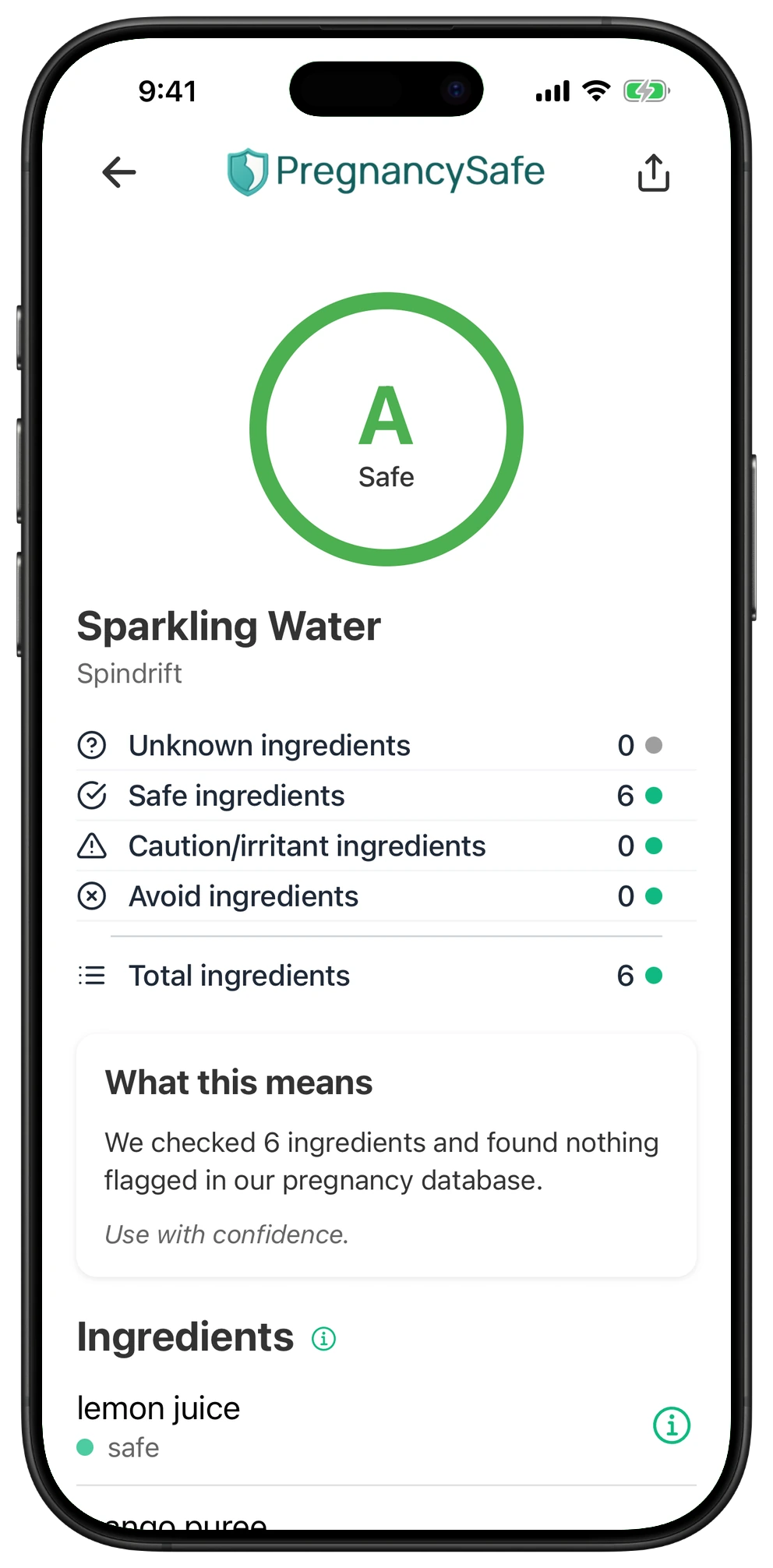
Check your exact sparkling water in the app
✓ What's Safe
- • Choose plain, caffeine free, nonalcoholic sparkling water as a straightforward everyday option.
- • Check the exact flavor and formulation: plain water, tea blends and enhanced drinks can share similar packaging.
- • Read caffeine amounts per serving and per container; keep total caffeine from all sources below 200 mg a day.
- • Choose unsweetened versions when you want hydration without added sugar; check the nutrition label rather than relying on flavor descriptions.
- • For botanical or vitamin enriched drinks, check the ingredient form and amount before making them a daily habit.
- • Choose still water if sparkling water makes your bloating or heartburn worse.
✗ What to Avoid
- • Avoid alcoholic hard seltzers; ordinary carbonation does not make plain sparkling water alcoholic.
- • Avoid drinking caffeinated sparkling water without counting its caffeine alongside coffee, tea and other sources. Natural or organic caffeine still counts.
- • Limit frequent sugary versions containing high fructose corn syrup or other added sugars rather than treating them like plain water.
- • Avoid assuming concentrated hibiscus or other botanical blends are equivalent to plain flavored water; discuss regular medicinal strength use with your pregnancy care team.
- • Limit frequent heavily dyed drinks containing red 40, yellow 5 or blue 1 if you want to reduce unnecessary exposure; occasional regulated food amounts are not established causes of fetal harm.
- • Avoid forcing yourself to drink bubbles that aggravate heartburn or bloating, or relying on sparkling water as a nausea treatment.
Most Common Ingredients in Sparkling Water Products
We analyzed 4,256 sparkling water products. Here are the most common ingredients, ranked by how often they appear:
Ingredients to Watch Out For in Sparkling Water
These are the most common flagged ingredients across 4,256 sparkling water products we analyzed.
Caution
Red 40 is a synthetic food dye commonly used to add vibrant red color to candies, beverages, and processed foods.
Has limited human pregnancy data and is allowed at regulated food additive levels, but child neurobehavior concerns and high dose animal findings make frequent high dye intake worth limiting.
Flagged in 242 of 4,256 products (6%)
high fructose corn syrup
Caution
High fructose corn syrup is a sweet, liquid sweetener made from corn starch, commonly used in processed foods and beverages.
Is not a known teratogen at occasional food amounts, but high added sugar intake can displace nutrients and raise gestational diabetes and metabolic concerns.
Flagged in 170 of 4,256 products (4%)
caffeine
Caution
Caffeine is a natural stimulant found in coffee, tea, and various plants that temporarily boosts alertness and reduces fatigue.
Should be counted across all sources and generally limited to below 200 mg/day in pregnancy because higher intake has observational links to miscarriage and fetal growth outcomes.
Flagged in 148 of 4,256 products (3%)
yellow 5
Caution
Yellow 5 is a synthetic food dye used to impart a bright yellow color to various processed foods and beverages.
Has limited human pregnancy data, rare hypersensitivity labeling concerns, and animal/children's neurobehavior signals despite regulated dietary use under ADI based limits.
Flagged in 146 of 4,256 products (3%)
blue 1
Caution
Blue 1 is a synthetic blue dye commonly used to add vibrant color to foods, beverages, and cosmetics.
Has limited human pregnancy data; regulated food use is not shown to cause fetal harm, but high dose animal neurobehavior findings and child sensitivity concerns support minimizing frequent exposure.
Flagged in 117 of 4,256 products (3%)
retinol
Avoid
Retinol is a form of vitamin A commonly used in skincare to promote cell turnover and reduce the appearance of aging.
Is generally avoided in pregnancy because retinoid class fetal risk concerns outweigh nonessential cosmetic benefits despite low topical absorption and reassuring inadvertent exposure data.
Flagged in 38 of 4,256 products (1%)
organic caffeine
Caution
Organic caffeine is a natural stimulant derived from organically grown coffee beans, tea leaves, or other plant sources, providing an energizing boost without synthetic additives.
Should be counted across all sources and generally limited to below 200 mg/day in pregnancy because higher intake has observational links to miscarriage and fetal growth outcomes.
Flagged in 27 of 4,256 products (1%)
Caution
Hibiscus is a vibrant, tart flavored flower often used to make teas, infusions, and natural remedies.
Has limited human pregnancy safety data; medicinal teas or supplements may lower blood pressure and uterine or menstrual effects are uncertain.
Flagged in 17 of 4,256 products (0%)
Sparkling Water Products We've Analyzed
Our catalog contains ratings for 4,256 sparkling water products. These are database grades, not independent safety certifications.
This category mixes plain water with flavored, caffeinated and enhanced drinks. Ingredient flags in some records do not apply to every plain sparkling water. Check the exact drink and caffeine amount rather than choosing by grade alone.
Pregnancy Safe Sparkling Water Products
Popular options from our catalog, prioritizing A and B ingredient grades, with C grade options used to fill remaining places. Within each group, products are ordered by searches in Pregnancy Safe, not retail sales. Read the cautions and guidance above; grades do not verify a complete current label or guarantee pregnancy safety.
| Grade | Product | Brand |
|---|---|---|
| A | Sparkling Water | Spindrift |
| B+ | Sparkling Ice Kiwi Strawberry | Sparkling Ice |
| B+ | Fresca Sparkling Soda Water Grapefruit Citrus | Fresca |
| A | Grapefruit Sparkling Water & Real Squeezed Fruit | Spindrift |
| B+ | Sparkling Ice | Sparkling Ice |
Your Questions Answered
Is sparkling water safe to drink in pregnancy?
Yes, plain, caffeine free, nonalcoholic sparkling water is a reasonable hydration choice. Dissolved carbon dioxide creates the bubbles and is not itself a reason to avoid the drink during pregnancy. Check the exact label because some drinks sold alongside plain sparkling water contain caffeine, sweeteners, botanicals or added vitamins.
What drinks should you avoid while pregnant?
Avoid alcoholic drinks, including alcoholic hard seltzers. Limit caffeinated drinks so your total caffeine stays below 200 mg a day from all sources, including coffee, tea and caffeinated sparkling water. Keep sugary drinks occasional rather than using them as your main hydration source. Botanical drinks require ingredient- and dose specific consideration, especially concentrated extracts or medicinal strength preparations.
Can sparkling water cause bloating or heartburn during pregnancy?
Bubbles can worsen bloating or heartburn for some people. If you notice this, choose still water instead. This is a comfort issue, not evidence that carbonation is harming your baby. You do not need to keep drinking sparkling water if it makes you feel worse.
Can sparkling water help with pregnancy nausea?
You may find sparkling water easier to drink than still water, but it should not be presented as a proven nausea treatment. Let your tolerance guide your choice, since bubbles may also worsen bloating or heartburn. If nausea or vomiting makes it difficult to keep fluids down, contact your pregnancy care team rather than relying on sparkling water.
Are flavored, zero sugar and vitamin enriched sparkling waters all the same?
No these descriptions can cover very different formulations. Zero sugar does not mean caffeine free, and added vitamins do not automatically make a drink more suitable for pregnancy. Permitted sweeteners are not inherently unsafe just because they appear on an ingredient list. For vitamin enriched or botanical versions, check the exact ingredient forms and amounts; a grade cannot establish the dose you will consume.
Does an A grade guarantee that sparkling water is pregnancy safe?
No. Our catalog contains 4,256 products in this category, including 2,768 with an A grade, but these are catalog scores rather than counts of independently verified safe drinks. The category includes plain, flavored, caffeinated and enhanced beverages, so the exact label matters more than the grade alone. Read the qualifications alongside each listed product; popularity does not establish suitability, and a low grade or incomplete record is not by itself proof that a drink is harmful.
How to Interpret These Ratings
Our ingredient and category rules generate letter grades from the information recorded in the catalog. Missing ingredients and broad category assignments can affect the result. These grades do not measure your dose, confirm a complete current label, or test a product for contamination.
A high grade is not a guarantee of pregnancy safety. A low grade is not, by itself, proof of harm from every use. Follow the product-specific guidance above, check the actual package, and ask your prenatal clinician about supplements, treatment decisions or uncertain exposures.
People Also Checked
References
- https://www.nhs.uk/pregnancy/keeping-well/foods-to-avoid/
- https://www.nhs.uk/live-well/eat-well/food-guidelines-and-food-labels/water-drinks-nutrition/
- https://www.hfpappexternal.fda.gov/scripts/fdcc/index.cfm?id=FDCRed40&set=ColorAdditives
- https://www.ecfr.gov/current/title-21/chapter-I/subchapter-A/part-74/subpart-A/section-74.340
- https://www.fda.gov/food/color-additives-information-consumers/tracking-food-industry-pledges-remove-petroleum-based-food-dyes
- https://www.efsa.europa.eu/en/efsajournal/pub/1327
- https://www.efsa.europa.eu/en/efsajournal/pub/4007
- https://apps.who.int/food-additives-contaminants-jecfa-database/Home/Chemical/2361
- https://oehha.ca.gov/risk-assessment/report/health-effects-assessment-potential-neurobehavioral-effects-synthetic-food-dyes-children
- https://pubmed.ncbi.nlm.nih.gov/6636206/
- https://pubmed.ncbi.nlm.nih.gov/2613118/
- https://pubmed.ncbi.nlm.nih.gov/7940558/
- https://cdn.realfood.gov/DGA.pdf
- https://www.dietaryguidelines.gov/sites/default/files/2021-12/DGA_Pregnancy_FactSheet-508c.pdf
- https://www.acog.org/womens-health/faqs/healthy-eating-during-pregnancy
- https://www.cdc.gov/nutrition/php/data-research/added-sugars.html
- https://www.cdc.gov/diabetes/about/gestational-diabetes.html
- https://www.who.int/publications/i/item/9789241549028
- https://nesr.usda.gov/2025-dietary-guidelines-advisory-committee-systematic-reviews/dietary-patterns_gestational-diabetes
- https://www.acog.org/clinical/clinical-guidance/committee-opinion/articles/2010/08/moderate-caffeine-consumption-during-pregnancy
- https://www.acog.org/womens-health/experts-and-stories/ask-acog/how-much-coffee-can-i-drink-while-pregnant
- https://www.ncbi.nlm.nih.gov/books/NBK582613/
- https://www.who.int/tools/elena/interventions/caffeine-pregnancy
- https://www.fda.gov/consumers/consumer-updates/spilling-beans-how-much-caffeine-too-much
- https://pubmed.ncbi.nlm.nih.gov/25179792/
- https://pubmed.ncbi.nlm.nih.gov/25238871/
- https://hfpappexternal.fda.gov/scripts/fdcc/index.cfm?id=FDCYellow5&set=ColorAdditives
- https://www.ecfr.gov/current/title-21/chapter-I/subchapter-A/part-74#74.705
- https://www.fda.gov/food/nutrition-food-labeling-and-critical-foods/food-allergies
- https://apps.who.int/food-additives-contaminants-jecfa-database/Home/Chemical/3885
- https://efsa.onlinelibrary.wiley.com/doi/10.2903/j.efsa.2009.1331
- https://pubmed.ncbi.nlm.nih.gov/1628860/
- https://pmc.ncbi.nlm.nih.gov/articles/PMC7023231/
- https://pmc.ncbi.nlm.nih.gov/articles/PMC6354951/
- https://www.hfpappexternal.fda.gov/scripts/fdcc/index.cfm?id=FDCBlue1&set=ColorAdditives
- https://www.ecfr.gov/current/title-21/chapter-I/subchapter-A/part-74
- https://efsa.onlinelibrary.wiley.com/doi/10.2903/j.efsa.2010.1853
- https://apps.who.int/food-additives-contaminants-jecfa-database/Home/Chemical/3309
- https://pubmed.ncbi.nlm.nih.gov/23208798/
- https://pubmed.ncbi.nlm.nih.gov/24257113/
- https://www.aad.org/public/everyday-care/skin-care-secrets/routine/pregnancy-skin-care
- https://mothertobaby.org/fact-sheets/topical-acne-treatments-pregnancy/
- https://mothertobaby.org/fact-sheets/tretinoin-retin-a-pregnancy/
- https://www.medicinesinpregnancy.org/leaflets-a-z/isotretinoin-gel/
- https://www.ema.europa.eu/en/news/updated-measures-pregnancy-prevention-during-retinoid-use
- https://dailymed.nlm.nih.gov/dailymed/lookup.cfm?setid=34d79c31-1568-4797-a4f5-31200c7788db
- https://pubmed.ncbi.nlm.nih.gov/26215715/
- https://pubmed.ncbi.nlm.nih.gov/41365815/
- https://pubmed.ncbi.nlm.nih.gov/16243460/
- https://health.ec.europa.eu/publications/revision-scientific-opinion-sccs157616-vitamin-retinol-retinyl-acetate-retinyl-palmitate_en
- https://mothertobaby.org/fact-sheets/herbal-products-pregnancy/
- https://www.ncbi.nlm.nih.gov/books/NBK501882/
- https://pubmed.ncbi.nlm.nih.gov/19434218/
- https://pubmed.ncbi.nlm.nih.gov/18066103/
- https://pmc.ncbi.nlm.nih.gov/articles/PMC9086798/
- https://www.nccih.nih.gov/health/hypertension-high-blood-pressure
- https://www.ffhdj.com/index.php/ffhd/article/view/1768