Is Tea Safe During Pregnancy? (Updated 2026 Guide)
Updated September 9, 2026
The Answer
Tea can fit into pregnancy with caution: keep total caffeine below 200 mg a day from all sources and check the ingredients in herbal blends. Decaf can still contain caffeine, and caffeine free does not automatically mean pregnancy safe.
For brewed tea, the main consideration is caffeine exposure, which varies with serving size, preparation and formulation. Herbal ingredients need separate assessment: avoid liquorice containing herbal tea, and get advice before using medicinal or concentrated herbal preparations. Limited pregnancy evidence for herbs such as hibiscus and ginseng does not establish that an occasional small exposure causes harm.
Pregnancy Safe is 100% independent and research driven. No companies pay to promote or sponsor products.
Stress Less This Pregnancy
Check your exact tea in the app
✓ What's Safe
- • Check caffeine per prepared serving with the manufacturer, then count tea alongside coffee, soda, energy drinks and chocolate toward your daily total below 200 mg.
- • Choose decaffeinated versions to reduce caffeine, while allowing for residual caffeine rather than treating decaf as caffeine free.
- • Look for a complete ingredient list that identifies every herb; a simple, clearly declared formula is easier to assess than an unspecified blend.
- • Measure your serving and follow preparation or dilution directions, especially for chai concentrates and tea powders.
- • Choose unsweetened or lower added sugar bottled teas for regular drinking; compare the amount in the whole bottle, not just one serving.
- • Drink tea separately from iron supplements and iron rich meals, since tea polyphenols can reduce non heme iron absorption.
✗ What to Avoid
- • Avoid liquorice containing herbal tea, including blends listing licorice root or organic licorice root; organic growing does not remove the concern.
- • Avoid repeated large or strong servings of black tea without counting caffeine, and do not assume drinks containing black tea extract have the same caffeine as a standard brew.
- • Avoid self prescribing supplement dose ginseng extract or concentrated herbal tonics; pregnancy data are limited, and experimental findings do not establish harm from every tea serving.
- • Avoid making medicinal strength hibiscus tea a routine without clinical advice, particularly if you have low blood pressure or take blood pressure medicine.
- • Avoid relying on natural, organic, caffeine free or pregnancy branding as proof that every herb in a blend is appropriate.
- • Limit frequent high sugar tea drinks containing high fructose corn syrup or other added sugars; the concern is overall intake, not established fetal harm from an occasional serving.
Most Common Ingredients in Tea Products
We analyzed 4,229 tea products. Here are the most common ingredients, ranked by how often they appear:
Ingredients to Watch Out For in Tea
These are the most common flagged ingredients across 4,229 tea products we analyzed.
black tea
Caution
Black tea is a robust, oxidized tea known for its bold flavor and rich aroma.
Is generally compatible in normal servings but contributes to the pregnancy caffeine limit and may interfere with iron absorption if taken with meals or iron supplements.
Flagged in 363 of 4,229 products (9%)
high fructose corn syrup
Caution
High fructose corn syrup is a sweet, liquid sweetener made from corn starch, commonly used in processed foods and beverages.
Is not a known teratogen at occasional food amounts, but high added sugar intake can displace nutrients and raise gestational diabetes and metabolic concerns.
Flagged in 131 of 4,229 products (3%)
Caution
Hibiscus is a vibrant, tart flavored flower often used to make teas, infusions, and natural remedies.
Has limited human pregnancy safety data; medicinal teas or supplements may lower blood pressure and uterine or menstrual effects are uncertain.
Flagged in 128 of 4,229 products (3%)
brewed black tea
Caution
Brewed black tea is a rich, aromatic beverage made by steeping cured black tea leaves in hot water, offering a bold flavor and invigorating qualities.
Is generally compatible in normal servings but contributes to the pregnancy caffeine limit and may interfere with iron absorption if taken with meals or iron supplements.
Flagged in 81 of 4,229 products (2%)
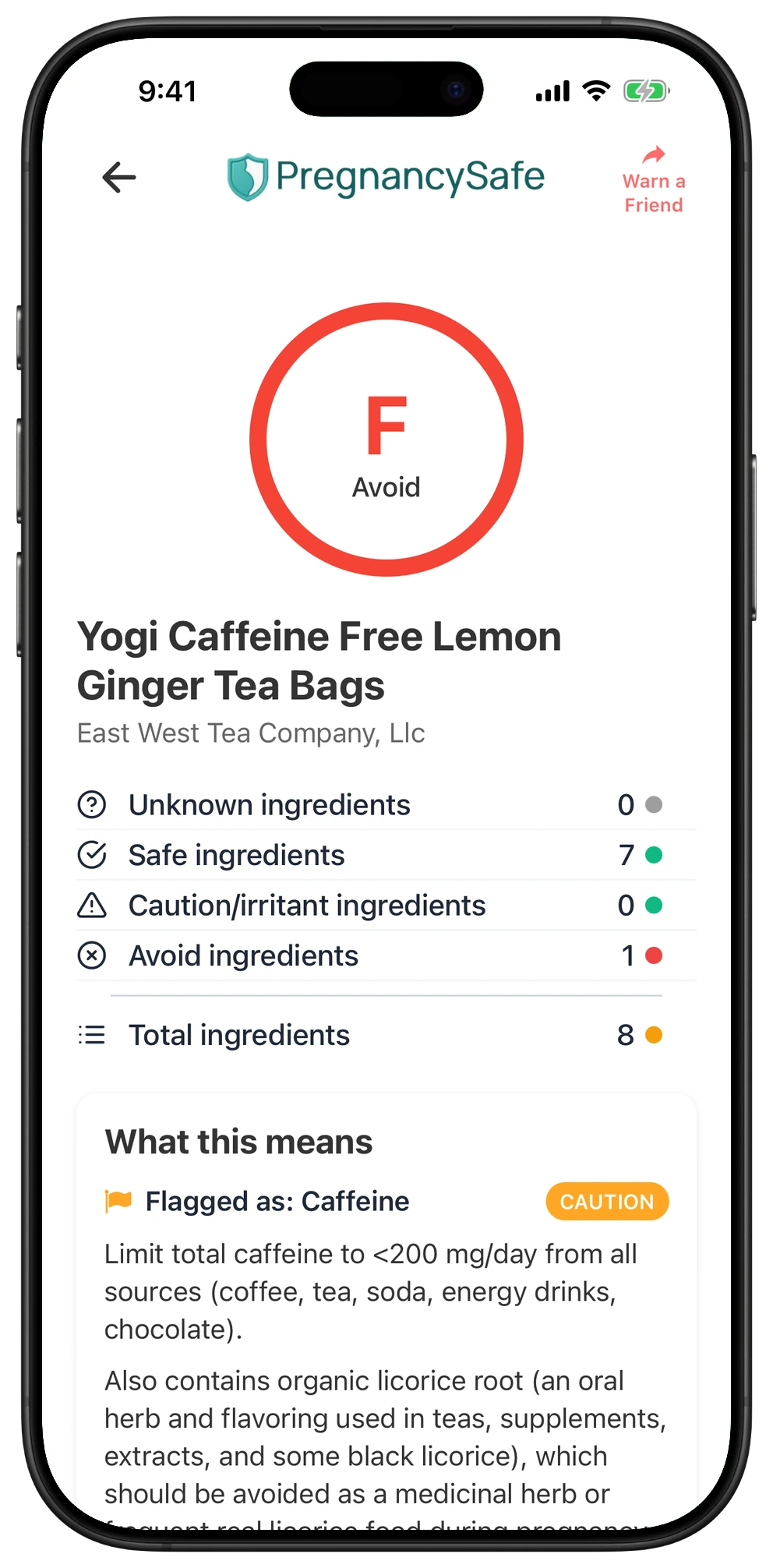
licorice root
Avoid
Licorice root is a sweet, aromatic herb traditionally used for its soothing properties and distinctive flavor in herbal remedies and confections.
Should be avoided as a medicinal herb or frequent real licorice food during pregnancy because glycyrrhizin can raise blood pressure, lower potassium, and has observational links to shorter gestation and possible child development effects.
Flagged in 80 of 4,229 products (2%)
ginseng extract
Avoid
Ginseng extract is a natural supplement derived from the roots of the ginseng plant, known for its energizing and adaptogenic properties.
Is not recommended as an oral supplement in pregnancy because human safety data are limited and Panax ginsenosides have animal or embryo culture developmental concerns.
Flagged in 73 of 4,229 products (2%)
chamomile
Caution
Chamomile is a soothing herb known for its calming properties and delicate, apple like aroma.
Has limited and mixed pregnancy data with lower concern for occasional tea or food flavoring than for regular high dose oral supplements, tinctures, or essential oils.
Flagged in 66 of 4,229 products (2%)
organic black tea
Caution
Organic black tea is a naturally cultivated, antioxidant rich beverage made from fermented Camellia sinensis leaves, offering a bold and invigorating flavor.
Is generally compatible in normal servings but contributes to the pregnancy caffeine limit and may interfere with iron absorption if taken with meals or iron supplements.
Flagged in 60 of 4,229 products (1%)
Types of Tea
Tea Products We've Analyzed
Our catalog contains ratings for 4,229 tea products. These are database grades, not independent safety certifications.
Some tea records contain an incomplete blend declaration. A grade does not establish the full herbal formula or caffeine per serving. The listed products are not independently verified current labels; their grades do not remove caffeine or serving considerations.
Pregnancy Safe Tea Products
Popular options from our catalog, prioritizing A and B ingredient grades, with C grade options used to fill remaining places. Within each group, products are ordered by searches in Pregnancy Safe, not retail sales. Read the cautions and guidance above; grades do not verify a complete current label or guarantee pregnancy safety.
| Grade | Product | Brand |
|---|---|---|
| A | Organic Lemon Balm Tea | Traditional Medicinals |
| A | Bigelow Tea Bags | Bigelow |
| A | Twinnings Tea | Twinings |
| B+ | Mixed Berry Diet Green Tea, Mixed Berry | Lipton |
| A | Yogi Organic Caffeine Free Ginger Tea Bags | East West Tea Company, Llc |
Your Questions Answered
Can I drink tea during my pregnancy?
Yes, ordinary brewed tea can fit into pregnancy when you keep total caffeine below 200 mg a day. Count caffeine from all drinks and foods, not tea alone. Black, green, white, matcha and tea based chai drinks need serving specific consideration rather than a blanket approval. Herbal blends require a separate ingredient check even when they contain no caffeine.
Is decaf tea safe during pregnancy?
Decaf tea can be a practical way to reduce caffeine, but it is not necessarily caffeine free. Check any available caffeine information and include the amount you drink in your daily total. Decaffeination also does not resolve concerns about additional herbs in a blend. A clearly labelled decaf tea is easier to assess, but neither the word decaf nor an A grade guarantees suitability.
What teas should I avoid while pregnant?
Avoid herbal teas containing liquorice, also spelled licorice, including blends where it is not the main named flavour. Avoid self directed medicinal or supplement dose herbal preparations, including ginseng extract, unless your clinician has assessed them. Hibiscus and chamomile require more nuanced consideration because evidence varies by preparation, species and amount; uncertainty is not proof that one cup causes harm. Ordinary black tea is not categorically prohibited, but its caffeine counts toward your daily limit.
How many cups of tea can I drink each day?
There is no universal safe cup count because cup size, brew strength and formulation vary. Typical brewed black tea may provide roughly 47 mg caffeine per 8 ounces, while a larger mug can contain around 71–75 mg, with variation between preparations. Use product specific information where available and leave room for your other caffeine sources. NHS guidance also limits herbal tea, but a generic cup allowance does not make liquorice or every other herb appropriate.
Are chamomile and hibiscus teas safe during pregnancy?
Neither has a blanket pregnancy safety answer. Chamomile evidence differs by species and preparation: occasional tea is lower concern than regular medicinal dosing, and an EMA monograph accepts German chamomile flower infusion without establishing safety for Roman chamomile or all extracts. Hibiscus has very limited human pregnancy evidence and may lower blood pressure; animal extract findings do not prove harm from a typical cup. Ask your maternity clinician before regular or medicinal use, and avoid chamomile if you have a relevant daisy family allergy.
Why should I avoid liquorice tea if a small amount of flavouring is different?
Liquorice root tea can deliver glycyrrhizin, which can raise blood pressure and lower potassium, particularly with regular or concentrated exposure. Human observational studies link heavy intake with pregnancy and child development concerns, but they do not establish that a small incidental food exposure caused harm. NHS guidance advises avoiding liquorice containing herbal tea during pregnancy. If you have already had some, that alone does not mean harm occurred; discuss frequent use or concentrated exposure with your maternity team.
Does an A grade mean a tea is safe or recommended during pregnancy?
No: the catalog contains 4,229 products, including 1,982 with A grades, but those numbers describe catalog coverage rather than clinically approved products or a representative market sample. Some records have incomplete blend declarations, and an A grade does not establish the full herbal formula or caffeine per serving, so it is insufficient for a product recommendation. Likewise, a low grade does not prove that each product causes harm. The listed products are comparison options, not independently verified current labels or clinical safety certifications; check your exact formula and serving information.
How to Interpret These Ratings
Our ingredient and category rules generate letter grades from the information recorded in the catalog. Missing ingredients and broad category assignments can affect the result. These grades do not measure your dose, confirm a complete current label, or test a product for contamination.
A high grade is not a guarantee of pregnancy safety. A low grade is not, by itself, proof of harm from every use. Follow the product-specific guidance above, check the actual package, and ask your prenatal clinician about supplements, treatment decisions or uncertain exposures.
People Also Checked
References
- https://www.acog.org/womens-health/experts-and-stories/ask-acog/how-much-coffee-can-i-drink-while-pregnant
- https://www.acog.org/clinical/clinical-guidance/committee-opinion/articles/2010/08/moderate-caffeine-consumption-during-pregnancy
- https://www.nhs.uk/pregnancy/keeping-well/foods-to-avoid/
- https://www.fda.gov/consumers/consumer-updates/spilling-beans-how-much-caffeine-too-much
- https://www.nhsinform.scot/ready-steady-baby/pregnancy/looking-after-yourself-and-your-baby/eating-well-in-pregnancy/
- https://www.mayoclinic.org/healthy-lifestyle/pregnancy-week-by-week/in-depth/pregnancy-nutrition/art-20043844
- https://pubmed.ncbi.nlm.nih.gov/10999016/
- https://pmc.ncbi.nlm.nih.gov/articles/PMC5998341/
- https://cdn.realfood.gov/DGA.pdf
- https://www.dietaryguidelines.gov/sites/default/files/2021-12/DGA_Pregnancy_FactSheet-508c.pdf
- https://www.acog.org/womens-health/faqs/healthy-eating-during-pregnancy
- https://www.cdc.gov/nutrition/php/data-research/added-sugars.html
- https://www.cdc.gov/diabetes/about/gestational-diabetes.html
- https://www.who.int/publications/i/item/9789241549028
- https://nesr.usda.gov/2025-dietary-guidelines-advisory-committee-systematic-reviews/dietary-patterns_gestational-diabetes
- https://mothertobaby.org/fact-sheets/herbal-products-pregnancy/
- https://www.ncbi.nlm.nih.gov/books/NBK501882/
- https://pubmed.ncbi.nlm.nih.gov/19434218/
- https://pubmed.ncbi.nlm.nih.gov/18066103/
- https://pmc.ncbi.nlm.nih.gov/articles/PMC9086798/
- https://www.nccih.nih.gov/health/hypertension-high-blood-pressure
- https://www.ffhdj.com/index.php/ffhd/article/view/1768
- https://www.nccih.nih.gov/health/licorice-root
- https://webprod.hc-sc.gc.ca/nhpid-bdipsn/dbImages/mono_licorice_english.pdf
- https://www.ema.europa.eu/en/medicines/herbal/liquiritiae-radix
- https://www.medsafe.govt.nz/profs/PUArticles/December2019/Liquorice-side-effects-interactions.htm
- https://www.bfr.bund.de/cm/349/does-the-consumption-of-liquorice-by-pregnant-women-impair-the-mental-and-physical-development-of-children.pdf
- https://pubmed.ncbi.nlm.nih.gov/28158597/
- https://pubmed.ncbi.nlm.nih.gov/11390327/
- https://www.nccih.nih.gov/health/asian-ginseng
- https://www.ema.europa.eu/en/documents/herbal-report/draft-assessment-report-panax-ginseng-camey-radix-revision-1_en.pdf
- https://pubmed.ncbi.nlm.nih.gov/18204104/
- https://www.ncbi.nlm.nih.gov/books/NBK501814/
- https://www.mskcc.org/cancer-care/integrative-medicine/herbs/ginseng-asian
- https://www.mskcc.org/cancer-care/integrative-medicine/herbs/ginseng-american
- https://pubmed.ncbi.nlm.nih.gov/14507839/
- https://www.nccih.nih.gov/health/chamomile
- https://www.ema.europa.eu/en/documents/herbal-monograph/final-european-union-herbal-monograph-matricaria-recutita-l-flos-first-version_en.pdf
- https://www.ema.europa.eu/en/documents/herbal-monograph/final-community-herbal-monograph-chamaemelum-nobile-l-all-flos_en.pdf
- https://pubmed.ncbi.nlm.nih.gov/22516883/
- https://pubmed.ncbi.nlm.nih.gov/20872924/
- https://www.ncbi.nlm.nih.gov/books/NBK501808/
- https://www.ecfr.gov/current/title-21/chapter-I/subchapter-B/part-182/subpart-A/section-182.10