Is Matcha Tea Safe During Pregnancy? (Updated 2026 Guide)
Updated September 9, 2026
The Answer
Matcha tea can fit into pregnancy caffeine guidance if you keep total caffeine below 200 mg a day from all sources. Check the caffeine in your actual serving: powder quantity and preparation vary, so there is no universal safe number of scoops or cups.
The main consideration with matcha is your total daily caffeine exposure, not simply whether the drink contains green tea. Bottled drinks and blends may also contain added sugars or herbal extracts that need separate consideration; concerns about supplement dose herbs do not establish harm from every small beverage exposure. Matcha is powdered green tea, so ordinary brewed or bottled green tea should not be treated as an equivalent product.
Pregnancy Safe is 100% independent and research driven. No companies pay to promote or sponsor products.
Stress Less This Pregnancy
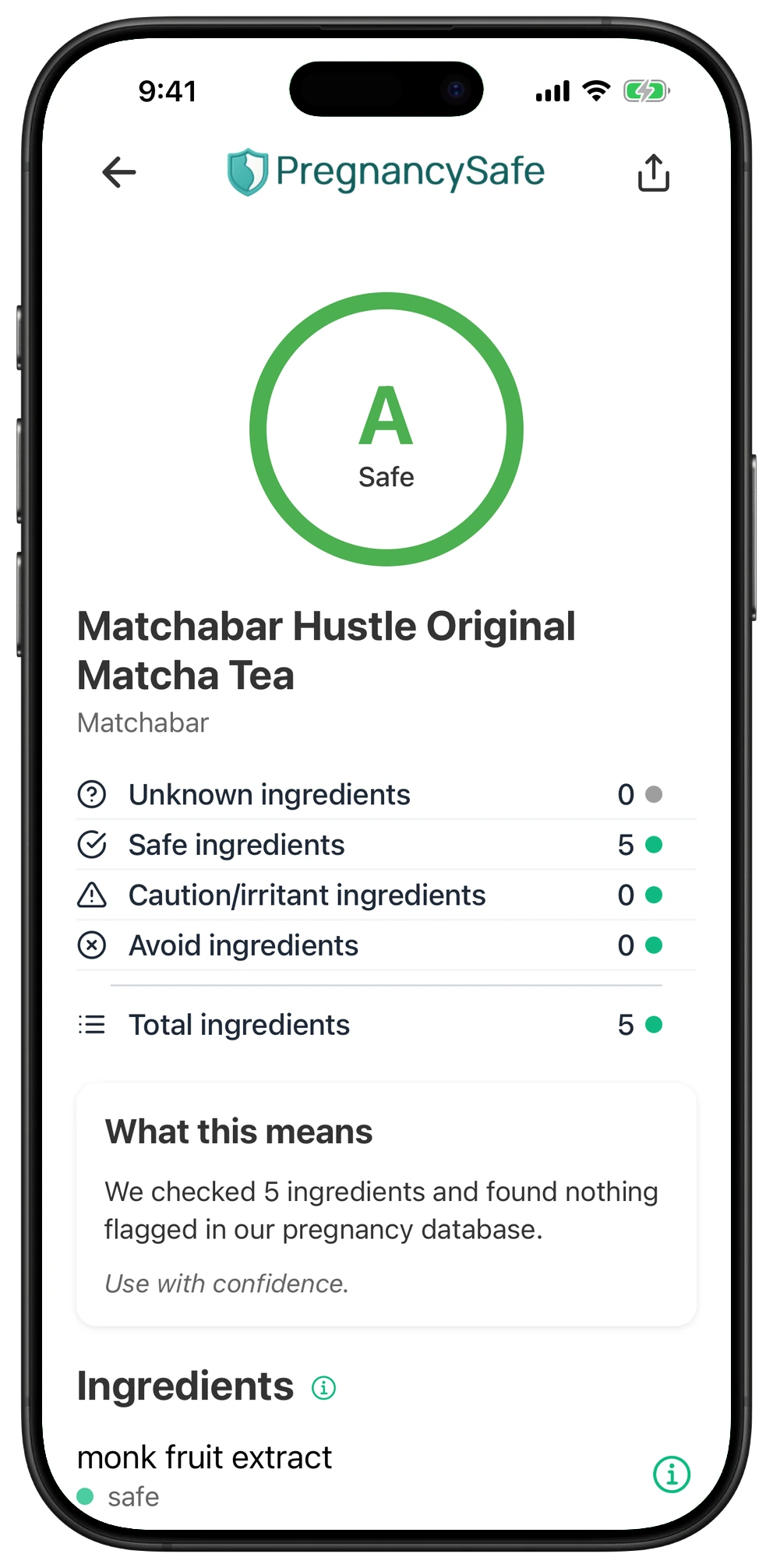
Check your exact matcha tea in the app
✓ What's Safe
- • Choose a serving with stated caffeine content, and include coffee, other teas, soda, energy drinks and chocolate in your daily total.
- • Measure matcha powder according to the package serving size rather than adding unmeasured or heaped scoops.
- • Check that the ingredients actually identify matcha; a generic green tea label does not confirm it.
- • Prefer plain matcha or straightforward drinks without added herbal extracts, especially when extract amounts are undisclosed.
- • Compare added sugars per serving and check how many servings the bottle contains.
- • Recheck the exact current formula and caffeine information when buying a ready to drink version.
✗ What to Avoid
- • Avoid portions or repeated servings that bring your total daily caffeine to 200 mg or more.
- • Avoid assuming that one cup, one teaspoon or one café serving always contains the same amount of caffeine.
- • Skip ginseng extract, ginseng root extract or asian ginseng blends unless your clinician approves them; pregnancy evidence is limited, especially for supplement dose use.
- • Avoid medicinal or regularly consumed licorice root teas and concentrated extracts; small incidental food flavoring is a different exposure.
- • Avoid making heavily sweetened matcha drinks a frequent habit, including those containing high fructose corn syrup; the concern is high added sugar intake, not occasional exposure.
- • Do not treat an ingredient grade as confirmation of caffeine content, current package ingredients or pregnancy safety.
Ingredients in the Reviewed Sample
Selected ingredients are counted once per product where the reviewed source label declares them. Compound label phrases are normalized. These are occurrence counts, not amounts or a complete ingredient list.
Matcha Tea Products We've Analyzed
This page uses a source-reviewed sample of 2 matcha tea product records. It is not a comprehensive catalog count or a pregnancy-safety ranking.
This small sample contains two bottled matcha products, not ordinary brewed green tea or a representative selection of matcha powders. Archived B Sweet labels differ by formula version. Grades describe selected catalog labels; they do not measure caffeine or verify your current bottle.
Your Questions Answered
Can I drink matcha while pregnant?
Matcha can fit into pregnancy caffeine guidance when your total intake stays below 200 mg a day. Count all caffeine sources, not just matcha. Check the caffeine content and amount of powder in your actual serving rather than relying on a standard cup count.
What teas should I avoid while pregnant?
Avoid medicinal licorice root teas and concentrated licorice extracts, and do not use ginseng supplements or extract blends without clinician guidance. Hibiscus and chamomile need more nuanced consideration because pregnancy evidence is limited and preparation and dose matter. Concerns from continuous animal extract exposure or high dose supplements do not prove that occasional ordinary tea causes harm. Caffeinated teas, including matcha and black tea, still count toward your daily caffeine limit.
How many scoops of matcha can I have during pregnancy?
There is no universal safe scoop count because scoop size, powder quantity and caffeine content differ. Use caffeine information for the exact powder and measure the stated serving. Choose an amount that keeps your total daily caffeine below 200 mg after accounting for everything else you consume. If caffeine information is unavailable, ask the manufacturer or café rather than assuming a scoop fits your allowance.
Is bottled green tea the same as matcha?
No. Matcha is powdered green tea, while ordinary brewed green tea and bottled green tea drinks are not necessarily made with matcha. Check the ingredient list for the actual tea form and any added extracts or sweeteners. Do not transfer caffeine estimates between different preparations.
Is matcha a safer replacement for coffee during pregnancy?
Switching to matcha does not automatically reduce your caffeine intake. Compare the caffeine in the portions you actually drink, since matcha powder quantity and preparation change exposure. Either drink must fit within the same total caffeine limit of below 200 mg a day.
Does an A grade mean a matcha drink is pregnancy safe?
No. An A grade is an ingredient score, not a caffeine measurement or pregnancy safety guarantee. The two source reviewed bottled matcha records shown here are a small sample, not matcha as a whole. Check the current package, serving size and caffeine content; archived recipes can differ from the bottle you buy.
How to Interpret These Ratings
Our ingredient and category rules generate letter grades from the information recorded in the catalog. Missing ingredients and broad category assignments can affect the result. These grades do not measure your dose, confirm a complete current label, or test a product for contamination.
A high grade is not a guarantee of pregnancy safety. A low grade is not, by itself, proof of harm from every use. Follow the product-specific guidance above, check the actual package, and ask your prenatal clinician about supplements, treatment decisions or uncertain exposures.
People Also Checked
See our full guide to tea during pregnancy.