Is La Roche-Posay Toleriane Double Repair Face Moisturizer Safe During Pregnancy? (Updated 2026 Guide)
Updated September 8, 2026
La Roche-Posay Toleriane Double Repair Face Moisturizer
La Roche Posay
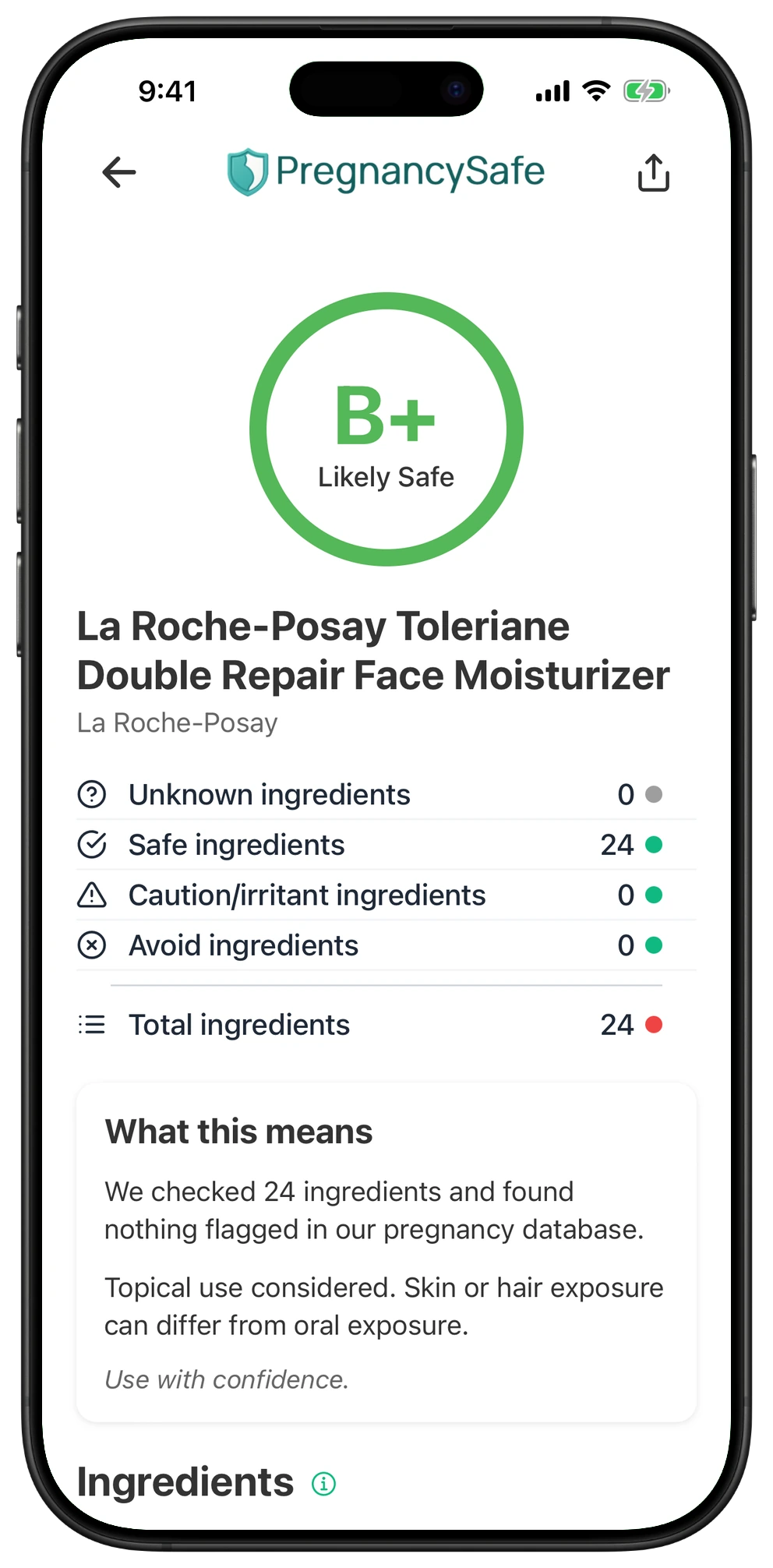
La Roche Posay Toleriane Double Repair Face Moisturizer is generally a reasonable option for normal topical use during pregnancy, with a B+ ingredient based grade. Palmitic acid is the only scoring relevant ingredient and is rated likely safe; its supporting concerns involve dietary or circulating exposure, not demonstrated harm from ordinary facial application.
Go ahead and use it. Nothing to worry about here.
Pregnancy Safe is 100% independent and research driven. No companies pay to promote or sponsor products.
Stress Less This Pregnancy
Check your face moisturizer in the app

What Ingredients Are in La Roche-Posay Toleriane Double Repair Face Moisturizer?
La Roche-Posay Toleriane Double Repair Face Moisturizer has 18 ingredients. All 18 ingredients are considered safe or likely safe for pregnancy.
palmitic acid
LIKELY SAFE
Palmitic acid is a common saturated fatty acid found in palm oil, animal fats, and various plant oils, often used in cosmetics and industrial applications. Palmitic acid is rated likely safe here; dietary and circulating exposure concerns do not establish pregnancy harm from ordinary topical moisturizer use.
aqua water eau
SAFE
Aqua, water, or eau is a clear, tasteless, and odorless liquid essential for life and commonly used as a solvent in various applications. Water used as a topical solvent is not a pregnancy concern, although the finished moisturizer's ingredients and microbial quality still matter.
dimethicone
SAFE
Dimethicone is a silicone based polymer commonly used in skincare and cosmetic products to provide a smooth, silky feel and create a protective barrier on the skin. Normal topical dimethicone use is expected to produce very low systemic exposure, supporting low pregnancy concern despite limited direct pregnancy data.
glycerin
SAFE
Glycerin is a colorless, odorless, and sweet tasting humectant commonly used in skincare products to attract and retain moisture in the skin. Glycerin is compatible with pregnancy in normal topical cosmetic use, where exposure is expected to be low.
SAFE
Niacinamide is a versatile skincare ingredient known for its ability to improve skin elasticity, enhance the barrier function, and reduce the appearance of blemishes and uneven skin tone. Normal topical niacinamide use is generally considered safe during pregnancy, while high dose oral supplements are a separate exposure.
potassium cetyl phosphate
SAFE
Potassium cetyl phosphate is a gentle, water soluble surfactant and emulsifier commonly used in skincare and cosmetic formulations to stabilize emulsions and improve texture. The low concern assessment draws on other topical potassium salts, so the evidence is indirect for potassium cetyl phosphate during pregnancy.
zea mays starch corn starch
SAFE
Corn starch is low concern in normal topical cosmetic use during pregnancy, with limited direct pregnancy data and low expected systemic exposure.
ammonium polyacryloyldimethyl taurate
SAFE
Ammonium polyacryloyldimethyl taurate is a synthetic thickening and stabilizing agent commonly used in skincare and cosmetic formulations to enhance texture and consistency. This thickener is unflagged in the formula, but that does not establish pregnancy safety for normal topical use.
capryloyl glycine
SAFE
Capryloyl glycine is a derivative of glycine that functions as a skin soothing and antimicrobial agent in skincare formulations. This skin conditioning ingredient is unflagged, without a pregnancy specific assessment establishing its safety in this topical formula.
caprylyl glycol
SAFE
Caprylyl glycol is a versatile moisturizing agent and skin conditioner commonly used in skincare products for its humectant and antimicrobial properties. This moisturizing ingredient is unflagged, which is not equivalent to a pregnancy safety review of topical exposure.
ceramide np
SAFE
Ceramide NP is a lipid molecule that helps strengthen and restore the skin's natural barrier, providing hydration and protection against environmental stressors. Ceramide NP supports the skin barrier, but its unflagged status does not establish pregnancy specific safety for topical use.
glyceryl stearate se
SAFE
Glyceryl stearate SE is an emulsifier and stabilizer derived from glycerin and stearic acid, commonly used in skincare products to blend oil and water components. This emulsifier is unflagged, but no pregnancy specific assessment establishes its safety in normal topical use.
myristic acid
SAFE
Myristic acid is a saturated fatty acid commonly used in cosmetics and soap making for its cleansing and emulsifying properties. Myristic acid is unflagged in this moisturizer, rather than individually established as safe for topical use during pregnancy.
myristyl myristate
SAFE
Myristyl myristate is unflagged, with no ingredient specific pregnancy evidence available here to confirm topical safety.
sodium hydroxide
SAFE
Sodium hydroxide is a highly caustic, white, solid compound commonly used as a strong base in cleaning, manufacturing, and chemical processes. Sodium hydroxide is unflagged in this formula; its concentrated chemical hazards alone do not establish pregnancy risk from the finished moisturizer.
squalane
SAFE
Squalane is a lightweight, stable, and moisturizing oil derived from plant sources or shark liver that helps hydrate and protect the skin. Squalane is a moisturizing ingredient that is unflagged here, rather than specifically reviewed for topical pregnancy safety.
stearic acid
SAFE
Stearic acid is a naturally occurring saturated fatty acid commonly used as an emulsifier and thickening agent in cosmetics and skincare products. This emulsifying fatty acid is unflagged, but that status does not confirm pregnancy specific safety for topical use.
xanthan gum
SAFE
Xanthan gum is a natural thickening and stabilizing agent derived from fermented sugars, commonly used in gluten free baking and food processing. Xanthan gum is unflagged in this topical formula, without a pregnancy specific safety assessment.
Answering Your Questions
How much La Roche-Posay Toleriane Double Repair Face Moisturizer is safe during pregnancy?
Apply enough to leave a thin, comfortable layer on your face, following the package directions. No pregnancy specific quantity limit is established for this formula, so you do not need to measure out a special pregnancy dose.
Can you use La Roche-Posay Toleriane Double Repair Face Moisturizer daily while pregnant?
Follow the package directions and adjust use to your skin's dryness and tolerance. If you develop stinging, redness, or a rash, stop using it rather than applying it more often.
Why did this moisturizer receive a B+ pregnancy grade?
The B+ comes from ingredient based scoring, with palmitic acid as the only scoring relevant ingredient, rated likely safe. Its evidence concerns higher dietary saturated fat exposure and elevated circulating palmitic acid, not demonstrated pregnancy harm from facial moisturizer use. Some other ingredients are unflagged rather than individually reviewed for pregnancy safety, so the grade is not proof of zero risk.
Can I use this moisturizer while breastfeeding?
The B+ grade assesses pregnancy, not a separate breastfeeding review of the complete formula. Dimethicone has reassuring low absorption evidence, but that does not establish breastfeeding safety for every ingredient; keep facial moisturizer off the nipple and away from areas your baby may lick.
What alternative face moisturizer should I look for during pregnancy?
Look for a basic moisturizer with an ingredient list reviewed for normal topical use during pregnancy, rather than relying on the brand name alone. Glycerin and dimethicone are examples with reassuring topical use assessments; the complete formula still matters.
Is every La Roche Posay Toleriane product safe during pregnancy?
This B+ assessment applies only to Toleriane Double Repair Face Moisturizer with the ingredient list reviewed here. Other Toleriane products, including SPF variants, need their own ingredient review.
Is the niacinamide in this moisturizer safe during pregnancy?
Niacinamide is generally considered safe for normal topical cosmetic use during pregnancy, although pregnancy specific clinical trials are limited. High dose oral vitamin B3 supplement concerns should not be applied to ordinary use of this moisturizer.
Should I avoid this moisturizer because it contains palmitic acid?
Palmitic acid is rated likely safe here, not caution or avoid. Associations involving dietary saturated fat or circulating palmitic acid do not establish that applying this moisturizer to your face causes the same effects.
What Are Pregnancy Safe Alternatives to La Roche-Posay Toleriane Double Repair Face Moisturizer?
Here are some solid alternatives. Everything below has an A or B grade, meaning no flagged ingredients in our database.
| Grade | Product | Brand | Type |
|---|---|---|---|
| B+ | Neutrogena Hydro Boost Fragrance Free Water Gel | Neutrogena | face moisturizer |
| A | La Roche-Posay Toleriane Dermallegro Soothing Face Moisturizer For Sensitive Skin | La Roche-Posay | face moisturizer |
| A | Vichy Liftactiv Supreme Spf30 50Ml | Vichy | face moisturizer |
| A | Avène Hydrance Light Hydrating Emulsion Spf30 For Dehydrated Skin 40Ml | Avène | face moisturizer |
Are Other La Roche Posay Products Safe During Pregnancy?
We looked at 12 other La Roche Posay products. 1 are pregnancy safe (A or B grade), while 11 need a closer look.
| Grade | Product | Type |
|---|---|---|
| B+ | La Roche-Posay Lipikar AP+M Triple Repair Body Moisturizing Cream | body moisturizer |
| D+ | La Roche Posay Toleriane Face Moisturizer Sunscreen With Ceramide And Niacinamide - Spf 30 | face moisturizer |
| C | La Roche Posay Anthelios Clear Skin Dry Touch Face Sunscreen For Acne Prone Skin - Spf 60 | sunscreen |
| C- | La Roche Posay Acne Treatment Salicylic Acid Face Serum - 1Oz | face serum |
How Does La Roche-Posay Toleriane Double Repair Face Moisturizer Compare to Other Face Moisturizers?
We graded 279 Face Moisturizers for pregnancy safety. Here's how they stack up:
La Roche-Posay Toleriane Double Repair Face Moisturizer earns a B+ grade, placing it among the top of Face Moisturizers. Only 1% of products in this category get an A grade, so it pays to choose carefully.
How Do We Score Products for Pregnancy Safety?
We analyze each product's ingredients and category to flag known risks and provide cautionary notices for general category safety concerns.
A - Safe
Excellent choice! All ingredients are considered safe during pregnancy.
What to do: Use with confidence.
B - Likely Safe
Pretty much safe with very minimal risk. Some ingredients may have limited pregnancy studies, but no significant safety concerns have been identified.
What to do: Use with confidence.
C - Limit
Contains ingredients with some pregnancy considerations. Research shows these ingredients may have limited safety data, potential for minor hormonal effects, or require caution based on animal studies.
What to do: Use sparingly and consider safer alternatives when available.
D - Caution
Similar to C grade but contains multiple cautionary ingredients. The combination increases overall concern.
What to do: Try to avoid if that makes you feel better. If you've already used it, no need to panic.
F - Avoid
Contains an ingredient Pregnancy Safe recommends avoiding during pregnancy. This may reflect an established risk or a precaution based on limited evidence; check the ingredient guidance and exposure context.
What to do: Do not use during pregnancy. If you've already used it, don't worry - contact your OBGYN if concerned.
People Also Checked
Chicken Mcnuggets® (4 Piece)
Mcdonalds
Cerave Hydrating Cream-To-Foam Cleanser With Amino Acids For Normal To Dry Skin 236Ml
Cerave
Celestial Seasonings Sangria Zinger Caffeine Free Herbal Tea - Case Of 6 - 20 Bags
Celestial Seasonings
Cetaphil Ultra Gentle Sensitive Body Wash
Cetaphil
Olipop Crisp Apple Prebiotic Soda
Olipop
References
- https://www.acog.org/womens-health/faqs/healthy-eating-during-pregnancy
- https://pmc.ncbi.nlm.nih.gov/articles/PMC10875910/
- https://pmc.ncbi.nlm.nih.gov/articles/PMC7648931/
- https://pmc.ncbi.nlm.nih.gov/articles/PMC8062006/
- https://pmc.ncbi.nlm.nih.gov/articles/PMC5104202/
- https://karger.com/anm/article/80/1/1/871636/Current-Guidelines-on-Fat-Intake-in-Pregnant-and
- https://www.personalcarecouncil.org/wp-content/uploads/2022/03/INCINomenclatureConventionsReferenceInformation2022_v1.pdf
- https://www.seslhd.health.nsw.gov.au/sites/default/files/groups/Royal_Hospital_for_Women/Mothersafe/documents/skinhaircareandcosmetictreatmentsapril2021.pdf
- https://www.nhs.uk/pregnancy/complications/itching-and-intrahepatic-cholestasis/
- https://www.fda.gov/cosmetics/resources-consumers-cosmetics/cosmetics-pregnancy
- https://www.fda.gov/cosmetics/cosmetics-guidance-documents/good-manufacturing-practice-gmp-guidelinesinspection-checklist-cosmetics
- https://www.fda.gov/cosmetics/potential-contaminants-cosmetics/microbiological-safety-and-cosmetics
- https://pubmed.ncbi.nlm.nih.gov/25153208/
- https://www.medicinesinpregnancy.org/leaflets-a-z/dimethicone/
- https://uktis.org/monographs/use-of-head-lice-treatments-in-pregnancy/
- https://www.cir-safety.org/sites/default/files/FAR_Methicones_032022.pdf
- https://www.medicines.org.uk/emc/product/4860/smpc
- https://www.sps.nhs.uk/articles/treating-lice-during-breastfeeding/
- https://mothertobaby.org/fact-sheets/lice-scabies-pregnancy/
- https://www.ecfr.gov/current/title-21/chapter-I/subchapter-D/part-347/subpart-B/section-347.10
- https://www.hfpappexternal.fda.gov/scripts/fdcc/index.cfm?id=GLYCERIN&set=FoodSubstances
- https://pubmed.ncbi.nlm.nih.gov/31840548/
- https://pmc.ncbi.nlm.nih.gov/articles/PMC7009851/
- https://www.medicinesinpregnancy.org/leaflets-a-z/glycerin-suppositories/
- https://mothertobaby.org/pregnancy-breastfeeding-exposures/cosmetics/
- https://pubmed.ncbi.nlm.nih.gov/41944999/
- https://jintegrativederm.org/doi/10.64550/joid.97jp5737
- https://pubmed.ncbi.nlm.nih.gov/16596767/
- https://ods.od.nih.gov/factsheets/Niacin-HealthProfessional/
- https://www.aad.org/public/everyday-care/skin-care-secrets/routine/pregnancy-skin-care
- https://pubmed.ncbi.nlm.nih.gov/25399625/
- https://www.cir-safety.org/sites/default/files/citric032012FR.pdf
- https://doi.org/10.1177/1091581818814189
- https://www.epa.gov/sites/default/files/2019-08/documents/support_document_for_proposed_designation_of_d-gluconic_acid_potassium_salt.pdf
- https://webprod.hc-sc.gc.ca/nhpid-bdipsn/ingredReq?id=2811
- https://journals.sagepub.com/doi/pdf/10.1177/1091581811403832
- https://pubmed.ncbi.nlm.nih.gov/21772025/
- https://www.cir-safety.org/ingredient/zea-mays-corn-starch
- https://www.ecfr.gov/current/title-21/chapter-I/subchapter-D/part-347
- https://www.hfpappexternal.fda.gov/scripts/fdcc/index.cfm?id=CORNSTARCH&set=FoodSubstances
- https://www.fda.gov/food/people-risk-foodborne-illness/dietary-advice-and-during-pregnancy
- https://pubmed.ncbi.nlm.nih.gov/40984809/