Is Premier Protein Chocolate Protein Shake Safe During Pregnancy? (Updated 2026 Guide)
Updated September 9, 2026
Premier Protein Chocolate Protein Shake
Premier Protein
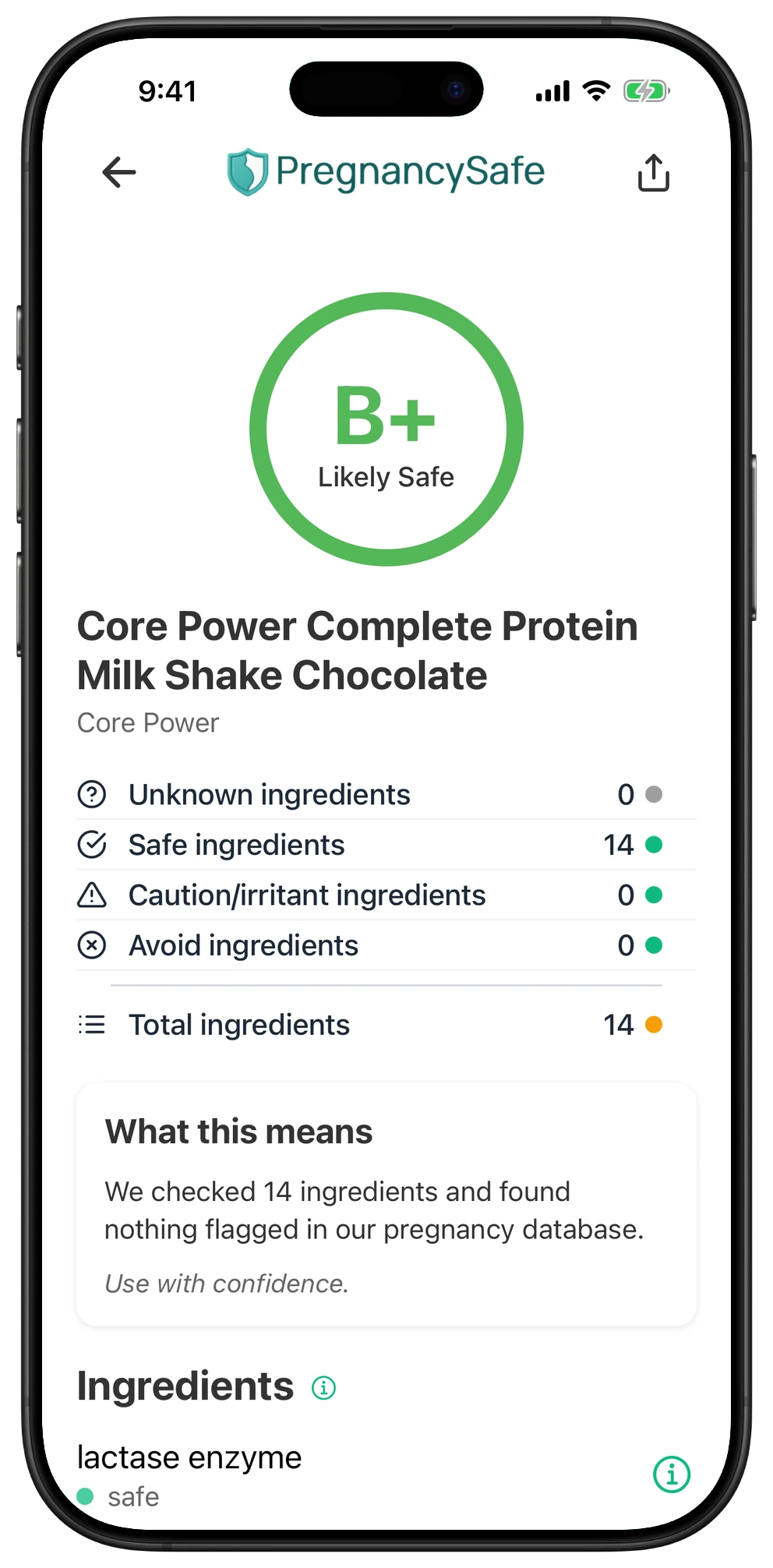
Premier Protein Chocolate Protein Shake receives a B+ and is generally a reasonable pregnancy option in ordinary dietary amounts. Its ingredient based score includes several likely safe ingredients, such as carrageenan and added trace minerals, rather than ingredients rated caution or avoid. Use it to complement meals, and check its added nutrients alongside your prenatal vitamin before making it a daily habit.
Go ahead and use it. Nothing to worry about here.
Pregnancy Safe is 100% independent and research driven. No companies pay to promote or sponsor products.
Stress Less This Pregnancy
Check your protein shake in the app

What Ingredients Are in Premier Protein Chocolate Protein Shake?
Premier Protein Chocolate Protein Shake has 38 ingredients. All 38 ingredients are considered safe or likely safe for pregnancy.
carrageenan
LIKELY SAFE
Carrageenan is a natural thickening and gelling agent derived from red seaweed used in food products to improve texture and stability. Food grade carrageenan is generally low concern in pregnancy at normal food additive amounts, although direct human pregnancy studies are limited.
chromium polynicotinate
LIKELY SAFE
Chromium polynicotinate is a bioavailable form of chromium supplement commonly used to support healthy blood sugar levels and metabolic function. Chromium is generally low concern at dietary or low dose multivitamin amounts in pregnancy, while high dose supplementation has limited safety evidence.
copper gluconate
LIKELY SAFE
Copper gluconate is a bioavailable form of copper commonly used in dietary supplements and skincare products to support skin health and overall mineral balance. Copper is generally compatible with pregnancy at normal dietary or prenatal amounts, while high dose intake and copper handling disorders require clinician guidance.
dl alpha tocopheryl acetate
LIKELY SAFE
DL Alpha Tocopheryl Acetate is a stable, esterified form of vitamin E commonly used in skincare products for its antioxidant and moisturizing properties. This vitamin E form is generally compatible with pregnancy at normal nutritional amounts, unlike routine high dose oral supplementation, which is not recommended.
manganese sulfate
LIKELY SAFE
Manganese sulfate is a chemical compound used as a dietary supplement and fertilizer additive to provide essential manganese for plant growth and animal nutrition. Manganese is generally compatible with pregnancy at normal food and prenatal amounts, whereas excessive supplements and occupational inhalation are separate exposure concerns.
potassium iodide
LIKELY SAFE
Potassium iodide is a chemical compound used as a dietary supplement to prevent iodine deficiency and as an emergency treatment for radioactive iodine exposure. Iodine supports pregnancy nutrition at dietary and prenatal amounts, but excess intake can disrupt maternal and fetal thyroid function.
sodium molybdate
LIKELY SAFE
Sodium molybdate is an inorganic compound used as a source of molybdenum in fertilizers, industrial applications, and as a corrosion inhibitor. Molybdenum is low concern at normal dietary and prenatal amounts in pregnancy, while high dose supplements may interfere with copper metabolism.
sodium selenite
LIKELY SAFE
Sodium selenite is an inorganic compound used as a dietary supplement source of selenium, essential for antioxidant protection and thyroid function. Selenium is generally compatible with pregnancy at normal dietary and prenatal amounts, but excessive combined intake can cause toxicity.
vitamin a palmitate
LIKELY SAFE
Vitamin A Palmitate is a synthetic form of vitamin A commonly used in skincare and nutritional supplements to support vision, immune function, and skin health. Evidence about ordinary dietary palmitic acid does not establish pregnancy safety for the vitamin A dose delivered by vitamin A palmitate.
acesulfame potassium
SAFE
Acesulfame potassium is a calorie free artificial sweetener commonly used to enhance the sweetness of food and beverages. Evidence about dietary potassium does not establish pregnancy safety for acesulfame potassium as an orally consumed sweetener.
biotin
SAFE
Biotin is a water soluble B vitamin (vitamin B7) essential for healthy skin, hair, and nail growth. Normal food and prenatal amounts of biotin are compatible with pregnancy, while high dose supplements can interfere with important lab tests.
calcium caseinate
SAFE
Calcium caseinate is a high quality, slow digesting protein derived from milk, commonly used as a dietary supplement or food additive to support muscle growth and recovery. This milk protein is generally compatible with pregnancy in normal dietary amounts from pasteurized products, but avoid it if you have a confirmed milk allergy.
calcium d pantothenate
SAFE
Calcium D pantothenate is a stable form of vitamin B5 that supports energy production and overall metabolic health. Evidence about elemental calcium does not establish a pregnancy specific assessment of calcium D pantothenate at this shake's oral dose.
cellulose gel
SAFE
Cellulose gel is a thickening and stabilizing agent derived from plant cellulose, commonly used in food, pharmaceuticals, and cosmetics. Poorly absorbed cellulose gel is generally low concern during pregnancy at normal food additive amounts.
cellulose gum
SAFE
Cellulose gum is a water soluble thickening and stabilizing agent derived from plant cellulose, commonly used in food and pharmaceutical products. Cellulose gum is generally compatible with pregnancy at normal food additive amounts, and concentrated oral or animal microbiome findings do not establish fetal harm.
cholecalciferol
SAFE
Cholecalciferol is a form of vitamin D3 that helps regulate calcium and phosphate levels in the body, supporting healthy bones and immune function. Vitamin D3 is compatible with pregnancy at normal nutritional amounts, but count fortified drinks alongside supplements to avoid excessive intake.
cyanocobalamin
SAFE
Cyanocobalamin is a synthetic form of vitamin B12 commonly used in supplements and fortified foods to support red blood cell formation and neurological health. Vitamin B12 in ordinary foods and prenatal amounts is compatible with pregnancy, with deficiency rather than routine intake the main concern.
dipotassium phosphate
SAFE
Dipotassium phosphate is a water soluble salt commonly used as a food additive and buffering agent to regulate pH levels. Its phosphate component is generally compatible with pregnancy at normal food amounts, while high dose intake or kidney disease warrants individualized guidance.
ferric orthophosphate
SAFE
Ferric orthophosphate is a soluble iron compound commonly used as a dietary supplement and as a fertilizer additive to provide essential iron nutrients. Phosphate evidence supports low concern at ordinary dietary amounts in pregnancy but does not assess this ingredient's iron contribution.
folic acid
SAFE
Folic acid is a synthetic form of vitamin B9 essential for DNA synthesis and cell growth. Folic acid is recommended for pregnancy nutrition, but include fortified drinks when checking your total intake from fortified foods and supplements.
magnesium phosphate
SAFE
Magnesium phosphate is a mineral compound commonly used as a dietary supplement to support bone health and muscle function. Its phosphate component is generally compatible with pregnancy at normal food amounts, with separate caution for high dose phosphate intake or kidney disease.
milk protein concentrate
SAFE
Milk protein concentrate is a concentrated form of milk protein that provides a rich source of high quality, easily digestible protein used in various food and nutritional products. Milk protein is generally compatible with pregnancy in normal dietary amounts from pasteurized products, but milk allergy and excessive protein supplementation are separate concerns.
SAFE
Niacinamide is a versatile skincare ingredient known for its ability to improve skin elasticity, enhance the barrier function, and reduce the appearance of blemishes and uneven skin tone. Topical niacinamide evidence does not establish safety for oral exposure in this shake, and pregnancy supplement limits remain relevant to total intake.
phytonadione
SAFE
Phytonadione is a form of vitamin K used to prevent and treat vitamin K deficiency and related bleeding disorders. Vitamin K1 at adequate dietary intake is not expected to harm pregnancy, while prescription dosing and anticoagulant interactions require clinician guidance.
pyridoxine hydrochloride
SAFE
Pyridoxine hydrochloride is the hydrochloride salt form of vitamin B6, essential for amino acid metabolism and neurotransmitter synthesis. Vitamin B6 is compatible with pregnancy at normal dietary and prenatal amounts, but chronic high dose supplementation can cause nerve damage.
riboflavin
SAFE
Riboflavin is a water soluble B vitamin (vitamin B2) essential for energy production and the metabolism of fats, proteins, and carbohydrates. Riboflavin is compatible with pregnancy at normal food and prenatal amounts, while very high dose supplementation is usually unnecessary.
salt
SAFE
Salt is a mineral essential for flavor enhancement and preserving food. Normal dietary salt is compatible with pregnancy, while high intake or medical conditions affecting blood pressure or kidney function may require tailored advice.
soybean oil
SAFE
Soybean oil is a versatile, plant based oil extracted from soybeans, commonly used for cooking, frying, and as an ingredient in processed foods. Soybean oil is compatible with pregnancy at normal food amounts, with individualized advice appropriate if you have a soy allergy.
thiamine mononitrate
SAFE
Thiamine mononitrate is a synthetic form of vitamin B1 used as a dietary supplement and food additive to support energy metabolism. Thiamine is compatible with pregnancy at normal food and prenatal amounts, and preventing deficiency is especially important with severe vomiting or poor intake.
tripotassium phosphate
SAFE
Tripotassium phosphate is a water soluble salt commonly used as a food additive, buffering agent, and pH stabilizer. Its phosphate component is generally compatible with pregnancy at ordinary food amounts, while high dose intake and kidney disease require separate consideration.
water
SAFE
Water is a clear, tasteless, and essential liquid that sustains all known forms of life. Water from a safe treated source is compatible with pregnancy, with contamination rather than ordinary dietary exposure the relevant concern.
zinc glycinate chelate
SAFE
Zinc glycinate chelate is a highly absorbable form of zinc bound to glycine, commonly used as a dietary supplement to support immune function and overall health. Zinc is compatible with pregnancy at normal dietary and prenatal amounts, but excessive supplemental intake can cause digestive symptoms and copper deficiency.
cocoa powder
SAFE
Cocoa powder is a finely ground, unsweetened powder made from roasted cacao beans, commonly used to add rich chocolate flavor to baked goods and desserts. Cocoa powder is unflagged, but that does not establish a pregnancy specific safety review or the caffeine amount in a serving.
natural and artificial flavors
SAFE
A blend of natural and artificial flavors used to enhance the taste and aroma of food and beverages. These unspecified flavors are unflagged, which does not establish that every flavor component has been reviewed for pregnancy.
sodium ascorbate
SAFE
Sodium ascorbate is a buffered, water soluble form of vitamin C commonly used as an antioxidant and nutritional supplement. This vitamin C form is unflagged, but its pregnancy suitability at the amount in this shake is not established by an ingredient specific review.
sodium hexametaphosphate
SAFE
Sodium hexametaphosphate is a water soluble compound commonly used as a food additive and water softener to prevent mineral buildup. Sodium hexametaphosphate is unflagged, rather than specifically reviewed as safe for oral exposure during pregnancy.
sucralose
SAFE
Sucralose is a calorie free artificial sweetener commonly used to sweeten foods and beverages without adding sugar. Sucralose is unflagged, but that status alone does not establish pregnancy safety at a particular oral intake.
sunflower oil
SAFE
Sunflower oil is a light, mild tasting vegetable oil extracted from sunflower seeds, commonly used for cooking and frying. Sunflower oil is unflagged, rather than specifically reviewed for pregnancy exposure at the amount in this shake.
Answering Your Questions
How much Premier Protein Chocolate Protein Shake is safe during pregnancy?
Use the labeled serving size as a starting point, adjusting the portion to the protein you need beyond your meals. Check the vitamin and mineral amounts alongside your prenatal and other supplements; a serving size is not a pregnancy specific safety limit.
Can you use Premier Protein Chocolate Protein Shake daily while pregnant?
Use it when you need a convenient protein addition rather than automatically adding it to every day. If you want it daily or need several servings to manage poor food intake, ask your prenatal clinician or dietitian to review your overall nutrition.
Why does Premier Protein Chocolate Protein Shake receive a B+?
The B+ comes from ingredient based scoring, with several ingredients rated likely safe, including carrageenan, chromium, copper, vitamin E, iodine, manganese, molybdenum, and selenium. None are rated caution or avoid for this product category, but the grade is not a clinical test of the finished shake or a guarantee at every intake level.
Can I drink this shake while breastfeeding?
The pregnancy grade does not establish a separate breastfeeding verdict. Before using it regularly, check its added nutrients against your postnatal supplements, particularly iodine, because excess intake can affect infant thyroid function.
What alternatives can I choose during pregnancy?
Consider pasteurized yogurt, milk, or a smoothie made with pasteurized dairy and fruit if those suit your diet. For another packaged shake, look for clearly labeled nutrient amounts that fit your needs; choose a carrageenan free option if that ingredient bothers your digestion.
Can I have a chocolate protein shake while pregnant?
Chocolate flavor alone does not determine pregnancy suitability; the full formula and how much you drink matter. This shake receives a B+, but the ingredient list does not establish its caffeine amount, so check the label or manufacturer rather than assuming it is caffeine free.
Can protein shakes affect pregnancy nutrition?
They can help fill a protein gap, but using them to push protein intake far above your needs has no established pregnancy benefit and may be harmful. Keep varied meals as your foundation rather than using this shake as your main source of nutrition.
Should I worry about carrageenan in this shake?
Food grade carrageenan is rated likely safe and is generally low concern at normal food additive amounts, although direct human pregnancy research is limited. Degraded carrageenan, also called poligeenan, is a different material; findings about it do not establish fetal harm from this shake. You may prefer an alternative if carrageenan aggravates your digestive symptoms.
What Are Pregnancy Safe Alternatives to Premier Protein Chocolate Protein Shake?
Here are some solid alternatives. Everything below has an A or B grade, meaning no flagged ingredients in our database.
| Grade | Product | Brand | Type |
|---|---|---|---|
| B+ | Core Power Elite Chocolate High Protein Milk Shake | Fairlife | protein shake |
| A | Koia Shake, Plant-Based, Protein, Vanilla Bean | Koia | protein shake |
| A | Alani Cookies & Cream Protein Shake 355Ml | Alani Nu | protein shake |
| A | Koia Shake, Plant-Based, Protein, Chocolate Banana | Koia | protein shake |
Are Other Premier Protein Products Safe During Pregnancy?
We looked at 10 other Premier Protein products. 9 are pregnancy safe (A or B grade), while 1 need a closer look.
| Grade | Product | Type |
|---|---|---|
| A | Al'Mazing Vanilla Non-Dairy Protein Shake | protein shake |
| B+ | 30 G Protein High Protein Shake, Cake Batter Delight, Cake Batter Delight | protein shake |
| B+ | Almond Milk Non-Dairy Protein Shake Chocolate | protein shake |
| B+ | Apple Cinnamon Flavored High Protein Shake With Oats, Apple Cinnamon | protein shake |
How Does Premier Protein Chocolate Protein Shake Compare to Other Protein Shakes?
We graded 1,109 Protein Shakes for pregnancy safety. Here's how they stack up:
Premier Protein Chocolate Protein Shake earns a B+ grade, placing it among the majority of Protein Shakes. About 77% of products in this category get an A or B grade.
How Do We Score Products for Pregnancy Safety?
We analyze each product's ingredients and category to flag known risks and provide cautionary notices for general category safety concerns.
A - Safe
Excellent choice! All ingredients are considered safe during pregnancy.
What to do: Use with confidence.
B - Likely Safe
Pretty much safe with very minimal risk. Some ingredients may have limited pregnancy studies, but no significant safety concerns have been identified.
What to do: Use with confidence.
C - Limit
Contains ingredients with some pregnancy considerations. Research shows these ingredients may have limited safety data, potential for minor hormonal effects, or require caution based on animal studies.
What to do: Use sparingly and consider safer alternatives when available.
D - Caution
Similar to C grade but contains multiple cautionary ingredients. The combination increases overall concern.
What to do: Try to avoid if that makes you feel better. If you've already used it, no need to panic.
F - Avoid
Contains an ingredient Pregnancy Safe recommends avoiding during pregnancy. This may reflect an established risk or a precaution based on limited evidence; check the ingredient guidance and exposure context.
What to do: Do not use during pregnancy. If you've already used it, don't worry - contact your OBGYN if concerned.
People Also Checked
References
- https://hfpappexternal.fda.gov/scripts/fdcc/index.cfm?id=CARRAGEENAN&set=FoodSubstances
- https://www.ecfr.gov/current/title-21/part-172/section-172.620
- https://apps.who.int/food-additives-contaminants-jecfa-database/Home/Chemical/377
- https://www.fao.org/fileadmin/user_upload/jecfa_additives/docs/monograph16/additive-117-m16.pdf
- https://pubmed.ncbi.nlm.nih.gov/32625873/
- https://pubmed.ncbi.nlm.nih.gov/24467586/
- https://pubmed.ncbi.nlm.nih.gov/29469913/
- https://ods.od.nih.gov/factsheets/Chromium-HealthProfessional/
- https://ods.od.nih.gov/factsheets/Pregnancy-HealthProfessional/
- https://www.ncbi.nlm.nih.gov/books/NBK222329/
- https://webprod.hc-sc.gc.ca/nhpid-bdipsn/atReq?atid=multi_vitmin_suppl&lang=eng
- https://www.canada.ca/en/health-canada/services/food-nutrition/genetically-modified-foods-other-novel-foods/approved-products/novel-food-information-chromax-source-trivalent-chromium-foods-special-dietary-use.html
- https://pubmed.ncbi.nlm.nih.gov/36618526/
- https://foodandnutritionresearch.net/index.php/fnr/article/view/10325
- https://pubmed.ncbi.nlm.nih.gov/16767758/
- https://ods.od.nih.gov/factsheets/Copper-HealthProfessional/
- https://www.ncbi.nlm.nih.gov/books/NBK222312/
- https://www.who.int/publications/i/item/9789240007789
- https://www.acog.org/womens-health/faqs/healthy-eating-during-pregnancy
- https://www.cdc.gov/contraception/hcp/usspr/intrauterine-contraception.html
- https://www.aasld.org/practice-guidelines/diagnosis-and-treatment-wilson-disease
- https://ods.od.nih.gov/factsheets/VitaminE-HealthProfessional/
- https://www.who.int/tools/elena/interventions/vitaminsec-pregnancy
- https://www.who.int/tools/elena/review-summaries/vitaminsec-pregnancy--vitamin-e-supplementation-in-pregnancy
- https://www.cochrane.org/evidence/CD004069_vitamin-e-supplementation-pregnancy
- https://mothertobaby.org/fact-sheets/vitamin-e/
- https://pubmed.ncbi.nlm.nih.gov/30235959/
- https://ods.od.nih.gov/factsheets/Manganese-HealthProfessional/
- https://ods.od.nih.gov/factsheets/Manganese-Consumer/
- https://www.ncbi.nlm.nih.gov/books/NBK222332/
- https://www.who.int/publications/i/item/WHO-HEP-ECH-WSH-2021.5
- https://www.cdc.gov/niosh/welding/about/index.html
- https://ods.od.nih.gov/factsheets/Iodine-HealthProfessional/
- https://www.who.int/tools/elena/commentary/iodine-pregnancy
- https://journals.sagepub.com/doi/full/10.1177/10507256261445624
- https://www.thyroid.org/ata-statement-on-the-potential-risks-of-excess-iodine-ingestion-and-exposure/
- https://ods.od.nih.gov/factsheets/Molybdenum-HealthProfessional/
- https://ods.od.nih.gov/factsheets/Molybdenum-Consumer/
- https://www.ncbi.nlm.nih.gov/books/NBK222301/
- https://www.ncbi.nlm.nih.gov/books/NBK235243/
- https://pmc.ncbi.nlm.nih.gov/articles/PMC10421405/
- https://ods.od.nih.gov/factsheets/Selenium-HealthProfessional/
- https://ods.od.nih.gov/factsheets/Selenium-Consumer/
- https://www.ncbi.nlm.nih.gov/books/NBK225470/
- https://pubmed.ncbi.nlm.nih.gov/37716440/
- https://journals.sagepub.com/doi/10.1089/thy.2016.0457
- https://pmc.ncbi.nlm.nih.gov/articles/PMC10875910/
- https://pmc.ncbi.nlm.nih.gov/articles/PMC7648931/
- https://pmc.ncbi.nlm.nih.gov/articles/PMC8062006/
- https://pmc.ncbi.nlm.nih.gov/articles/PMC5104202/
- https://karger.com/anm/article/80/1/1/871636/Current-Guidelines-on-Fat-Intake-in-Pregnant-and
- https://ods.od.nih.gov/factsheets/Potassium-HealthProfessional/
- https://www.ncbi.nlm.nih.gov/books/NBK545428/
- https://wicworks.fns.usda.gov/resources/eye-nutrition-potassium
- https://www.fda.gov/food/nutrition-facts-label/daily-value-nutrition-and-supplement-facts-labels
- https://dailymed.nlm.nih.gov/dailymed/lookup.cfm?setid=41ff55cf-4af3-487e-bd78-09703d310780
- https://www.kidney.org/kidney-topics/hyperkalemia-high-potassium
- https://ods.od.nih.gov/factsheets/Biotin-HealthProfessional/
- https://ods.od.nih.gov/factsheets/Biotin-Consumer/
- https://www.fda.gov/medical-devices/in-vitro-diagnostics/biotin-interference-troponin-lab-tests-assays-subject-biotin-interference
- https://www.ncbi.nlm.nih.gov/books/NBK114297/
- https://pmc.ncbi.nlm.nih.gov/articles/PMC6802814/
- https://www.dietaryguidelines.gov/sites/default/files/2021-12/DGA_Pregnancy_FactSheet-508c.pdf
- https://www.cdc.gov/food-safety/foods/pregnant-women.html
- https://www.fda.gov/food/buy-store-serve-safe-food/dangers-raw-milk-unpasteurized-milk-can-pose-serious-health-risk
- https://www.nhs.uk/pregnancy/keeping-well/have-a-healthy-diet/
- https://nesr.usda.gov/2020-dietary-guidelines-advisory-committee-systematic-reviews/pregnancy-and-lactation-subcommittee/maternal-diet-pregnancy-lactation-child-food-allergies-and-atopic-allergic-diseases
- https://www.fda.gov/consumers/consumer-updates/have-food-allergies-read-label
- https://www.who.int/tools/elena/interventions/energy-protein-pregnancy
- https://ods.od.nih.gov/factsheets/Calcium-HealthProfessional/
- https://ods.od.nih.gov/factsheets/Iron-HealthProfessional/
- https://www.who.int/tools/elena/interventions/calcium-pregnancy
- https://www.ncbi.nlm.nih.gov/books/NBK56056/
- https://www.cochrane.org/evidence/CD001059_taking-calcium-supplements-during-pregnancy-effective-way-prevent-blood-pressure-disorders-and
- https://pmc.ncbi.nlm.nih.gov/articles/PMC7009359/
- https://apps.who.int/food-additives-contaminants-jecfa-database/Home/Chemical/251
- https://www.inchem.org/documents/jecfa/jeceval/jec_1653.htm
- https://hfpappexternal.fda.gov/scripts/fdcc/index.cfm?id=CELLULOSEMICROCRYSTALLINE&set=FoodSubstances
- https://apps.who.int/food-additives-contaminants-jecfa-database/chemical.aspx?chemID=609
- https://www.fda.gov/food/food-additives-and-gras-ingredients-information-consumers/understanding-how-fda-regulates-food-additives
- https://www.ecfr.gov/current/title-21/chapter-I/subchapter-B/part-182#182.1745
- https://apps.who.int/food-additives-contaminants-jecfa-database/Home/Chemical/3773
- https://pubmed.ncbi.nlm.nih.gov/32625652/
- https://pubmed.ncbi.nlm.nih.gov/36514369/
- https://eur-lex.europa.eu/legal-content/EN/TXT/PDF/?uri=OJ%3AL_202500666
- https://pubmed.ncbi.nlm.nih.gov/34774538/
- https://pubmed.ncbi.nlm.nih.gov/25731162/
- https://dailymed.nlm.nih.gov/dailymed/lookup.cfm?setid=b32ed9e8-d091-4f16-b416-5a62cdfee49a
- https://www.acog.org/clinical/clinical-guidance/committee-opinion/articles/2011/07/vitamin-d-screening-and-supplementation-during-pregnancy
- https://ods.od.nih.gov/factsheets/VitaminD-HealthProfessional/
- https://www.endocrine.org/clinical-practice-guidelines/vitamin-d-for-prevention-of-disease
- https://www.who.int/tools/elena/interventions/vitamind-supp-pregnancy
- https://www.ncbi.nlm.nih.gov/books/NBK56058/
- https://www.cochrane.org/evidence/CD008873_does-vitamin-d-supplementation-benefit-harm-or-have-no-effects-pregnant-women-or-their-babies
- https://ods.od.nih.gov/factsheets/VitaminB12-HealthProfessional/
- https://www.who.int/publications/i/item/9789241549912
- https://cdn.who.int/media/docs/librariesprovider2/country-sites/maternal-nutrition-eng.pdf?download=true&sfvrsn=5c6e02ee_2
- https://www.cochrane.org/evidence/CD013823_vitamin-b12-supplementation-women-during-pregnancy
- https://ods.od.nih.gov/factsheets/Phosphorus-HealthProfessional/
- https://www.ncbi.nlm.nih.gov/books/NBK109813/
- https://lpi.oregonstate.edu/mic/minerals/phosphorus
- https://www.cdc.gov/folic-acid/about/intake-and-sources.html
- https://www.cdc.gov/folic-acid/hcp/clinical-overview/index.html
- https://www.uspreventiveservicestaskforce.org/uspstf/recommendation/folic-acid-for-the-prevention-of-neural-tube-defects-preventive-medication
- https://ods.od.nih.gov/factsheets/Folate-HealthProfessional/
- https://www.who.int/tools/elena/interventions/folate-periconceptional
- https://www.who.int/tools/elena/interventions/daily-iron-pregnancy
- https://pubmed.ncbi.nlm.nih.gov/41944999/
- https://jintegrativederm.org/doi/10.64550/joid.97jp5737
- https://pubmed.ncbi.nlm.nih.gov/16596767/
- https://ods.od.nih.gov/factsheets/Niacin-HealthProfessional/
- https://www.fda.gov/cosmetics/resources-consumers-cosmetics/cosmetics-pregnancy
- https://www.aad.org/public/everyday-care/skin-care-secrets/routine/pregnancy-skin-care
- https://pubmed.ncbi.nlm.nih.gov/25399625/
- https://www.ncbi.nlm.nih.gov/books/NBK614537/
- https://ods.od.nih.gov/factsheets/VitaminK-HealthProfessional/
- https://www.ncbi.nlm.nih.gov/books/NBK222299/
- https://pmc.ncbi.nlm.nih.gov/articles/PMC6065418/
- https://dailymed.nlm.nih.gov/dailymed/lookup.cfm?setid=0d971993-466c-46dd-bdd6-2e300173621e
- https://ods.od.nih.gov/factsheets/VitaminB6-HealthProfessional/
- https://journals.lww.com/greenjournal/fulltext/2018/01000/acog_practice_bulletin_no__189__nausea_and.39.aspx
- https://www.ncbi.nlm.nih.gov/books/NBK582681/
- https://www.accessdata.fda.gov/drugsatfda_docs/label/2022/021876s016lbl.pdf
- https://ods.od.nih.gov/factsheets/Riboflavin-HealthProfessional/
- https://ods.od.nih.gov/factsheets/Riboflavin-Consumer/
- https://www.ncbi.nlm.nih.gov/books/NBK114322/
- https://www.ncbi.nlm.nih.gov/books/NBK114310/
- https://pmc.ncbi.nlm.nih.gov/articles/PMC11270530/
- https://pmc.ncbi.nlm.nih.gov/articles/PMC6946899/
- https://www.who.int/publications/i/item/9789241504836
- https://www.ncbi.nlm.nih.gov/books/NBK610895/
- https://hfpappexternal.fda.gov/scripts/fdcc/index.cfm?id=SOYBEANOILHYDROGENATED&set=FoodSubstances
- https://ods.od.nih.gov/factsheets/Omega3FattyAcids-HealthProfessional/
- https://lpi.oregonstate.edu/mic/other-nutrients/essential-fatty-acids
- https://pmc.ncbi.nlm.nih.gov/articles/PMC2621042/
- https://ods.od.nih.gov/factsheets/Thiamin-HealthProfessional/
- https://www.ncbi.nlm.nih.gov/books/NBK482360/
- https://pmc.ncbi.nlm.nih.gov/articles/PMC10158844/
- https://www.acog.org/womens-health/experts-and-stories/ask-acog/how-much-water-should-i-drink-during-pregnancy
- https://www.cdc.gov/healthy-weight-growth/water-healthy-drinks/index.html
- https://www.cdc.gov/heat-health/hcp/clinical-overview/heat-and-pregnant-women.html
- https://www.cdc.gov/drinking-water/about/index.html
- https://www.cdc.gov/yellow-book/hcp/family-travel/pregnant-travelers.html
- https://www.epa.gov/privatewells/protect-your-homes-water
- https://www.fda.gov/consumers/consumer-updates/bottled-water-everywhere-keeping-it-safe
- https://www.nationalacademies.org/read/10925/chapter/6
- https://ods.od.nih.gov/factsheets/Zinc-HealthProfessional/
- https://www.who.int/publications/i/item/9789240030466
- https://www.ncbi.nlm.nih.gov/books/NBK573183/
- https://www.ncbi.nlm.nih.gov/books/NBK600581/
- https://www.cochrane.org/evidence/CD000230_zinc-supplementation-improving-pregnancy-and-infant-outcome