Is Cetaphil Moisturizing Cream Safe During Pregnancy? (Updated 2026 Guide)
Updated September 9, 2026
Cetaphil Moisturizing Cream
Cetaphil
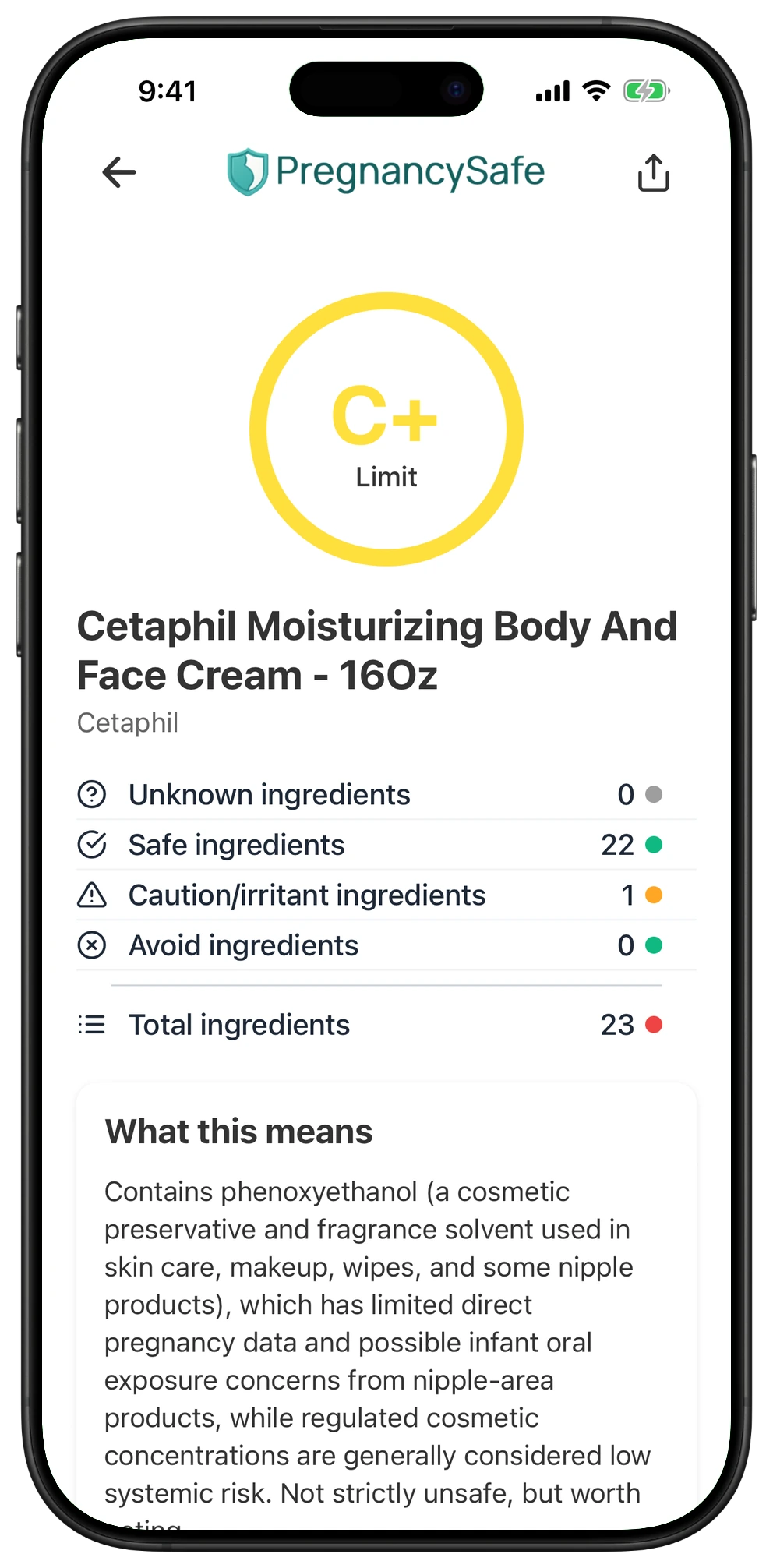
Cetaphil Moisturizing Cream receives a C+ pregnancy grade: a cautious choice, not an automatic avoid for ordinary topical use. The main caution is phenoxyethanol’s limited direct pregnancy evidence, while propylene glycol and topical vitamin E are rated likely safe at normal cosmetic exposure levels.
You can use this, but maybe don't make it your everyday go to. Not the end of the world if you've used it. Consult your OBGYN or midwife if you have concerns.
Pregnancy Safe is 100% independent and research driven. No companies pay to promote or sponsor products.
Stress Less This Pregnancy
Check your moisturizer in the app

What Ingredients Are in Cetaphil Moisturizing Cream?
Cetaphil Moisturizing Cream has 23 ingredients. We flagged 1 ingredient to use with caution.
CAUTION
Phenoxyethanol is a preservative commonly used in cosmetics and skincare products to prevent microbial growth and extend shelf life. Phenoxyethanol warrants caution because direct pregnancy data are limited, although regulated topical concentrations are generally low systemic risk and nursing related ingestion is a separate exposure.
propylene glycol
LIKELY SAFE
Propylene glycol is a colorless, odorless, and tasteless synthetic liquid commonly used as a solvent, humectant, and carrier in food, pharmaceuticals, and cosmetic products. Propylene glycol is low concern during pregnancy at normal cosmetic amounts on intact skin; high dose or repeated medication exposure is a separate concern.
tocopheryl acetate
LIKELY SAFE
Tocopheryl acetate is a stable, esterified form of vitamin E commonly used in skincare products for its antioxidant and moisturizing properties. Tocopheryl acetate is low concern in ordinary topical pregnancy use because systemic exposure is expected to be minimal, unlike high dose oral vitamin E supplementation.
citric acid
SAFE
Citric acid is a natural organic acid commonly used as a preservative and flavor enhancer in food and beverages. Citric acid is generally compatible with pregnancy in ordinary topical cosmetics, although direct pregnancy studies are lacking and stronger acidic formulations may irritate.
dimethicone
SAFE
Dimethicone is a silicone based polymer commonly used in skincare and cosmetic products to provide a smooth, silky feel and create a protective barrier on the skin. Dimethicone has very low expected absorption during normal topical use in pregnancy, although direct human pregnancy data remain limited.
glycerin
SAFE
Glycerin is a colorless, odorless, and sweet tasting humectant commonly used in skincare products to attract and retain moisture in the skin. Glycerin is compatible with ordinary topical use during pregnancy, with low expected pregnancy exposure from cosmetics.
SAFE
Niacinamide is a versatile skincare ingredient known for its ability to improve skin elasticity, enhance the barrier function, and reduce the appearance of blemishes and uneven skin tone. Niacinamide is generally considered safe for normal topical use during pregnancy, a different exposure from high dose oral vitamin B3 supplements.
water
SAFE
Water is a clear, tasteless, and essential liquid that sustains all known forms of life. Water in an ordinarily used topical cream is not a pregnancy concern, although the finished product’s other ingredients and microbial quality still matter.
acrylates c10 30 alkyl acrylate crosspolymer
SAFE
This ingredient is unflagged in this topical formula, but an individual pregnancy safety assessment is not available.
benzyl alcohol
SAFE
Benzyl alcohol is a colorless, aromatic alcohol commonly used as a preservative and solvent in cosmetics and pharmaceuticals. Benzyl alcohol is unflagged in this topical formula, which does not establish that it has been individually reviewed for pregnancy safety.
carbomer
SAFE
Carbomer is a synthetic, water soluble polymer used as a thickening, stabilizing, and emulsifying agent in cosmetic and pharmaceutical formulations. Carbomer is unflagged in this moisturizer, but its thickening role alone does not establish pregnancy safety.
cetyl alcohol
SAFE
Cetyl alcohol is a fatty alcohol commonly used as an emollient, thickener, and emulsifier in skincare and cosmetic products. Cetyl alcohol is an unflagged fatty alcohol in this formula, without an individual pregnancy specific assessment.
dicaprylyl ether
SAFE
Dicaprylyl ether is a lightweight, emollient ester used in skincare and cosmetic formulations to enhance spreadability and provide a silky, non greasy feel. Dicaprylyl ether is unflagged in this topical formula, but pregnancy specific safety evidence is not established here.
dimethiconol
SAFE
Dimethiconol is a silicone based polymer used in skincare and haircare products to provide smoothness, shine, and a protective, conditioning barrier. Dimethiconol is unflagged in this cream, but an individual pregnancy assessment is not available and dimethicone’s evidence should not automatically be assigned to it.
disodium edta
SAFE
Disodium EDTA is a chelating agent commonly used in cosmetics and food products to bind metal ions and improve stability. Disodium EDTA is unflagged in this topical formula, rather than individually established as safe during pregnancy.
glyceryl stearate
SAFE
Glyceryl stearate is a moisturizing and emulsifying agent derived from glycerin and stearic acid, commonly used in skincare products to help blend oil and water based ingredients. Glyceryl stearate is unflagged in this moisturizer, but its moisturizing and emulsifying functions do not establish pregnancy safety.
helianthus annuus seed oil
SAFE
Helianthus annuus seed oil is a nourishing, lightweight oil derived from sunflower seeds, commonly used in skincare and cooking for its moisturizing and antioxidant properties. Sunflower seed oil is unflagged in this topical formula, but its plant origin does not substitute for pregnancy specific safety evidence.
panthenol
SAFE
Panthenol is a moisturizing and soothing ingredient commonly used in skincare and haircare products to improve hydration and promote healthy skin and hair. Panthenol is unflagged in this moisturizer, but an individual pregnancy specific safety assessment is not available.
pantolactone
SAFE
Pantolactone is a chemical compound used as an intermediate in the synthesis of vitamin B5 (pantothenic acid) and related pharmaceuticals. Pantolactone is unflagged in this formula, but its relationship to vitamin B5 production does not establish pregnancy safety.
peg 30 stearate
SAFE
PEG 30 stearate is unflagged in this topical formula, with no individual pregnancy safety assessment available.
petrolatum
SAFE
Petrolatum is a semi solid, occlusive substance derived from petroleum that is commonly used to moisturize and protect the skin. Petrolatum is unflagged in this cream, but its skin protecting role is not itself a pregnancy specific safety assessment.
prunus amygdalus dulcis oil
SAFE
Prunus amygdalus dulcis oil is a nourishing, lightweight oil derived from sweet almonds, commonly used in skincare for its moisturizing and soothing properties. Sweet almond oil is unflagged in this topical formula, but its plant origin alone does not establish pregnancy safety.
sodium hydroxide
SAFE
Sodium hydroxide is a highly caustic, white, solid compound commonly used as a strong base in cleaning, manufacturing, and chemical processes. Sodium hydroxide is unflagged here, and its concentrated chemical hazards do not establish pregnancy risk from the finished moisturizer.
Answering Your Questions
How much Cetaphil Moisturizing Cream is safe during pregnancy?
If you choose to use it, apply enough to lightly cover the dry skin you want to moisturize, following your package directions. This assessment concerns ordinary topical amounts on intact skin, not unusually extensive application, heavily damaged skin, or use under airtight coverings.
Can you use Cetaphil Moisturizing Cream daily while pregnant?
Follow your package directions and reapply according to dryness rather than adding unnecessary layers. No pregnancy specific application frequency has been established for this formula; stop if irritation develops.
Why does Cetaphil Moisturizing Cream receive a C+ pregnancy grade?
The C+ comes from ingredient based scoring, with phenoxyethanol rated caution and propylene glycol and tocopheryl acetate rated likely safe. Phenoxyethanol has limited direct pregnancy data, although regulated cosmetic concentrations are generally considered low systemic risk. The grade is not evidence that normal use of this cream harms a pregnancy, and unflagged ingredients are not necessarily individually reviewed for pregnancy safety.
Can I use Cetaphil Moisturizing Cream while breastfeeding?
Ordinary skin application is different from a baby swallowing cream during nursing. Avoid applying it to your nipples or areas your baby may lick; phenoxyethanol related nursing concerns involve infant oral exposure from nipple products, not proof of harm from ordinary maternal skin use. Choose a product specifically intended for nipple care if you need one.
What moisturizer should I choose instead during pregnancy?
If you want to avoid this formula’s main caution, look for a moisturizer without phenoxyethanol and check the complete ingredient assessment rather than relying on the brand. Glycerin and dimethicone are moisturizing ingredients with reassuring assessments for ordinary topical use, but their presence alone does not establish the safety of an entire formula.
Can I use this cream on both my face and body during pregnancy?
This is a face and body moisturizer, and the C+ assessment applies to ordinary leave on use on intact skin. Use it according to the label; unusually extensive application or use on extensively damaged skin goes beyond the exposure conditions supporting the reassuring ingredient assessments.
Should I avoid this cream because it contains phenoxyethanol?
Phenoxyethanol is a caution ingredient here, not an avoid ingredient. Cosmetic safety reviews consider regulated concentrations acceptable, but direct human pregnancy evidence is limited. High dose animal findings and infant ingestion concerns should not be treated as evidence that ordinary topical moisturizer use causes the same effects.
Are niacinamide and vitamin E in this cream pregnancy concerns?
Niacinamide is rated safe for normal topical cosmetic use, while tocopheryl acetate, a vitamin E ingredient, is rated likely safe because expected systemic exposure is minimal and direct pregnancy studies are limited. High dose oral supplement concerns do not translate directly to the amounts you apply in a moisturizer.
What Are Pregnancy Safe Alternatives to Cetaphil Moisturizing Cream?
Here are some solid alternatives. Everything below has an A or B grade, meaning no flagged ingredients in our database.
| Grade | Product | Brand | Type |
|---|---|---|---|
| B+ | Byoma Moisturizing Rich Cream | Byoma | moisturizer |
| A | Byoma Gel Cream Moisturizer | Byoma | moisturizer |
| A | Daily Moisturizing Cream | Aveeno | moisturizer |
| A | Byoma Mini Gel Cream Moisturizer 0.68 Fl Oz | Byoma | moisturizer |
Are Other Cetaphil Products Safe During Pregnancy?
We looked at 14 other Cetaphil products. 8 are pregnancy safe (A or B grade), while 6 need a closer look.
| Grade | Product | Type |
|---|---|---|
| B+ | Cetaphil Gentle Skin Cleanser | skin cleanser |
| B+ | Cetaphil Gentle Skin Cleanser - Travel Size | skin cleanser |
| C+ | Cetaphil Daily Facial Cleanser | facial cleanser |
| C+ | Cetaphil Ultra Gentle Sensitive Body Wash | body wash |
How Does Cetaphil Moisturizing Cream Compare to Other Moisturizers?
We graded 981 Moisturizers for pregnancy safety. Here's how they stack up:
Cetaphil Moisturizing Cream earns a C+ grade, placing it among the majority of Moisturizers. Only 3% of products in this category get an A grade, so it pays to choose carefully.
How Do We Score Products for Pregnancy Safety?
We analyze each product's ingredients and category to flag known risks and provide cautionary notices for general category safety concerns.
A - Safe
Excellent choice! All ingredients are considered safe during pregnancy.
What to do: Use with confidence.
B - Likely Safe
Pretty much safe with very minimal risk. Some ingredients may have limited pregnancy studies, but no significant safety concerns have been identified.
What to do: Use with confidence.
C - Limit
Contains ingredients with some pregnancy considerations. Research shows these ingredients may have limited safety data, potential for minor hormonal effects, or require caution based on animal studies.
What to do: Use sparingly and consider safer alternatives when available.
D - Caution
Similar to C grade but contains multiple cautionary ingredients. The combination increases overall concern.
What to do: Try to avoid if that makes you feel better. If you've already used it, no need to panic.
F - Avoid
Contains an ingredient Pregnancy Safe recommends avoiding during pregnancy. This may reflect an established risk or a precaution based on limited evidence; check the ingredient guidance and exposure context.
What to do: Do not use during pregnancy. If you've already used it, don't worry - contact your OBGYN if concerned.
People Also Checked
References
- https://health.ec.europa.eu/system/files/2021-08/sccs_o_195_0.pdf
- https://ec.europa.eu/growth/tools-databases/cosing/details/28157
- https://journals.sagepub.com/doi/10.3109/10915819009078737
- https://link.springer.com/article/10.1007/s00204-024-03938-5
- https://www.sfda.gov.sa/en/warnings/1156
- https://www.industrialchemicals.gov.au/sites/default/files/Ethanol%2C%202-phenoxy-_Human%20health%20tier%20II%20assessment.pdf
- https://hero.epa.gov/reference/2857875
- https://books.publisso.de/sites/default/files/documents/series/mak/dam/Vol2019/Iss1/Alt006/mb12299kske6319_w.pdf
- https://www.ecfr.gov/current/title-21/part-184/section-184.1666
- https://pmc.ncbi.nlm.nih.gov/articles/PMC7009459/
- https://pubmed.ncbi.nlm.nih.gov/15995735/
- https://pubmed.ncbi.nlm.nih.gov/23064775/
- https://www.ema.europa.eu/en/documents/scientific-guideline/questions-and-answers-propylene-glycol-used-excipient-medicinal-products-human-use_en.pdf
- https://pmc.ncbi.nlm.nih.gov/articles/PMC11867916/
- https://pubmed.ncbi.nlm.nih.gov/29281181/
- https://pubmed.ncbi.nlm.nih.gov/40234020/
- https://cdnservices.industrialchemicals.gov.au/statements/EVA00103%20-%20Evaluation%20Statement%20-%2026%20June%202023.pdf
- https://journals.sagepub.com/doi/10.1177/1091581818794455
- https://pmc.ncbi.nlm.nih.gov/articles/PMC4154592/
- https://pubmed.ncbi.nlm.nih.gov/15868062/
- https://mothertobaby.org/fact-sheets/vitamin-e/
- https://www.cir-safety.org/sites/default/files/citric032012FR.pdf
- https://www.canada.ca/en/health-canada/services/consumer-product-safety/cosmetics/cosmetic-ingredient-hotlist-prohibited-restricted-ingredients/hotlist.html
- https://www.fda.gov/cosmetics/cosmetic-ingredients/alpha-hydroxy-acids
- https://pubmed.ncbi.nlm.nih.gov/35309882/
- https://pubmed.ncbi.nlm.nih.gov/16040403/
- https://pubmed.ncbi.nlm.nih.gov/9256916/
- https://www.medicinesinpregnancy.org/leaflets-a-z/dimethicone/
- https://uktis.org/monographs/use-of-head-lice-treatments-in-pregnancy/
- https://www.cir-safety.org/sites/default/files/FAR_Methicones_032022.pdf
- https://www.medicines.org.uk/emc/product/4860/smpc
- https://www.sps.nhs.uk/articles/treating-lice-during-breastfeeding/
- https://mothertobaby.org/fact-sheets/lice-scabies-pregnancy/
- https://www.ecfr.gov/current/title-21/chapter-I/subchapter-D/part-347/subpart-B/section-347.10
- https://www.hfpappexternal.fda.gov/scripts/fdcc/index.cfm?id=GLYCERIN&set=FoodSubstances
- https://pubmed.ncbi.nlm.nih.gov/31840548/
- https://pmc.ncbi.nlm.nih.gov/articles/PMC7009851/
- https://www.medicinesinpregnancy.org/leaflets-a-z/glycerin-suppositories/
- https://mothertobaby.org/pregnancy-breastfeeding-exposures/cosmetics/
- https://pubmed.ncbi.nlm.nih.gov/41944999/
- https://jintegrativederm.org/doi/10.64550/joid.97jp5737
- https://pubmed.ncbi.nlm.nih.gov/16596767/
- https://ods.od.nih.gov/factsheets/Niacin-HealthProfessional/
- https://www.fda.gov/cosmetics/resources-consumers-cosmetics/cosmetics-pregnancy
- https://www.aad.org/public/everyday-care/skin-care-secrets/routine/pregnancy-skin-care
- https://pubmed.ncbi.nlm.nih.gov/25399625/
- https://www.personalcarecouncil.org/wp-content/uploads/2022/03/INCINomenclatureConventionsReferenceInformation2022_v1.pdf
- https://www.seslhd.health.nsw.gov.au/sites/default/files/groups/Royal_Hospital_for_Women/Mothersafe/documents/skinhaircareandcosmetictreatmentsapril2021.pdf
- https://www.nhs.uk/pregnancy/complications/itching-and-intrahepatic-cholestasis/
- https://www.fda.gov/cosmetics/cosmetics-guidance-documents/good-manufacturing-practice-gmp-guidelinesinspection-checklist-cosmetics
- https://www.fda.gov/cosmetics/potential-contaminants-cosmetics/microbiological-safety-and-cosmetics
- https://pubmed.ncbi.nlm.nih.gov/25153208/