Is Calamari Safe During Pregnancy? (Updated 2026 Guide)
Updated September 9, 2026
The Answer
Yes you can eat calamari during pregnancy when it is thoroughly cooked and safely handled, as part of a varied lower mercury seafood diet. Cooking and storage matter more than an ingredient grade for preventing foodborne illness.
Squid is a lower mercury seafood option; the main pregnancy precaution is avoiding raw or undercooked calamari and preventing contamination during preparation and storage. Golden breading does not prove the squid inside is cooked. Sodium aluminum phosphate is flagged in one catalog product, but concerns about higher chronic aluminum exposure do not establish harm from an occasional serving of breaded calamari.
Pregnancy Safe is 100% independent and research driven. No companies pay to promote or sponsor products.
Stress Less This Pregnancy
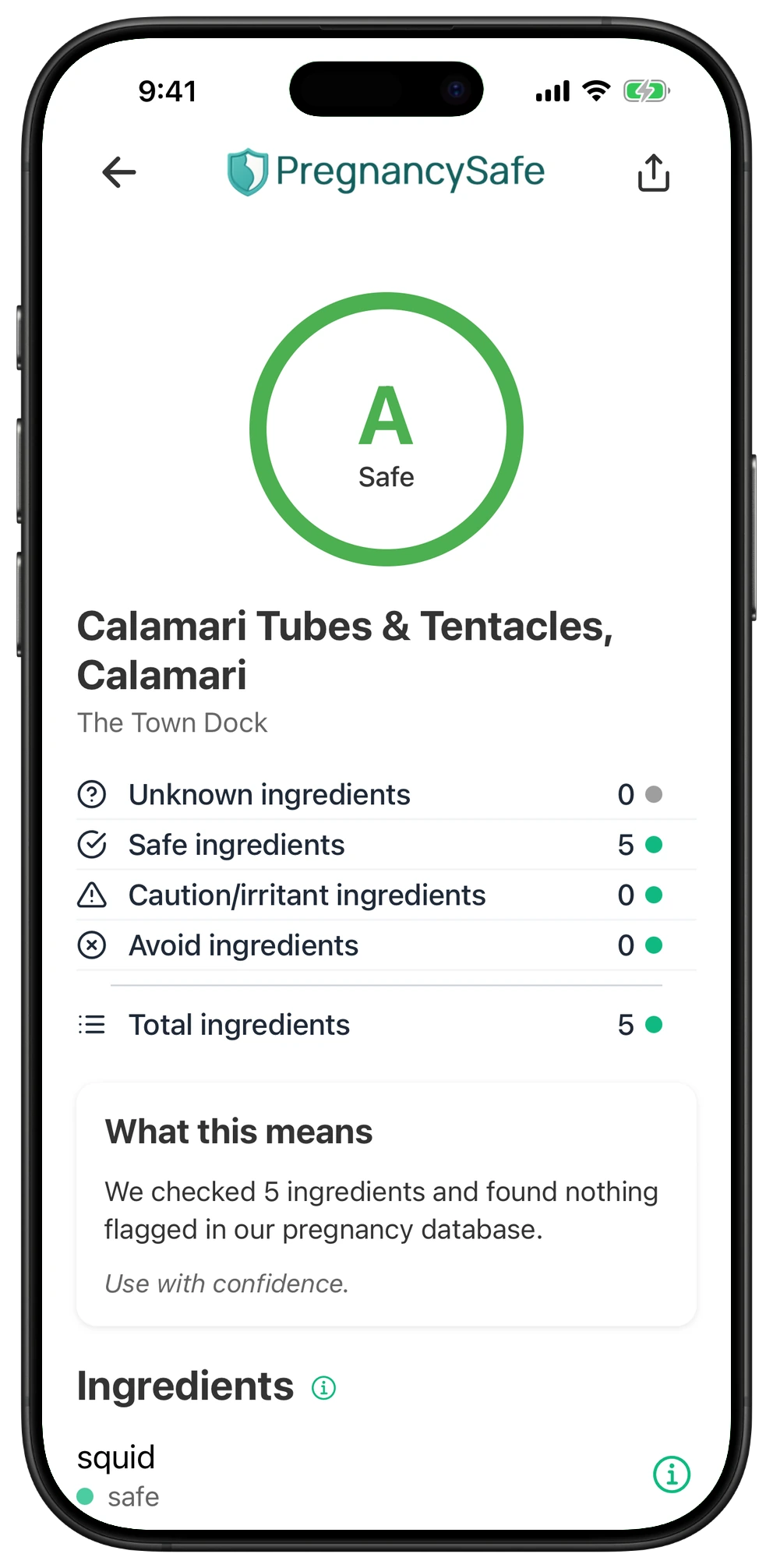
Check your exact calamari in the app

✓ What's Safe
- • Choose thoroughly cooked calamari, whether grilled, baked or fried; check the center rather than relying on breading color.
- • Read frozen package storage and cooking instructions, including whether the calamari is raw or already cooked.
- • Choose a seller or restaurant that keeps seafood properly chilled and can confirm your calamari will be cooked through.
- • Keep raw squid and its utensils separate from cooked food, and refrigerate cooked calamari promptly.
- • Include calamari alongside other lower mercury seafood rather than making it your only seafood choice.
- • Compare breading, sodium and allergen labels if these affect your dietary needs; plain squid and breaded rings are different formulations.
✗ What to Avoid
- • Avoid raw or undercooked squid during pregnancy.
- • Do not assume a crisp, golden coating means the calamari inside is fully cooked.
- • Avoid treating frozen or pre breaded calamari as ready to eat unless the label explicitly identifies it that way.
- • Avoid calamari that has not been kept properly chilled before cooking or refrigerated promptly afterward.
- • Do not put cooked calamari back on a plate that held raw squid without washing it first.
- • Avoid squid if you have a known squid allergy, and check breading for allergens such as wheat or egg.
Most Common Ingredients in Calamari Products
We analyzed 9 calamari products. Here are the most common ingredients, ranked by how often they appear:
Ingredients to Watch Out For in Calamari
These are the most common flagged ingredients across 9 calamari products we analyzed.
sodium aluminum phosphate
Caution
Sodium aluminum phosphate is a leavening agent commonly used in baked goods to produce carbon dioxide and help the dough or batter rise.
Has developmental concern at higher chronic exposures, but regulated vaccine adjuvants and occasional clinician directed antacid use should be considered separately.
Flagged in 1 of 9 products (11%)
Calamari Products We've Analyzed
Our catalog contains ratings for 9 calamari products. These are database grades, not independent safety certifications.
Catalog ingredient grades are not pregnancy safety certifications, a check of current labels, or measurements of caffeine, pathogens or handling. Not all candidates were independently reviewed.
Pregnancy Safe Calamari Products
Popular options from our catalog, prioritizing A and B ingredient grades, with C grade options used to fill remaining places. Within each group, products are ordered by searches in Pregnancy Safe, not retail sales. Read the cautions and guidance above; grades do not verify a complete current label or guarantee pregnancy safety.
| Grade | Product | Brand |
|---|---|---|
| B+ | Wild Panko Galamari Rings, Wild Panko Calamari | Pacific Seafoods |
| B+ | Wild Caught Calamari In An Oven Crispy Breading, Calamari | — |
| A | Calamari | Fisherman'S Pride |
| A | Calamari Rings | — |
| A | Calamari | — |
Your Questions Answered
Can I eat calamari while pregnant?
Yes, thoroughly cooked and safely handled calamari can fit a pregnancy diet. Squid is a lower mercury seafood option, so choose it as part of a variety of lower mercury seafood. Avoid raw or undercooked preparations, regardless of whether they are fresh or previously frozen.
Is fried calamari high in mercury?
Squid is considered a lower mercury seafood option, including when it is served as fried calamari. Frying is not what makes it lower in mercury, and it does not replace the need to cook the squid through. Breading, oil and sodium are separate dietary considerations, not evidence that fried calamari causes fetal harm.
How often can I eat calamari during pregnancy?
Include calamari within pregnancy seafood guidance rather than treating it as an unlimited extra. Choose a variety of lower mercury seafood across the week instead of eating only squid. Portion size and your other seafood meals matter when deciding how often to have it.
Can I eat frozen or breaded calamari during pregnancy?
Yes, provided it is stored as directed and thoroughly cooked before eating. Frozen rings may contain raw squid even when they are breaded, so read the exact package instructions. A browned coating alone cannot establish that the center is cooked.
Does sodium aluminum phosphate make breaded calamari unsafe?
Sodium aluminum phosphate is a leavening agent that helps batter or breading rise. Its caution flag relates to aluminum evidence involving higher chronic exposures; that evidence does not establish pregnancy harm from an occasional food serving. If you prefer to avoid the additive, check the current ingredient label or choose unbreaded squid, while still prioritizing thorough cooking and safe handling.
Does an A ingredient grade mean calamari is safe to eat?
No an ingredient grade cannot tell you whether seafood contains pathogens, has been stored correctly or is cooked through. Our catalog contains nine calamari products: five graded A, three B+ and one C+. These are ingredient grades, not pregnancy safety certifications or confirmation that every current label was independently checked.
How to Interpret These Ratings
Our ingredient and category rules generate letter grades from the information recorded in the catalog. Missing ingredients and broad category assignments can affect the result. These grades do not measure your dose, confirm a complete current label, or test a product for contamination.
A high grade is not a guarantee of pregnancy safety. A low grade is not, by itself, proof of harm from every use. Follow the product-specific guidance above, check the actual package, and ask your prenatal clinician about supplements, treatment decisions or uncertain exposures.
People Also Checked
References
- https://www.fda.gov/food/consumers/advice-about-eating-fish
- https://www.fda.gov/food/people-risk-foodborne-illness/cooking-food-safety-moms-be
- https://wwwn.cdc.gov/TSP/ToxProfiles/ToxProfiles.aspx?id=191&tid=34
- https://pmc.ncbi.nlm.nih.gov/articles/PMC9681673/
- https://pmc.ncbi.nlm.nih.gov/articles/PMC10809980/
- https://www.cdc.gov/vaccine-safety/about/adjuvants.html
- https://www.fda.gov/vaccines-blood-biologics/safety-availability-biologics/common-ingredients-fda-approved-vaccines
- https://www.acog.org/womens-health/infographics/vaccines-during-pregnancy