Is Alkaline Water Safe During Pregnancy? (Updated 2026 Guide)
Updated September 9, 2026
The Answer
Plain alkaline water that is safe to drink can be an ordinary beverage during pregnancy, but a higher pH offers no established pregnancy benefit. Choose by water quality and actual ingredients, not alkalizing claims or an A grade alone.
The main considerations are whether the water is potable, how it is stored, and what has been added not simply its pH. Ordinary electrolyte additions are not clinical rehydration treatment; discuss unusual mineral intake with your clinician if you have kidney disease or medication related restrictions. Ingredient concerns depend on dose and form: concentrated bitter orange supplements differ from normal flavor amounts, and vanadium supplementation differs from trace background exposure.
Pregnancy Safe is 100% independent and research driven. No companies pay to promote or sponsor products.
Stress Less This Pregnancy
Check your exact alkaline water in the app

✓ What's Safe
- • Choose water from a source suitable for drinking; an alkaline label does not establish water quality.
- • Prefer plain drinking water over supplement style alkaline drops, powders, or botanical blends.
- • Read the exact current label for added minerals, vitamins, and extracts rather than relying on the product name.
- • Follow the bottle’s storage and handling instructions, including any directions after opening.
- • Check mineral amounts per serving and your usual daily intake with your clinician if kidney disease or medication restrictions affect your choices.
✗ What to Avoid
- • Avoid using a high pH number as evidence that water is purer or better for pregnancy.
- • Avoid vanadium supplementation; a trace background amount is not the same exposure as a supplemental dose.
- • Avoid concentrated bitter orange or synephrine supplements, particularly stimulant combinations; bitter orange oil used in normal flavor amounts is a different exposure.
- • Do not replace prescribed rehydration treatment with alkaline water just because it contains electrolytes.
- • Avoid drinking extra quantities or adding alkaline concentrates to pursue claims about alkalizing your blood or improving pregnancy outcomes.
Most Common Ingredients in Alkaline Water Products
We analyzed 50 alkaline water products. Here are the most common ingredients, ranked by how often they appear:
Ingredients to Watch Out For in Alkaline Water
These are the most common flagged ingredients across 50 alkaline water products we analyzed.
bitter orange oil
Caution
Bitter orange oil is a fragrant essential oil extracted from the peel of the bitter orange fruit, known for its citrus aroma and potential digestive and mood enhancing properties.
Is low concern at normal food or flavor amounts but concentrated synephrine supplements have limited pregnancy data and may add cardiovascular stimulant effects, especially with caffeine.
Flagged in 1 of 50 products (2%)
vanadium
Avoid
Vanadium is a transition metal known for its strength and corrosion resistance, often used in steel alloys and industrial applications.
Should be avoided as a supplement or avoidable industrial exposure because pregnancy benefits are unproven and human and animal data raise fetal growth and developmental concerns.
Flagged in 1 of 50 products (2%)
Alkaline Water Products We've Analyzed
Our catalog contains ratings for 50 alkaline water products. These are database grades, not independent safety certifications.
Grades are ingredient scores, not clinical verdicts or measurements of pathogens, dose, preparation or current package contents. Cohorts include unreviewed catalog records and counts are not independently verified safe-product totals.
Pregnancy Safe Alkaline Water Products
Popular options from our catalog, prioritizing A and B ingredient grades, with C grade options used to fill remaining places. Within each group, products are ordered by searches in Pregnancy Safe, not retail sales. Read the cautions and guidance above; grades do not verify a complete current label or guarantee pregnancy safety.
| Grade | Product | Brand |
|---|---|---|
| A | 7 Select Alkaline Water | 7-Select |
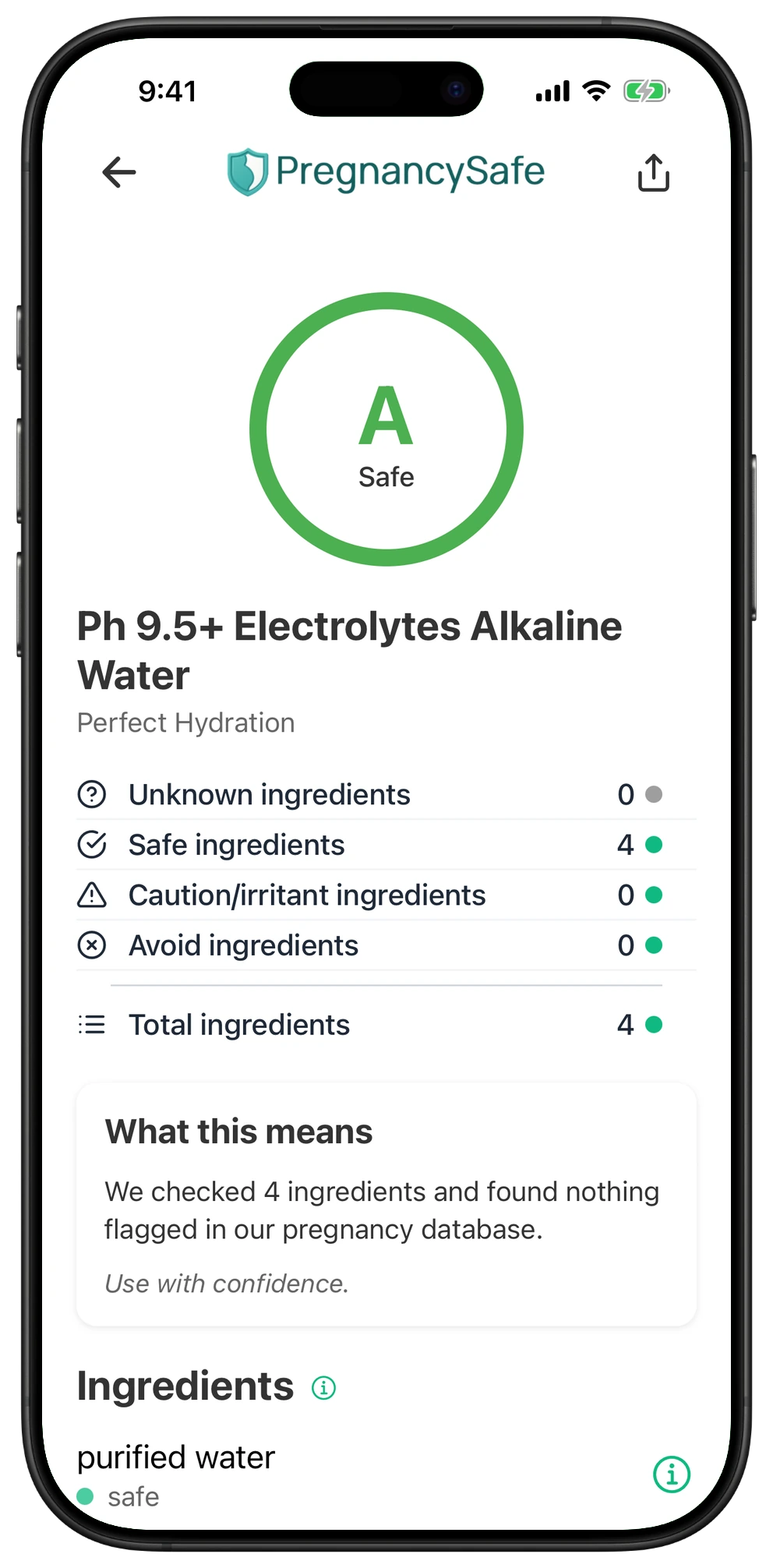
| A | Ph 9.5+ Electrolytes Alkaline Water | Perfect Hydration |
| B+ | Alkalete | Yoli |
| A | Alkaline Water | Kroger, The Kroger Co. |
| A | 9.5+ Ph Alkaline Water | Crystal Lake |
Your Questions Answered
Is alkaline water good for you when pregnant?
Potable alkaline water can serve as an ordinary drink during pregnancy. There is no established pregnancy benefit from choosing a higher pH or trying to alkalize your blood. Focus on water quality, storage, and added ingredients rather than paying extra for health claims.
What is the best water to drink while pregnant?
Choose water that is suitable for drinking from a reliable source and stored as directed. You do not need an alkaline label or a particular high pH for pregnancy hydration. Plain water is a practical choice because it avoids the added complexity of supplement style ingredients.
Does alkaline water help with morning sickness?
A specific benefit from alkaline water for morning sickness is not established. If you prefer its taste, you can choose a potable plain version as a beverage, but do not treat its pH as a treatment. Added electrolytes do not make it equivalent to clinical rehydration treatment. Ask your maternity team for advice if vomiting makes it difficult to keep fluids down.
Are the minerals added to alkaline water a concern?
Common ingredients include potassium bicarbonate, magnesium salts, and calcium chloride. Their names alone do not establish a pregnancy risk; the amount you consume and your medical circumstances matter. Discuss unusual mineral intake with your clinician if you have kidney disease or medication related restrictions. Do not assume an electrolyte label means the drink meets treatment needs.
Should I avoid alkaline water containing bitter orange oil or vanadium?
The form and amount matter more than the ingredient name alone. Bitter orange in normal food or flavor amounts is low concern, although direct pregnancy data are limited; concentrated bitter orange or synephrine supplements warrant caution, especially with caffeine. Avoid vanadium supplementation, which has no established pregnancy benefit. Evidence about higher vanadium exposures does not establish harm from an unspecified trace amount in drinking water.
Does an A grade mean an alkaline water is proven safe during pregnancy?
No. Our catalog contains 50 products: 46 graded A, three graded B+, and one graded F. These are ingredient scores, not clinical verdicts or measurements of water quality, dose, storage, or current package contents. The counts include records that have not been independently label reviewed, so check your exact package rather than treating either a high or low grade as a complete safety assessment.
How to Interpret These Ratings
Our ingredient and category rules generate letter grades from the information recorded in the catalog. Missing ingredients and broad category assignments can affect the result. These grades do not measure your dose, confirm a complete current label, or test a product for contamination.
A high grade is not a guarantee of pregnancy safety. A low grade is not, by itself, proof of harm from every use. Follow the product-specific guidance above, check the actual package, and ask your prenatal clinician about supplements, treatment decisions or uncertain exposures.
People Also Checked
References
- https://ods.od.nih.gov/factsheets/Pregnancy-HealthProfessional/
- https://www.nhs.uk/pregnancy/keeping-well/foods-to-avoid/
- https://www.nccih.nih.gov/health/bitter-orange
- https://www.ncbi.nlm.nih.gov/books/NBK501892/
- https://pubmed.ncbi.nlm.nih.gov/21594979/
- https://pubmed.ncbi.nlm.nih.gov/28058460/
- https://www.bfr.bund.de/cm/349/health-assessment-of-sports-and-weight-loss-products-containing-synephrine-and-caffeine.pdf
- https://www.rivm.nl/bibliotheek/rapporten/2017-0069.pdf
- https://www.canada.ca/en/health-canada/services/drugs-health-products/natural-non-prescription/legislation-guidelines/guidance-documents/notice-use-synephrine.html
- https://www.ncbi.nlm.nih.gov/books/NBK592340/
- https://www.ncbi.nlm.nih.gov/books/NBK592350/table/ch1.tab6/?report=objectonly
- https://pubmed.ncbi.nlm.nih.gov/30318100/
- https://pubmed.ncbi.nlm.nih.gov/27381766/
- https://pubmed.ncbi.nlm.nih.gov/40174741/
- https://pubmed.ncbi.nlm.nih.gov/8738553/