Cramping During Pregnancy: Early Cramps & When to Call
The Answer
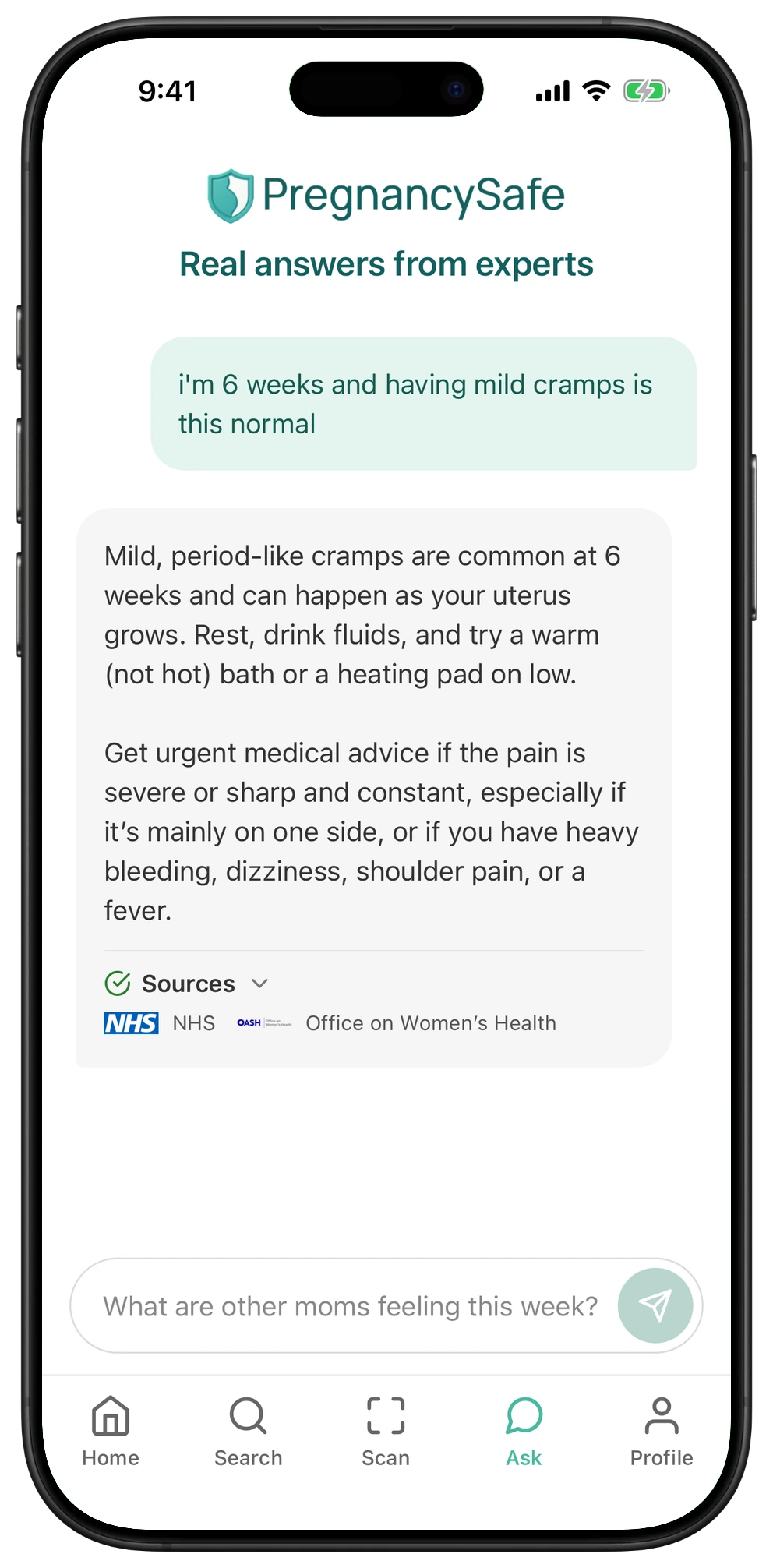
Abdominal or pelvic cramps can occur in early pregnancy without a complication, but seek medical advice rather than assuming they are harmless.
Seek immediate medical care for severe abdominal pain including sudden or worsening pain heavy bleeding, shoulder pain, dizziness, fainting, fever of 100.4°F/38°C or higher or reduced or stopped baby movement.
Call your maternity team immediately for cramps with spotting or bleeding, regular tightenings, leaking fluid, unusual discharge, back pain, or urinary changes such as painful or more frequent urination. Don't wait through these symptoms.
About 40% of women who checked in with Pregnancy Safe at week 6 reported cramping.[5] If you’ve felt cramps too, you’re not alone.
Stress Less This Pregnancy
Get personalized expert answers 24/7

What Can Cramping Feel Like in Early Pregnancy?
Pain may feel dull or sharp, including in the lower belly. Describe where and how it feels; neither establishes the cause. Ligament stretching, constipation or trapped gas can contribute to discomfort, but these possibilities aren't a diagnosis.
Early cramps don't always indicate a problem, but seek medical advice for early pregnancy pain, even without bleeding. If you're 4–6 weeks pregnant, there isn't a single start day to use as a benchmark. Week alone cannot determine the cause or safety of cramps. Don't assume cramps confirm implantation or tell you how the pregnancy is progressing. For tightenings later in pregnancy, see the contractions answer below.
How Long Do Pregnancy Cramps Last?
One episode's length is different from cramps recurring over days or weeks. There isn't one episode length or pregnancy week when cramps should end for everyone. Coming and going doesn't establish safety; stopping alone doesn't confirm either pregnancy health or loss. Note recurrence and accompanying symptoms for your care team, without delaying urgent help.
For mild pain without warning signs, try resting or changing position. Gas- or constipation related discomfort may ease after passing gas or a bowel movement. Call immediately if pain remains after 30–60 minutes of rest—a care threshold, not a normal duration. Severe pain or warning signs should not wait.
What to Tell Your Care Team
A few notes can help you explain what's happening when you contact your care team:
- Your pregnancy week and exactly where the pain is.
- How strong it feels, when it started, and how long episodes last.
- Whether it is constant, comes and goes, or follows a regular pattern.
- Any bleeding or spotting, and other symptoms, including diarrhea or digestive changes without assuming these explain the cramps.
- What you were doing beforehand and what eased or worsened the pain.
For example: “I'm 6 weeks pregnant. Mild lower belly cramps started this morning and come and go. I haven't had bleeding. Changing position helped briefly. What should I do?”
Call immediately for cramps with spotting; don't wait for a message reply. Follow the urgent care guidance above for symptoms needing immediate medical care.
Your clinician may also ask about your last period, earlier pregnancies and general health. They may recommend assessment or tests such as an ultrasound. These notes help explain your symptoms; they don't establish a diagnosis.
Cramping by Pregnancy Week
Percent of women checking in each week who reported this symptom. Weeks meeting our reporting cutoff: 3–9, 11–12. Missing weeks are not zero; this is not an individual symptom timeline.
Weeks 13–27 combined: Of the 800 who checked in with Pregnancy Safe, 80 reported cramping (10.0%).
These self selected reports aren't clinical prevalence or a safety check. No logged symptom doesn't mean no symptom.
Your Questions Answered
What if cramps start after sex or another activity?
Tell your care team when cramps began relative to the activity, how long they lasted and what else you noticed. Timing alone doesn't establish the cause. Follow the same warning sign guidance without waiting; call immediately if pain persists after 30–60 minutes of rest. Early pregnancy pain warrants medical advice even when it follows an activity.
Could cramps later in pregnancy be contractions?
Contractions involve the womb tightening and relaxing. Labor contractions tend to grow longer, stronger and more frequent; practice tightenings generally don't build up. These patterns aren't a way to diagnose labor yourself. Call your maternity team if you suspect labor or contractions come every five minutes or more often. Call urgently, without waiting until morning, for suspected labor before 37 weeks, waters breaking, vaginal bleeding, reduced baby movements, a contraction lasting over two minutes, or six or more contractions in ten minutes. Call emergency services for an ambulance if you think your baby is coming now and feel a strong urge to push.
What if cramps accompany digestive symptoms?
Constipation or trapped gas can contribute to discomfort, but don't assume they explain your cramps. Tell your care team about diarrhea and other accompanying symptoms, and follow the main warning sign guidance rather than assuming a digestive explanation means it's safe to wait.
References
- NHS: Stomach pain in pregnancy
- Royal College of Obstetricians and Gynaecologists: Bleeding or pain in early pregnancy
- CDC: Urgent maternal warning signs
- NHS: Signs that labor has begun
- Pregnancy Safe app check-ins.
186 of 469 women reported cramping in week 6 (39.7%). 80 of 800 women reported cramping in weeks 13–27, counted once across that span (10.0%). Production analytics snapshot: Nov 11, 2026 (UTC). Pregnancy week is estimated from the recorded due date. Each check-in profile is counted once per week or once across a combined span. Rates require at least 30 reporting and 30 not reporting. Combined spans are not directly comparable to weekly rates. Not logging a symptom does not mean it was absent. These are self-selected app reports, not prevalence in all pregnancies, individual progression, or a clinical safety assessment.