Is 8 Sheep Organics True Belly Serum Safe During Pregnancy? (Updated 2026 Guide)
Updated September 8, 2026
8 Sheep Organics True Belly Serum
8 Sheep Organics
8 Sheep Organics True Belly Serum is likely safe during pregnancy when used in normal cosmetic amounts on intact skin, with a B+ ingredient based grade. Propanediol and vitamin E are rated likely safe for this topical use, with no ingredients flagged for caution or avoidance; however, some ingredients lack a pregnancy specific review.
Go ahead and use it. Nothing to worry about here.
Pregnancy Safe is 100% independent and research driven. No companies pay to promote or sponsor products.
Stress Less This Pregnancy
Check your serum in the app

What Ingredients Are in 8 Sheep Organics True Belly Serum?
8 Sheep Organics True Belly Serum has 15 ingredients. All 15 ingredients are considered safe or likely safe for pregnancy.
propanediol
LIKELY SAFE
Propanediol is a versatile, plant derived humectant and solvent commonly used in skincare and cosmetic formulations to retain moisture and improve product texture. Propanediol is rated likely safe for normal cosmetic use on intact skin, while the linked propylene glycol evidence distinguishes this exposure from high dose or repeated medication exposure.
vitamin e
LIKELY SAFE
Vitamin E is a powerful antioxidant that helps protect the skin and body from oxidative damage and supports overall health. Vitamin E is low concern during pregnancy in normal topical amounts with minimal systemic exposure expected, and high dose oral supplement concerns do not apply directly.
glycerin
SAFE
Glycerin is a colorless, odorless, and sweet tasting humectant commonly used in skincare products to attract and retain moisture in the skin. Glycerin is generally compatible with pregnancy in normal topical cosmetic amounts, with low systemic exposure expected.
hydrolyzed hyaluronic acid
SAFE
Hydrolyzed hyaluronic acid is a smaller, more easily absorbed form of hyaluronic acid that helps hydrate and plump the skin. Hydrolyzed hyaluronic acid is considered compatible with pregnancy in normal topical moisturizing use, although direct pregnancy outcome studies are limited.
potassium sorbate
SAFE
Potassium sorbate is a widely used food preservative that inhibits mold, yeast, and bacteria growth to extend shelf life. Potassium sorbate is rated safe here, but the supporting topical pregnancy assessment concerns potassium citrate and gluconate rather than sorbate specifically.
sodium acetylated hyaluronate
SAFE
Sodium acetylated hyaluronate is a modified form of hyaluronic acid that enhances skin hydration and moisture retention with improved stability and absorption. Sodium acetylated hyaluronate is considered compatible with pregnancy in normal topical cosmetic use, based on hyaluronic acid evidence with limited direct pregnancy data.
sodium hyaluronate
SAFE
Sodium hyaluronate is a powerful hydrating agent that helps retain moisture in the skin, promoting plumpness and elasticity. Sodium hyaluronate is generally compatible with pregnancy in normal topical moisturizing use because systemic exposure is expected to be low.
water
SAFE
Water is a clear, tasteless, and essential liquid that sustains all known forms of life. Water used as the serum's topical base is not a pregnancy concern, although proper preservation and the other ingredients still matter.
avocado oil
SAFE
Avocado oil is a nutritious, heart healthy oil rich in monounsaturated fats, commonly used for cooking, skincare, and salad dressings. Avocado oil is unflagged in this topical serum, but that does not establish pregnancy safety through an ingredient specific review.
centella asiatica
SAFE
Centella asiatica is unflagged in this topical serum, but a pregnancy specific safety conclusion is not established by its unflagged status.
panthenol
SAFE
Panthenol is a moisturizing and soothing ingredient commonly used in skincare and haircare products to improve hydration and promote healthy skin and hair. Panthenol helps moisturize skin and is unflagged in this serum, but its pregnancy specific topical safety has not been established by an ingredient review here.
pullulan
SAFE
Pullulan is a water soluble polysaccharide produced by the fungus Aureobasidium pullulans, commonly used as a film forming agent, thickener, and edible coating in food and pharmaceutical applications. Pullulan is an unflagged film forming ingredient in this topical serum, not an ingredient with established pregnancy specific safety evidence here.
sclerotium gum
SAFE
Sclerotium gum is a natural thickening and stabilizing agent derived from a fermented fungus, commonly used in cosmetics and food products. Sclerotium gum is an unflagged thickener in this topical serum, but that status does not confirm pregnancy specific safety.
sodium dehydroacetate
SAFE
Sodium dehydroacetate is a preservative commonly used in cosmetics and personal care products to inhibit microbial growth and extend shelf life. Sodium dehydroacetate is an unflagged preservative in this serum, but an ingredient specific pregnancy safety review is not available here.
xanthan gum
SAFE
Xanthan gum is a natural thickening and stabilizing agent derived from fermented sugars, commonly used in gluten free baking and food processing. Xanthan gum is an unflagged thickener in this topical serum, but its unflagged status is not a pregnancy specific safety assessment.
Answering Your Questions
How much 8 Sheep Organics True Belly Serum is safe during pregnancy?
Use enough to spread a light layer over the intended area, following the amount on the product label. Avoid unusually extensive application, covering it with an airtight wrap, or applying it to extensively damaged skin, where the topical evidence is less applicable.
Can you use 8 Sheep Organics True Belly Serum daily while pregnant?
Follow the label's application frequency rather than adding extra applications for faster results. Try a small area first, and stop using it if you develop irritation.
Why did True Belly Serum receive a B+ grade?
The B+ comes from ingredient based scoring, with propanediol and vitamin E contributing likely safe ratings for normal topical use. Neither is flagged for caution or avoidance in this serum. The grade is not proof that the finished product or every ingredient has been studied during pregnancy.
Can I use True Belly Serum while breastfeeding?
The pregnancy grade does not establish breastfeeding safety, and a product specific breastfeeding assessment is not available here. If you use it, keep it off the nipple and areola and away from areas your baby may lick or put in their mouth; ask your clinician before applying it to the breast.
What alternatives should I consider during pregnancy?
If you want a simpler option, look for a fragrance free moisturizer with a short ingredient list and reviewed topical ingredients such as glycerin or hyaluronic acid. Check the whole formula rather than assuming that every belly serum or organic product has the same pregnancy rating.
Does 8 Sheep Organics True Belly Serum actually work?
Its glycerin and hyaluronic acid ingredients support skin hydration, so moisturizing is a reasonable expectation. That does not establish that this finished serum prevents or removes stretch marks, and its B+ safety grade is not an effectiveness rating.
Are all 8 Sheep Organics products safe for pregnancy?
This B+ rating applies only to True Belly Serum and the ingredients assessed for it. Other products from the brand need their own formula specific review; pregnancy focused marketing does not replace that assessment.
Should I worry about the vitamin E in this belly serum?
Vitamin E is rated likely safe for normal topical cosmetic use because systemic exposure is expected to be minimal, although direct pregnancy studies are limited. Concerns about high dose oral vitamin E supplements should not be applied to an ordinary layer of serum on intact skin.
What Are Pregnancy Safe Alternatives to 8 Sheep Organics True Belly Serum?
Here are some solid alternatives. Everything below has an A or B grade, meaning no flagged ingredients in our database.
| Grade | Product | Brand | Type |
|---|---|---|---|
| B+ | Byoma Hydrating Serum | Byoma | serum |
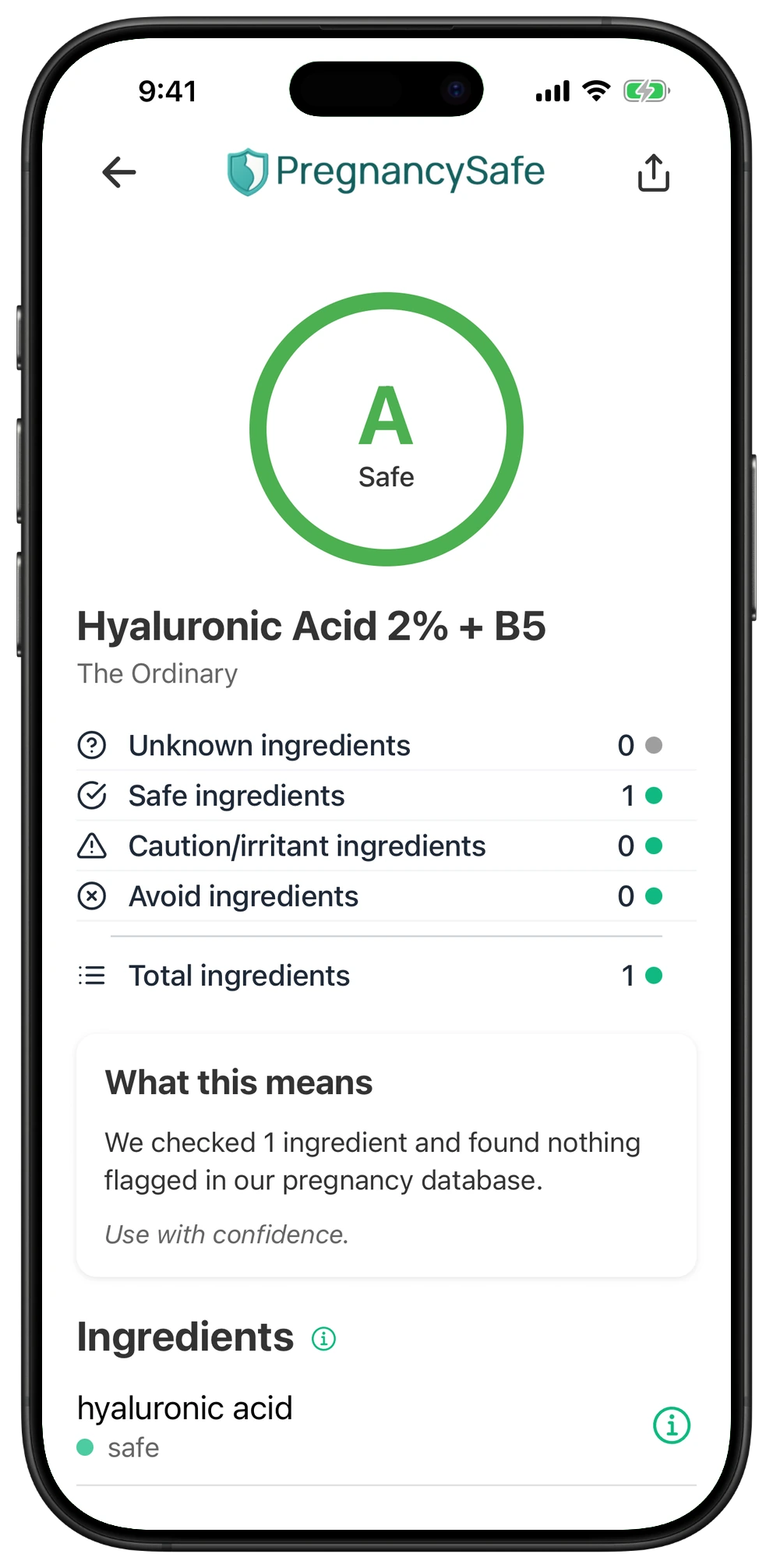
| A | Hyaluronic Acid 2% + B5 | The Ordinary | serum |
| A | E.L.F. Skin Holy Hydration Thirst Burst Drops Serum | E.L.F. Skin | serum |
| A | Hydrating Serum Ceramides Coconut 1.7Oz | Global Beauty Care | serum |
How Does 8 Sheep Organics True Belly Serum Compare to Other Serums?
We graded 1,128 Serums for pregnancy safety. Here's how they stack up:
8 Sheep Organics True Belly Serum earns a B+ grade, placing it among the top of Serums. Only 3% of products in this category get an A grade, so it pays to choose carefully.
How Do We Score Products for Pregnancy Safety?
We analyze each product's ingredients and category to flag known risks and provide cautionary notices for general category safety concerns.
A - Safe
Excellent choice! All ingredients are considered safe during pregnancy.
What to do: Use with confidence.
B - Likely Safe
Pretty much safe with very minimal risk. Some ingredients may have limited pregnancy studies, but no significant safety concerns have been identified.
What to do: Use with confidence.
C - Limit
Contains ingredients with some pregnancy considerations. Research shows these ingredients may have limited safety data, potential for minor hormonal effects, or require caution based on animal studies.
What to do: Use sparingly and consider safer alternatives when available.
D - Caution
Similar to C grade but contains multiple cautionary ingredients. The combination increases overall concern.
What to do: Try to avoid if that makes you feel better. If you've already used it, no need to panic.
F - Avoid
Contains an ingredient Pregnancy Safe recommends avoiding during pregnancy. This may reflect an established risk or a precaution based on limited evidence; check the ingredient guidance and exposure context.
What to do: Do not use during pregnancy. If you've already used it, don't worry - contact your OBGYN if concerned.
People Also Checked
References
- https://www.ecfr.gov/current/title-21/part-184/section-184.1666
- https://pmc.ncbi.nlm.nih.gov/articles/PMC7009459/
- https://pubmed.ncbi.nlm.nih.gov/15995735/
- https://pubmed.ncbi.nlm.nih.gov/23064775/
- https://www.ema.europa.eu/en/documents/scientific-guideline/questions-and-answers-propylene-glycol-used-excipient-medicinal-products-human-use_en.pdf
- https://pmc.ncbi.nlm.nih.gov/articles/PMC11867916/
- https://pubmed.ncbi.nlm.nih.gov/29281181/
- https://pubmed.ncbi.nlm.nih.gov/40234020/
- https://cdnservices.industrialchemicals.gov.au/statements/EVA00103%20-%20Evaluation%20Statement%20-%2026%20June%202023.pdf
- https://journals.sagepub.com/doi/10.1177/1091581818794455
- https://pmc.ncbi.nlm.nih.gov/articles/PMC4154592/
- https://pubmed.ncbi.nlm.nih.gov/15868062/
- https://mothertobaby.org/fact-sheets/vitamin-e/
- https://www.hfpappexternal.fda.gov/scripts/fdcc/index.cfm?id=GLYCERIN&set=FoodSubstances
- https://pubmed.ncbi.nlm.nih.gov/31840548/
- https://pmc.ncbi.nlm.nih.gov/articles/PMC7009851/
- https://www.medicinesinpregnancy.org/leaflets-a-z/glycerin-suppositories/
- https://mothertobaby.org/pregnancy-breastfeeding-exposures/cosmetics/
- https://pubmed.ncbi.nlm.nih.gov/35309882/
- https://www.cir-safety.org/sites/default/files/TR_Hyaluronates_032023_1.pdf
- https://pubmed.ncbi.nlm.nih.gov/19636067/
- https://www.aad.org/public/everyday-care/skin-care-secrets/routine/pregnancy-skin-care
- https://www.fda.gov/medical-devices/aesthetic-cosmetic-devices/dermal-fillers-soft-tissue-fillers
- https://pubmed.ncbi.nlm.nih.gov/28492048/
- https://www.cir-safety.org/sites/default/files/citric032012FR.pdf
- https://doi.org/10.1177/1091581818814189
- https://www.epa.gov/sites/default/files/2019-08/documents/support_document_for_proposed_designation_of_d-gluconic_acid_potassium_salt.pdf
- https://webprod.hc-sc.gc.ca/nhpid-bdipsn/ingredReq?id=2811
- https://www.personalcarecouncil.org/wp-content/uploads/2022/03/INCINomenclatureConventionsReferenceInformation2022_v1.pdf
- https://www.seslhd.health.nsw.gov.au/sites/default/files/groups/Royal_Hospital_for_Women/Mothersafe/documents/skinhaircareandcosmetictreatmentsapril2021.pdf
- https://www.nhs.uk/pregnancy/complications/itching-and-intrahepatic-cholestasis/
- https://www.fda.gov/cosmetics/resources-consumers-cosmetics/cosmetics-pregnancy
- https://www.fda.gov/cosmetics/cosmetics-guidance-documents/good-manufacturing-practice-gmp-guidelinesinspection-checklist-cosmetics
- https://www.fda.gov/cosmetics/potential-contaminants-cosmetics/microbiological-safety-and-cosmetics
- https://pubmed.ncbi.nlm.nih.gov/25153208/