Is Mussels Safe During Pregnancy? (Updated 2026 Guide)
Updated September 9, 2026
The Answer
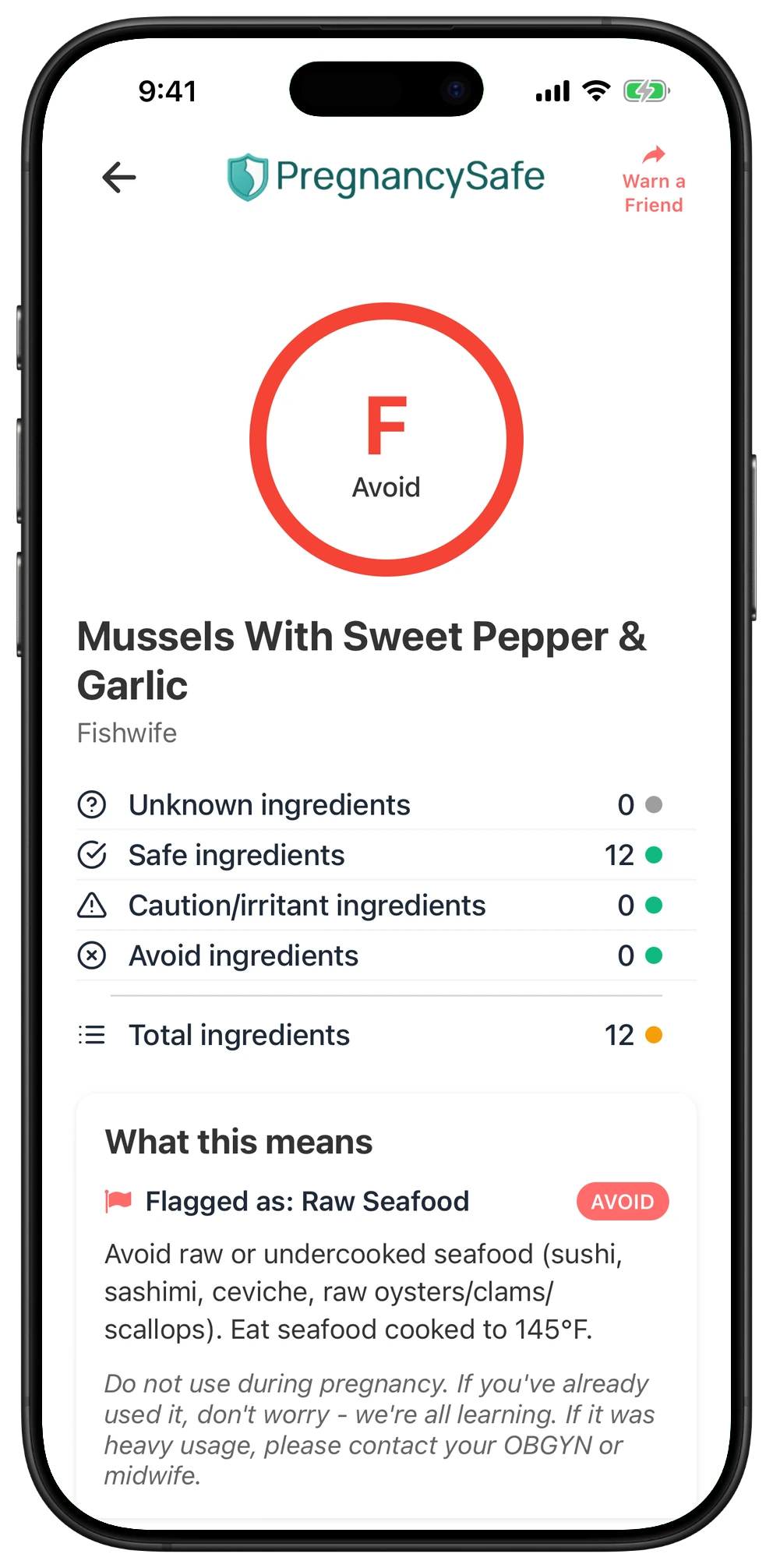
Yes, you can eat thoroughly cooked mussels during pregnancy when they come from regulated sources and are handled safely. Avoid raw or undercooked mussels, and follow local harvest advisories because cooking does not protect against every shellfish toxin.
The main concern is foodborne illness from raw, undercooked or improperly stored mussels; ingredient grades do not assess contamination or doneness. Cook seafood to 145°F, discard mussels whose shells do not open during cooking, and buy from regulated sources. For white wine sauces, the ingredient name does not establish the alcohol dose in your serving; choosing a sauce without added alcohol removes that uncertainty.
Pregnancy Safe is 100% independent and research driven. No companies pay to promote or sponsor products.
Stress Less This Pregnancy
Check your exact mussels in the app
✓ What's Safe
- • Buy mussels from regulated sellers and check any local harvest advisories.
- • Choose thoroughly cooked mussels; follow cooking instructions and the seafood temperature guidance of 145°F.
- • Follow package refrigeration, storage and preparation directions, including for frozen or precooked mussels.
- • Choose sauces without added wine or other beverage alcohol when you want to avoid uncertain residual alcohol exposure.
- • Vary your seafood choices within pregnancy guidance of 8–12 ounces weekly of lower mercury seafood rather than relying on one species.
✗ What to Avoid
- • Raw or undercooked mussels, even if they have a favorable ingredient grade.
- • Mussels from unregulated harvests or waters under a shellfish advisory.
- • Mussels whose shells remain closed after cooking.
- • Assuming opened shells mean the mussels are free from every toxin.
- • White wine sauces with unclear alcohol content when an alcohol free preparation is available; do not equate an ingredient listing with a measured dose.
- • Eating mussels that have not been stored as directed, or eating them despite a known relevant shellfish allergy.
Most Common Ingredients in Mussels Products
We analyzed 20 mussels products. Here are the most common ingredients, ranked by how often they appear:
Ingredients to Watch Out For in Mussels
These are the most common flagged ingredients across 20 mussels products we analyzed.
white wine
Avoid
White wine is a crisp, pale yellow alcoholic beverage made from fermented white grapes, often used to enhance the flavor of dishes or enjoyed on its own.
Has no established safe amount in pregnancy and is linked to fetal alcohol spectrum disorders and other adverse pregnancy outcomes.
Flagged in 1 of 20 products (5%)
Mussels Products We've Analyzed
Our catalog contains ratings for 20 mussels products. These are database grades, not independent safety certifications.
Catalog ingredient grades do not measure current-label completeness, pathogens, preparation, caffeine or clinical pregnancy suitability. These counts include unreviewed records and are not a percentage of independently verified safe products.
Pregnancy Safe Mussels Products
Popular options from our catalog, prioritizing A and B ingredient grades, with C grade options used to fill remaining places. Within each group, products are ordered by searches in Pregnancy Safe, not retail sales. Read the cautions and guidance above; grades do not verify a complete current label or guarantee pregnancy safety.
| Grade | Product | Brand |
|---|---|---|
| A | Matlaw'S, Mussels | Matlaws Food Products Inc |
| A | Mussels In Brine | Pesquera Tubul S.A. |
| A | Mussels | Seaproducts |
Your Questions Answered
Can I eat mussels when pregnant?
Yes, provided they are thoroughly cooked, safely stored and sourced from regulated sellers. Avoid raw or undercooked mussels during pregnancy. Check harvest advisories as well, because cooking and shell opening do not guarantee protection against every shellfish toxin.
What seafood to avoid during pregnancy?
Avoid raw or undercooked seafood, including raw mussels, oysters, clams, scallops and raw fish sushi or sashimi. Choose thoroughly cooked lower mercury seafood and follow species specific pregnancy advice. A broad seafood name or favorable ingredient grade cannot establish mercury levels, proper cooking or freedom from contamination.
What are 5 foods to avoid while pregnant?
Five seafood examples are raw mussels, raw oysters, raw clams, raw scallops and raw fish such as sashimi. These examples concern raw or undercooked preparation, not a blanket ban on their cooked counterparts. For cooked seafood, you still need to consider sourcing, storage and species specific mercury advice.
How should I cook mussels during pregnancy?
Cook mussels fully, following package directions and the seafood temperature guidance of 145°F. Discard any mussels whose shells fail to open during cooking. Open shells are not proof that every toxin has been eliminated, so regulated sourcing and harvest advisories remain important.
Can I eat mussels in white wine sauce while pregnant?
Choosing a sauce made without added alcohol is the simplest way to avoid uncertain alcohol exposure. Pregnancy guidance recommends avoiding beverage alcohol because no safe amount has been established. However, white wine on an ingredient list does not reveal the residual alcohol dose in a cooked serving, and it should not be treated as equivalent to drinking a glass of wine.
Do the mussel product grades tell me which are safe during pregnancy?
No. Our catalog contains 20 mussel products: 3 graded A and 17 graded F, but those ingredient grades are not clinical pregnancy safety verdicts. They include unreviewed records and do not measure current label completeness, pathogens, contamination or doneness. An A grade does not make raw mussels safe, and an F grade or incomplete record alone does not establish that a product is harmful.
How to Interpret These Ratings
Our ingredient and category rules generate letter grades from the information recorded in the catalog. Missing ingredients and broad category assignments can affect the result. These grades do not measure your dose, confirm a complete current label, or test a product for contamination.
A high grade is not a guarantee of pregnancy safety. A low grade is not, by itself, proof of harm from every use. Follow the product-specific guidance above, check the actual package, and ask your prenatal clinician about supplements, treatment decisions or uncertain exposures.
References
- https://www.fda.gov/food/people-risk-foodborne-illness/eating-out-bringing-food-safety-moms-be
- https://www.fda.gov/food/consumers/advice-about-eating-fish
- https://www.fda.gov/food/people-risk-foodborne-illness/cooking-food-safety-moms-be
- https://www.cdc.gov/listeria/prevention/index.html
- https://www.cdc.gov/alcohol-pregnancy/about/index.html
- https://www.cdc.gov/fasd/about/index.html
- https://www.acog.org/womens-health/infographics/alcohol-and-pregnancy
- https://www.niaaa.nih.gov/publications/brochures-and-fact-sheets/alcohol-and-your-pregnancy
- https://mothertobaby.org/fact-sheets/alcohol-pregnancy/
- https://pubmed.ncbi.nlm.nih.gov/26482673/
- https://pmc.ncbi.nlm.nih.gov/articles/PMC9543418/