Best Pregnancy Safe Exfoliant (Updated 2026 Guide)
Updated September 9, 2026
The Answer
Choose a gentle, clearly labeled exfoliant without retinoids; limited, short term topical salicylic acid use is generally acceptable after clinician discussion, while strong peels need separate review. Our catalog contains 14 exfoliants graded D+ to C+, but those ingredient scores do not establish whether an individual product is suitable during pregnancy.
For exfoliants, the main considerations are acid strength, treatment area, contact time and whether your skin is intact: directed low dose topical salicylic acid use differs from high strength peels or oral salicylates. Preservative and botanical caution flags may reflect limited pregnancy evidence or allergy concerns rather than established fetal harm from normal facial use. Avoid retinoids, be gentle with sensitive skin and use sun protection.
Pregnancy Safe is 100% independent and research driven. No companies pay to promote or sponsor products.
Stress Less This Pregnancy
Check your exact exfoliant in the app

✓ What's Safe
- • Check the exact version's full ingredient list, exfoliating active and stated acid concentration rather than relying on a grade.
- • Choose a product labeled for facial use, with clear application, contact time and rinse off or leave on instructions.
- • If considering salicylic acid, discuss the concentration, treatment area and intended duration with your clinician.
- • Look for fragrance free formulations if scent or fragranced skincare irritates your skin.
- • Check botanical ingredients against your known allergies, particularly chamomile and calendula if you react to daisy family plants.
- • Choose a formulation you tolerate without persistent irritation, and pair your routine with sun protection.
✗ What to Avoid
- • Avoid exfoliating formulas containing retinoids during pregnancy.
- • Avoid self directed high concentration salicylic acid peels or using wart and callus removers as facial exfoliants.
- • Avoid applying salicylic acid over large areas, on broken skin or under occlusive coverings without clinician guidance.
- • Avoid exceeding labeled application frequency or contact time to get faster results.
- • Avoid fragrance containing exfoliants if they trigger irritation or allergy; fragrance is not automatically evidence of fetal harm.
- • Avoid chamomilla recutita flower extract, matricaria recutita flower or calendula officinalis flower if you have a known allergy to them.
Most Common Ingredients in Exfoliant Products
We analyzed 14 exfoliant products. Here are the most common ingredients, ranked by how often they appear:
Ingredients to Watch Out For in Exfoliant
These are the most common flagged ingredients across 14 exfoliant products we analyzed.
salicylic acid
Caution
Salicylic acid is a beta hydroxy acid commonly used in skincare to exfoliate the skin, unclog pores, and treat acne.
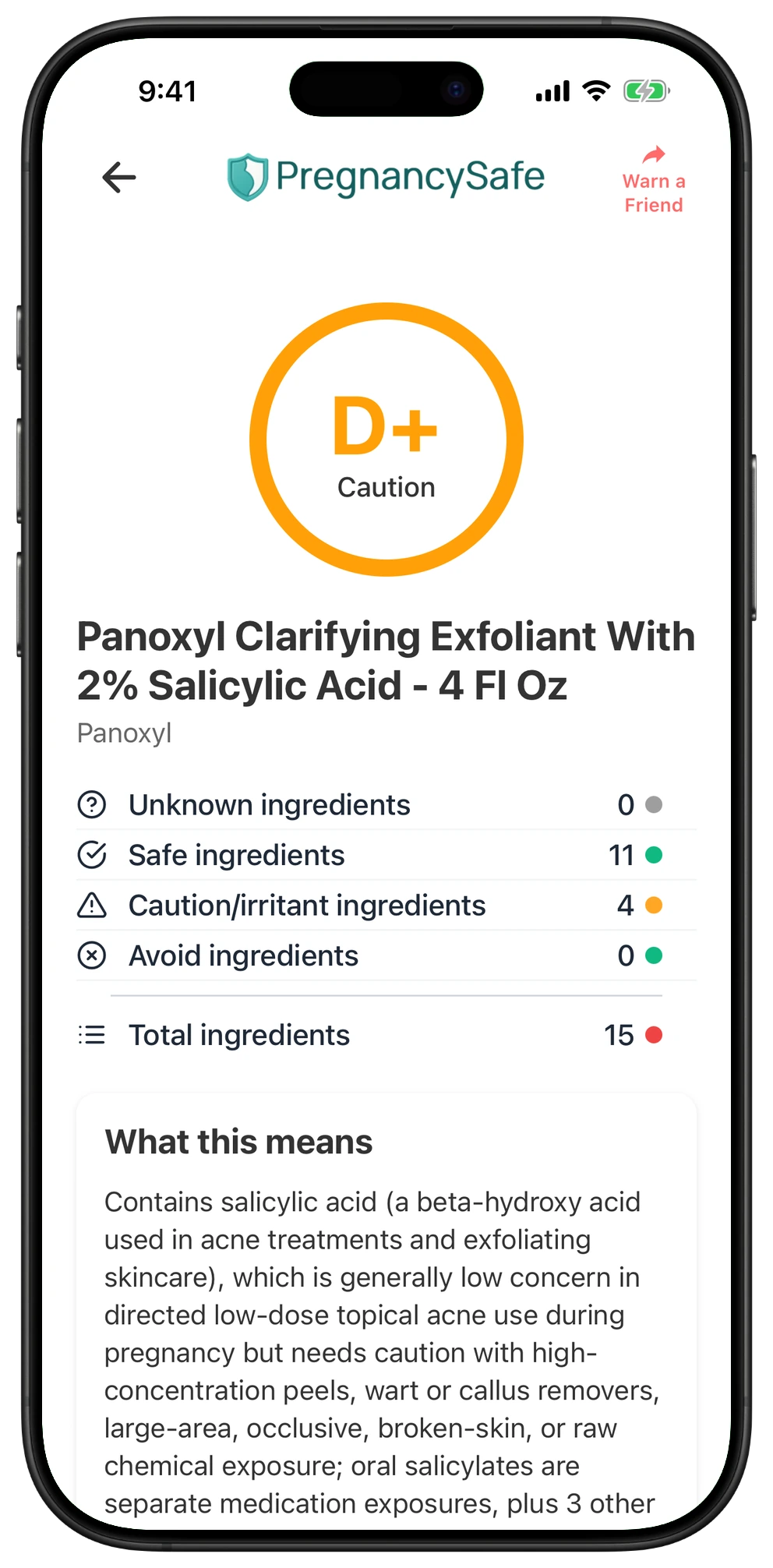
Is generally low concern in directed low dose topical acne use during pregnancy but needs caution with high concentration peels, wart or callus removers, large area, occlusive, broken skin, or raw chemical exposure; oral salicylates are separate medication exposures.
This BHA exfoliates skin and helps unclog pores. Directed low dose topical acne use is generally low concern during pregnancy; discuss limited short term use with your clinician. High strength peels, large area application, prolonged or occlusive use and broken skin application need separate caution, and oral salicylate warnings should not be transferred to ordinary facial use.
Flagged in 11 of 14 products (79%)
Caution
Phenoxyethanol is a preservative commonly used in cosmetics and skincare products to prevent microbial growth and extend shelf life.
Has limited direct pregnancy data and possible infant oral exposure concerns from nipple area products, while regulated cosmetic concentrations are generally considered low systemic risk.
This preservative helps prevent microbial growth in exfoliant formulas. Direct pregnancy data are limited, but safety reviews consider regulated cosmetic concentrations acceptable, including up to 1% as a preservative in the EU. High dose animal findings and infant ingestion concerns from nipple products do not establish harm from ordinary facial application.
Flagged in 8 of 14 products (57%)
spirulina platensis extract
Caution
Has limited pregnancy safety data and product quality concerns because contaminated blue green algae supplements can contain microcystins, heavy metals, or pathogenic bacteria.
This algae derived extract is a topical ingredient in some exfoliants, not an oral spirulina supplement. The main cited concerns involve contamination and limited pregnancy evidence for ingested blue green algae products. Those findings neither establish harm from a facial formula nor demonstrate that a particular exfoliant is contaminated.
Flagged in 3 of 14 products (21%)
chamomilla recutita flower extract
Caution
Chamomilla recutita flower extract is a soothing botanical ingredient known for its calming and anti inflammatory properties.
Warrants caution because pregnancy specific topical evidence is inadequate; assessed cosmetic concentrations appear to pose low systemic concern, but irritation or allergy is possible and concentrated or medicinal preparations are not well studied.
This German chamomile flower extract is used for skin conditioning in exfoliants. Pregnancy specific topical evidence is inadequate, although assessed cosmetic concentrations suggest low systemic concern. Allergy or irritation is the clearest topical concern, especially with ragweed or daisy family sensitivity; oral chamomile and concentrated essential oils are different exposures.
Flagged in 2 of 14 products (14%)
calendula officinalis flower
Caution
Calendula officinalis flower is a vibrant, medicinal flower known for its soothing, anti inflammatory, and skin healing properties.
Has limited human pregnancy data and possible uterine stimulating concerns with concentrated oral use; topical skincare is lower concern but allergy is possible.
This pot marigold flower ingredient may appear in botanical exfoliants. Normal topical use on intact skin is lower concern than concentrated oral preparations, but pregnancy specific evidence remains limited and daisy family allergy is possible. High dose oral animal findings should not be presented as evidence that facial calendula use stimulates the uterus.
Flagged in 1 of 14 products (7%)
fragrance
Caution
A fragrant substance used to add a pleasant aroma to products or environments.
Can hide product specific mixtures and has been associated with higher DEP metabolite exposure in some pregnancy studies; fragrance allergens and VOCs may also irritate sensitive skin or airways.
Fragrance identifies a scent mixture rather than one specific chemical in your exfoliant. It may trigger skin irritation or allergy, and choosing fragrance free can reduce exposure to undisclosed scent ingredients. Associations between fragranced product use and phthalate exposure do not mean every fragrance contains phthalates or that ordinary use is proven harmful during pregnancy.
Flagged in 1 of 14 products (7%)
glycyrrhiza glabra root extract
Caution
Glycyrrhiza glabra root extract is a natural compound derived from licorice root, commonly used for its soothing, anti inflammatory, and sweetening properties in skincare and herbal remedies.
Is low concern in typical topical cosmetics but warrants caution because oral licorice or glycyrrhizin exposure in pregnancy is linked to blood pressure effects, shorter gestation, preterm birth, and child neurodevelopment signals.
This licorice root extract is used for brightening and skin conditioning in exfoliants. Typical low concentration topical cosmetic use is much lower concern than heavy oral licorice or glycyrrhizin intake, though direct topical pregnancy data are limited. Oral pregnancy findings are not proof of the same effects from a facial exfoliant; watch for local irritation.
Flagged in 1 of 14 products (7%)
matricaria recutita flower
Caution
Matricaria recutita flower, commonly known as chamomile, is a soothing herbal flower used for its calming, anti inflammatory, and skin soothing properties.
Warrants caution because pregnancy specific topical evidence is inadequate; assessed cosmetic concentrations appear to pose low systemic concern, but irritation or allergy is possible and concentrated or medicinal preparations are not well studied.
This is German chamomile flower, using another botanical name for the same plant identified by Chamomilla recutita. In an exfoliant, the practical concern is irritation or allergy, particularly with daisy family sensitivity, while direct pregnancy evidence for topical use remains inadequate. Do not equate a labeled cosmetic flower ingredient with oral medicinal chamomile or concentrated essential oil exposure.
Flagged in 1 of 14 products (7%)
How Do Exfoliant Products Stack Up?
Our catalog contains ratings for 14 exfoliant products. These are database grades, not independent safety certifications.
Catalog ingredient scores are not clinical pregnancy verdicts or independent current-label/contaminant checks. Unreviewed, mixed-route or incompletely sourced records can affect counts. Follow exact product form, active ingredients, exposure and directions rather than choosing solely by grade.
Best Pregnancy Safe Exfoliant
Popular options from our catalog, prioritizing A and B ingredient grades, with C grade options used to fill remaining places. Within each group, products are ordered by searches in Pregnancy Safe, not retail sales. Read the cautions and guidance above; grades do not verify a complete current label or guarantee pregnancy safety.
| Grade | Product | Brand |
|---|---|---|
| C+ | Skin Perfecting 2% Bha Gel Exfoliant Catalog caution flags: salicylic acid. Read the category guidance above. | Paula'S Choice |
| C | Paula'S Choice Skin Perfecting 2% Aha + 2% Bha Exfoliant Peel (. Catalog caution flags: phenoxyethanol, salicylic acid. Read the category guidance above. | Paula'S Choice |
| C | Miracle Clear Brightening Triple Acid Exfoliant Catalog caution flags: citrus aurantium dulcis fruit extract, salicylic acid. Read the category guidance above. | Rael |
| C+ | Micro Powder Exfoliant Catalog caution flags: phenoxyethanol. Read the category guidance above. | First Aid Beauty |
| C- | Jojoba Pearls Daily Hydra-Exfoliant Catalog caution flags: calendula officinalis flower, matricaria recutita flower, salicylic acid. Read the category guidance above. | Odacite |
Your Questions Answered
Can I use a 2% salicylic acid exfoliant while pregnant?
A 2% facial exfoliant is not equivalent to oral aspirin or a high strength salicylic acid peel. Directed low dose topical acne use is generally low concern, and limited short term use can be considered after clinician discussion. Ask about your exact formula, treatment area and intended duration, especially if your skin is damaged or you use other exfoliating products.
What skincare products should be avoided during pregnancy?
For exfoliating skincare, avoid retinoid containing formulas and do not undertake high strength peels without professional review. Salicylic acid does not require a blanket ban: concentration, treatment area and how you use it matter. Also stop products that cause irritation or allergic reactions, which are distinct from reproductive harm.
What skincare is safe for melasma during pregnancy?
Sun protection is an important part of your pregnancy skincare routine, including when dark patches are your concern. Do not assume a stronger exfoliant or dark spot peel is a suitable treatment simply because it promises brightening. Ask a dermatologist to review the exact formula and help choose a pregnancy appropriate approach; avoid retinoid containing products.
How often should I exfoliate during pregnancy?
There is no single pregnancy specific exfoliation schedule to apply to every formula. Follow the product's directions and discuss intended duration with your clinician if you are using salicylic acid. Do not increase frequency or contact time to speed up results, and stop if irritation develops.
Do lower exfoliant grades mean the products are unsafe?
No. Our catalog contains 14 exfoliants: four graded C+, five C, two C- and three D+, with none graded A. These are ingredient scores, not clinical pregnancy verdicts or independent checks of every current label and product batch. Incomplete records and evidence from different exposure routes can affect scores, so review the exact formulation and directions rather than choosing solely by grade.
Are natural or preservative free exfoliants safer during pregnancy?
Those claims do not establish pregnancy safety. Botanical ingredients can cause allergies, and some caution flags come from oral supplement evidence that does not establish harm from facial application. Phenoxyethanol at regulated cosmetic concentrations is generally considered low systemic risk despite limited direct pregnancy data. Prioritize clear labeling, suitable acid strength and your skin's tolerance over natural or preservative free claims.
How to Interpret These Ratings
Our ingredient and category rules generate letter grades from the information recorded in the catalog. Missing ingredients and broad category assignments can affect the result. These grades do not measure your dose, confirm a complete current label, or test a product for contamination.
A high grade is not a guarantee of pregnancy safety. A low grade is not, by itself, proof of harm from every use. Follow the product-specific guidance above, check the actual package, and ask your prenatal clinician about supplements, treatment decisions or uncertain exposures.
People Also Checked
References
- https://www.aad.org/public/diseases/acne/derm-treat/pregnancy
- https://www.aad.org/public/everyday-care/skin-care-secrets/routine/pregnancy-skin-care
- https://www.acog.org/womens-health/faqs/skin-conditions-during-pregnancy
- https://mothertobaby.org/fact-sheets/topical-acne-treatments-pregnancy/
- https://pmc.ncbi.nlm.nih.gov/articles/PMC9823189/
- https://www.accessdata.fda.gov/drugsatfda_docs/omuf/Order/Final%20Administrative%20Order%20OTC000013_M006-Topical%20Acne%20drug%20products%20for%20OTC%20Human%20Use.pdf
- https://health.ec.europa.eu/system/files/2023-06/sccs_o_268.pdf
- https://www.fda.gov/drugs/drug-safety-and-availability/fda-recommends-avoiding-use-nsaids-pregnancy-20-weeks-or-later-because-they-can-result-low-amniotic
- https://www.accessdata.fda.gov/drugsatfda_docs/omuf/monographs/OTCMonograph_M028-WartRemoverDrugProductsforOTCHumanUse10012021.pdf
- https://www.ncbi.nlm.nih.gov/books/NBK582985/
- https://pmc.ncbi.nlm.nih.gov/articles/PMC3114665/
- https://pubmed.ncbi.nlm.nih.gov/9269866/
- https://pubmed.ncbi.nlm.nih.gov/10026401/
- https://pubmed.ncbi.nlm.nih.gov/24472429/
- https://www.ecfr.gov/current/title-21/chapter-I/subchapter-D/part-333/subpart-D/section-333.310
- https://pubmed.ncbi.nlm.nih.gov/38453786/
- https://www.accessdata.fda.gov/drugsatfda_docs/omuf/monographs/OTC%20Monograph_M006-Topical%20Acne%20drug%20products%20for%20OTC%20Human%20Use%2011.23.2021.pdf
- https://www.fda.gov/safety/medical-product-safety-information/nonsteroidal-anti-inflammatory-drugs-nsaids-drug-safety-communication-avoid-use-nsaids-pregnancy-20
- https://dermnetnz.org/topics/acne-in-pregnancy
- https://www.inchem.org/documents/icsc/icsc/eics0563.htm
- https://www.ncbi.nlm.nih.gov/books/NBK582985
- https://pubmed.ncbi.nlm.nih.gov/23914887
- https://www.fda.gov/drugs/drug-alerts-and-statements/fda-warns-against-purchasing-or-using-chemical-peel-skin-products-without-professional-supervision
- https://health.ec.europa.eu/system/files/2021-08/sccs_o_195_0.pdf
- https://ec.europa.eu/growth/tools-databases/cosing/details/28157
- https://journals.sagepub.com/doi/10.3109/10915819009078737
- https://link.springer.com/article/10.1007/s00204-024-03938-5
- https://www.sfda.gov.sa/en/warnings/1156
- https://www.industrialchemicals.gov.au/sites/default/files/Ethanol%2C%202-phenoxy-_Human%20health%20tier%20II%20assessment.pdf
- https://hero.epa.gov/reference/2857875
- https://books.publisso.de/sites/default/files/documents/series/mak/dam/Vol2019/Iss1/Alt006/mb12299kske6319_w.pdf
- https://www.fda.gov/food/natural-toxins-food/blue-green-algae-products-and-microcystins
- https://www.ncbi.nlm.nih.gov/books/NBK548312/
- https://www.ncbi.nlm.nih.gov/books/NBK501849/
- https://pubmed.ncbi.nlm.nih.gov/21793723/
- https://journal.ugm.ac.id/v3/InaJBCS/article/view/23573
- https://doi.org/10.4236/ojog.2017.71016
- https://pubmed.ncbi.nlm.nih.gov/37317149/
- https://pubmed.ncbi.nlm.nih.gov/37368655/
- https://pubmed.ncbi.nlm.nih.gov/23036452/
- https://pubmed.ncbi.nlm.nih.gov/21842336/
- https://www.nccih.nih.gov/health/chamomile
- https://www.ema.europa.eu/en/documents/herbal-monograph/final-european-union-herbal-monograph-matricaria-recutita-l-flos-first-version_en.pdf
- https://www.ema.europa.eu/en/documents/herbal-monograph/final-community-herbal-monograph-chamaemelum-nobile-l-all-flos_en.pdf
- https://journals.sagepub.com/doi/10.1177/1091581818801814
- https://journals.sagepub.com/doi/10.1177/1091581817705620
- https://pubmed.ncbi.nlm.nih.gov/40314057/
- https://pubmed.ncbi.nlm.nih.gov/40374153/
- https://www.ema.europa.eu/en/documents/herbal-monograph/final-european-union-herbal-monograph-calendula-officinalis-l-flos-revision-1_en.pdf
- https://www.ema.europa.eu/en/documents/herbal-report/final-assessment-report-calendula-officinalis-l-flos-revision-1_en.pdf
- https://www.ema.europa.eu/en/documents/herbal-report/addendum-assessment-report-calendula-officinalis-l-flos-revision-1_en.pdf
- https://pubmed.ncbi.nlm.nih.gov/19288530/
- https://pubmed.ncbi.nlm.nih.gov/11558637/
- https://www.ncbi.nlm.nih.gov/books/NBK501857/
- https://www.mskcc.org/cancer-care/integrative-medicine/herbs/calendula
- https://www.fda.gov/cosmetics/cosmetic-ingredients/fragrances-cosmetics
- https://www.fda.gov/cosmetics/cosmetic-ingredients/phthalates-cosmetics
- https://www.fda.gov/cosmetics/cosmetic-ingredients/allergens-cosmetics
- https://pmc.ncbi.nlm.nih.gov/articles/PMC3110684/
- https://pmc.ncbi.nlm.nih.gov/articles/PMC4016195/
- https://pmc.ncbi.nlm.nih.gov/articles/PMC4097177/
- https://pmc.ncbi.nlm.nih.gov/articles/PMC8453372/
- https://pmc.ncbi.nlm.nih.gov/articles/PMC10999525/
- https://www.epa.gov/indoor-air-quality-iaq/volatile-organic-compounds-impact-indoor-air-quality
- https://www.nccih.nih.gov/health/licorice-root
- https://cosmileeurope.eu/inci/detail/6154/glycyrrhiza-glabra-root-extract/
- https://pubmed.ncbi.nlm.nih.gov/11390327/
- https://pubmed.ncbi.nlm.nih.gov/12396997/
- https://pubmed.ncbi.nlm.nih.gov/28158597/
- https://pubmed.ncbi.nlm.nih.gov/28833680/
- https://pubmed.ncbi.nlm.nih.gov/16884839/
- https://www.cir-safety.org/sites/default/files/S-breakout-092020.pdf
- https://vkm.no/download/18.948158f1633d1b9fb95930/1525764185285/Hazard%20assessment%20of%20glycyrrhizic%20acid%20from%20liquorice.pdf