Is Brie Safe During Pregnancy? (Updated 2026 Guide)
Updated September 9, 2026
The Answer
You can eat brie during pregnancy when you choose a pasteurized version and cook it until steaming hot throughout. Avoid raw milk brie; the conservative NHS advice also excludes cold, uncooked brie even when pasteurized.
Brie is a soft, mold ripened cheese, and its main pregnancy concern is Listeria contamination rather than an inherently harmful ingredient. Pasteurization matters, but it does not make the finished cheese sterile; follow the conservative approach of cooking pasteurized brie until steaming hot throughout. Keep it refrigerated and follow the package storage and use by instructions.
Pregnancy Safe is 100% independent and research driven. No companies pay to promote or sponsor products.
Stress Less This Pregnancy
Check your exact brie in the app

✓ What's Safe
- • Check the actual package for an explicit statement that the milk is pasteurized.
- • Choose brie you can cook until steaming hot throughout, including the center.
- • Follow the package cooking instructions and check that the cheese itself is thoroughly hot, not just its topping or pastry.
- • Buy refrigerated brie and follow its storage, use by and after opening instructions.
- • When ordering brie, ask whether it is made with pasteurized milk and will be served thoroughly cooked.
✗ What to Avoid
- • Brie made with raw or unpasteurized milk.
- • Cold pasteurized brie on cheese boards or in sandwiches when following conservative pregnancy guidance.
- • Brie that is only softened, lightly warmed or melted without becoming steaming hot throughout.
- • Assuming a product labeled “baked brie” is ready to eat without checking its heating instructions.
- • Brie with unclear milk treatment or storage history, or cheese kept beyond its label instructions.
- • Using an ingredient grade as proof that a cheese is free from Listeria.
Most Common Ingredients in Brie Products
We analyzed 9 brie products. Here are the most common ingredients, ranked by how often they appear:
Ingredients to Watch Out For in Brie
These are the most common flagged ingredients across 9 brie products we analyzed.
brie cheese pasteurized milk
Avoid
Creamy and smooth, brie cheese made from pasteurized milk offers a rich, buttery flavor with a soft, edible rind.
Has Listeria risk in pregnancy with unpasteurized or uncooked forms; US and UK guidance differ on whether pasteurized uncooked brie is acceptable.
Flagged in 1 of 9 products (11%)
Brie Products We've Analyzed
Our catalog contains ratings for 9 brie products. These are database grades, not independent safety certifications.
Catalog ingredient grades do not measure current-label completeness, pathogens, preparation, caffeine or clinical pregnancy suitability. These counts include unreviewed records and are not a percentage of independently verified safe products.
Pregnancy Safe Brie Products
Popular options from our catalog, prioritizing A and B ingredient grades, with C grade options used to fill remaining places. Within each group, products are ordered by searches in Pregnancy Safe, not retail sales. Read the cautions and guidance above; grades do not verify a complete current label or guarantee pregnancy safety.
| Grade | Product | Brand |
|---|---|---|
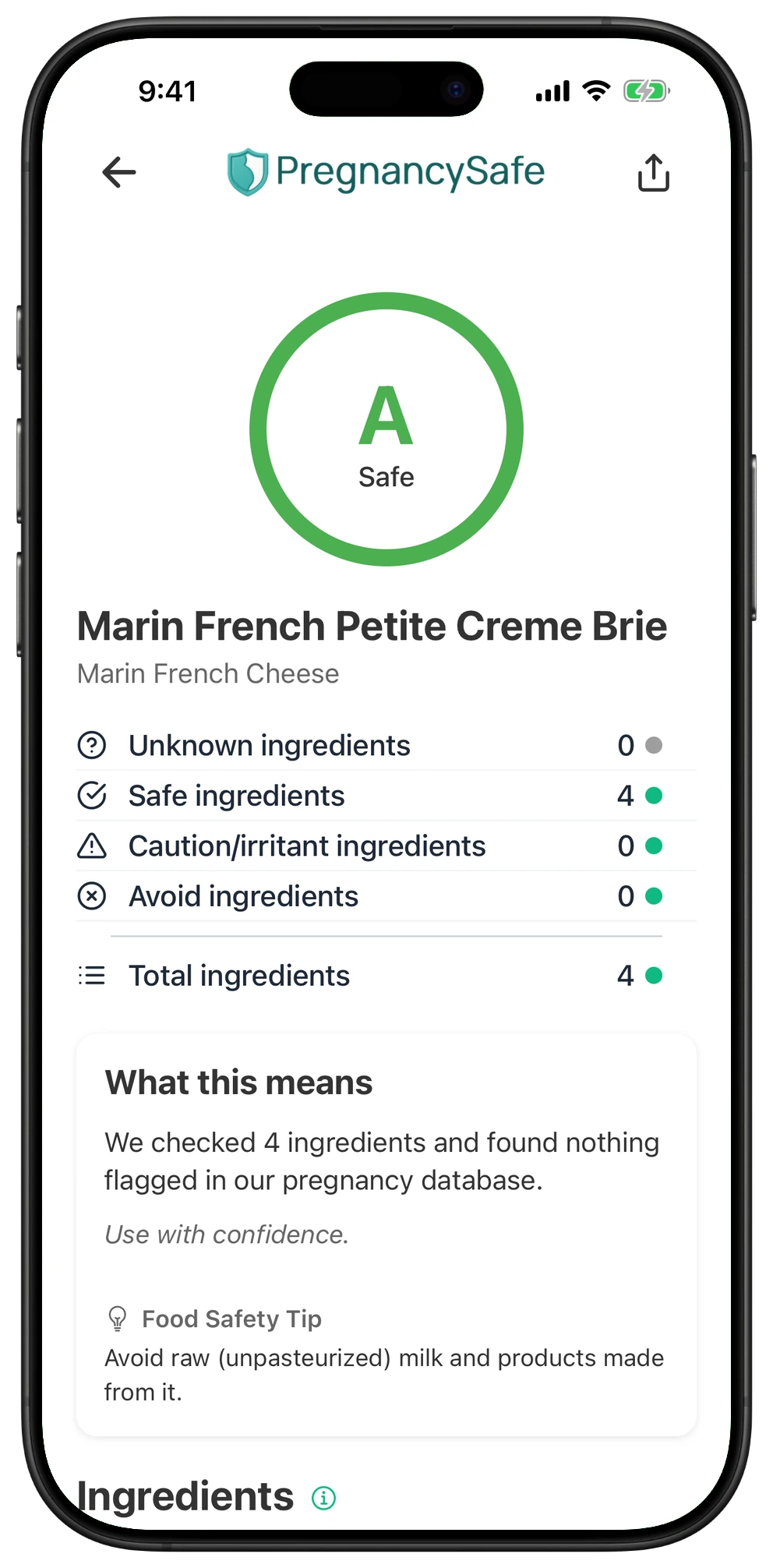
| A | Alouette Garlic Herb Petite Brie | Alouette |
| A | Alouette Black Truffle Petite Brie | Alouette |
| A | Black Truffle Brie | Alouette Cheese Usa Llc,Savencia |
| A | Double Creame Brie | Lena Creamery |
| A | Marin French Cheese Petite Breakfast Fresh Brie | Marin French Cheese |
Your Questions Answered
Is brie pasteurized or unpasteurized?
Brie can be made with either pasteurized or unpasteurized milk, so check the exact package rather than relying on the cheese name. Look for an explicit pasteurized milk statement and ask the seller if it is unclear. Even pasteurized brie should be cooked until steaming hot throughout under the conservative pregnancy guidance used here.
How likely is brie to have listeria?
There is no reliable probability for an individual package based on its name or ingredient list. Soft, high moisture cheeses such as brie can support Listeria, and outbreaks have been linked to brie. Pasteurization does not rule out contamination afterward, so choose pasteurized brie, store it as directed and cook it thoroughly.
Can I eat baked brie while pregnant?
Yes, choose pasteurized brie and cook it until steaming hot throughout. A browned crust, warm topping or runny texture alone does not establish that the center is thoroughly heated. Follow the package cooking instructions rather than treating the words “baked brie” as a safety guarantee.
Can I eat cold brie if the milk is pasteurized?
US and UK guidance differ on this point: FDA guidance allows pasteurized label brie, while NHS guidance advises against uncooked mold ripened brie even when pasteurized. The conservative approach used here is to cook pasteurized brie until steaming hot throughout. That precaution addresses possible contamination of the finished cheese, not just whether the milk was pasteurized.
Does an A grade mean brie is safe to eat cold?
No. Our catalog contains 9 brie products, including 8 graded A and 1 graded F, but these ingredient grades do not measure pathogens, storage or preparation. They are not counts of independently verified safe or unsafe products. Apply the same pasteurization, refrigeration and thorough cooking precautions regardless of grade.
Do cheese cultures mean brie contains raw milk?
No, cheese cultures and raw milk are different things. A brie label can list cultures alongside pasteurized milk, so check the milk description separately. Cultures do not establish pregnancy specific probiotic benefits or remove the need to cook mold ripened brie thoroughly.
How to Interpret These Ratings
Our ingredient and category rules generate letter grades from the information recorded in the catalog. Missing ingredients and broad category assignments can affect the result. These grades do not measure your dose, confirm a complete current label, or test a product for contamination.
A high grade is not a guarantee of pregnancy safety. A low grade is not, by itself, proof of harm from every use. Follow the product-specific guidance above, check the actual package, and ask your prenatal clinician about supplements, treatment decisions or uncertain exposures.
People Also Checked
References
- https://www.cdc.gov/foodsafety/rawmilk/index.html
- https://www.cdc.gov/listeria/prevention/index.html
- https://www.nhs.uk/pregnancy/keeping-well/foods-to-avoid/
- https://www.cdc.gov/food-safety/foods/pregnant-women.html
- https://www.cdc.gov/listeria/causes/dairy.html
- https://www.fda.gov/food/people-risk-foodborne-illness/entertaining-all-year-food-safety-moms-be
- https://www.food.gov.uk/listeria
- https://www.cdc.gov/listeria/outbreaks/monocytogenes-09-22/index.html