Nausea During Pregnancy: Morning Sickness & Relief
The Answer
Pregnancy nausea, often called morning sickness, is a queasy feeling that can happen with or without vomiting, at any time of day.
Try small, frequent meals, regular sips of water and rest. Avoid smells that make you feel worse.
Seek immediate medical care for severe nausea or vomiting, inability to keep water down, fainting or confusion. Get prompt help for dehydration, including very dark or little urine. You do not need to wait for home remedies to work.
About 48% of women who checked in with Pregnancy Safe at week 6 reported nausea.[7] If you’re feeling queasy too, you’re not alone.
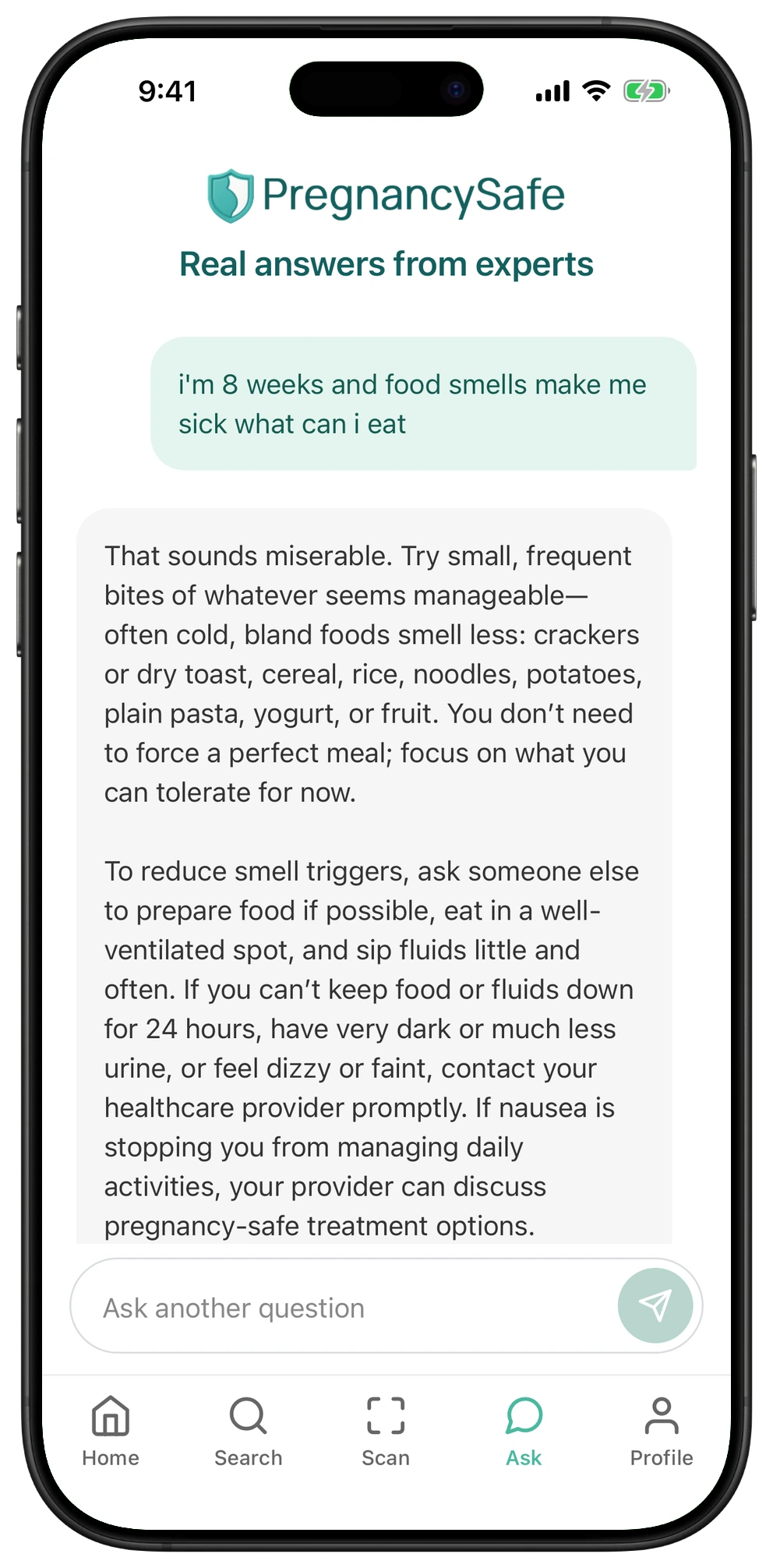
Stress Less This Pregnancy
Get personalized expert answers 24/7

How Common Is Nausea During Pregnancy?
Percent of women checking in each week who reported this symptom. Weeks meeting our reporting cutoff: 4–14. Missing weeks are not zero; this is not an individual symptom timeline.
Between weeks 13 and 27, 142 of 803 women who checked in with Pregnancy Safe reported nausea (17.7%). Each woman is counted once across that whole span, not once per week.
These check ins describe participating women, not all pregnancies or your personal timeline. No logged nausea does not necessarily mean no nausea; unavailable values are not zero.
What Helps Nausea During Pregnancy?
The NHS suggests smaller, more frequent meals, rest, avoiding personal triggers and drinking little and often. Different measures help different people. Choose manageable changes rather than trying everything at once. See foods and drinks to try and medicines to ask about below.
Ask your care team for help if symptoms persist or disrupt eating, drinking or daily life. Home measures are not a prerequisite for treatment.
What Foods and Drinks Can Help Morning Sickness?
Tolerance varies. These food options may be easier to manage, but they are not a cure or a diet you must follow:
- Plain toast or crackers.
- Rice when stronger flavors feel overwhelming.
- Cold foods if cooking smells trigger nausea.
- A little protein, such as peanut butter or beans, if tolerated.
- Small, frequent sips of water rather than a large drink.
When Does Morning Sickness Start, Peak and Stop?
RCOG describes a typical start around 4-7 weeks. Cleveland Clinic says symptoms commonly feel worst around 8-10 weeks. The NHS reports that they usually clear by 16-20 weeks, although some women feel sick longer.
These are different milestones, not deadlines. The app chart describes reporting, not a clinical peak or a prediction of your symptoms.
What Does Morning Sickness Feel Like, and What Causes It?
You may feel queasy, off your food or like you have motion sickness, with or without vomiting. It can last beyond the morning, sometimes all day.
Pregnancy hormones, including placental GDF15, are implicated. Susceptibility varies; there is no single explanation that identifies why you personally feel sick.
What Can You Take for Nausea While Pregnant?
A clinician can discuss doxylamine plus pyridoxine, also called vitamin B6, or other prescribed anti sickness medicines. Ask about the benefits and risks for your situation.
Have a clinician or pharmacist help select the exact product; do not treat OTC sleep aids as interchangeable. If prenatal vitamins worsen nausea, discuss vitamin options with your clinician.
What to Tell Your Care Team
Contact your care team for impaired eating or drinking or weight loss. Severe symptoms may require clinical evaluation for hyperemesis gravidarum. To help with assessment, share:
- Pregnancy week, when symptoms began and how often they happen.
- Food and fluid tolerance, urine amount and color, and weight changes.
- Medicines, other symptoms, previous pregnancy sickness and effects on daily life.
For example: I'm 9 weeks pregnant and have felt sick for a week. Small drinks stay down, but meals are difficult. My urine is darker and less frequent. I vomit twice daily and cannot manage work. What should I do? Add any weight loss.
For urgent warning signs, seek care immediately rather than waiting for a message reply.
Your Questions Answered
Can nausea happen at night or after meals?
Yes. Timing varies, and hunger, thirst, food smells, certain foods or lying down after eating can trigger nausea. Pregnancy hormones may affect how food and drink move through your digestive system, but this does not establish your individual cause. Try small, regular meals, a small snack before you become very hungry and avoiding lying flat just after meals. If prenatal vitamins worsen nausea, ask your care team before stopping or changing them.
What if I have no nausea, or it comes and goes?
Not everyone has morning sickness, and symptoms can vary. Absence, fluctuation or sudden stopping alone cannot tell you whether a pregnancy is healthy. Discuss worries with your care team; urgent warning signs need immediate care.
What if nausea starts later in pregnancy?
Nausea continuing from earlier pregnancy is different from nausea starting for the first time later. Ask your care team to assess new nausea after 16 weeks. RCOG specifically flags vomiting that first starts after 16 weeks for investigation of other causes. Seek immediate assessment for severe headache, vision changes, severe persistent pain or reduced baby movements.
References
- NHS: Vomiting and morning sickness
- Cleveland Clinic: Morning sickness
- Cleveland Clinic: Morning sickness at night
- The Mother Baby Center: Foods for pregnancy nausea
- RCOG: Pregnancy sickness and hyperemesis gravidarum
- CDC: Urgent maternal warning signs
- Pregnancy Safe app check-ins.
224 of 469 women reported nausea in week 6 (47.8%). 142 of 803 women reported nausea in weeks 13–27, counted once across that span (17.7%). Production analytics snapshot: Nov 11, 2026 (UTC). Pregnancy week is estimated from the recorded due date. Each check-in profile is counted once per week or once across a combined span. Rates require at least 30 reporting and 30 not reporting. Combined spans are not directly comparable to weekly rates. Not logging a symptom does not mean it was absent. These are self-selected app reports, not prevalence in all pregnancies, individual progression, or a clinical safety assessment. Related-symptom percentages use women who reported the main symptom on at least one eligible check-in across pregnancy weeks 1–42, through the same snapshot. Each pair counts a woman once only when both symptoms appeared on the same check-in. The displayed digestive symptoms are selected examples, not the most common symptoms overall. Rows overlap and must not be added together. More frequent check-ins give more opportunities to report a pair. These figures do not establish causation or greater risk compared with women without the main symptom. The same 30 reporting / 30 not reporting thresholds apply.