Is Grapes Safe During Pregnancy? (Updated 2026 Guide)
Updated September 9, 2026
The Answer
Yes, you can eat grapes during pregnancy. The main precaution is avoiding unwashed produce: rinse fresh grapes under running water and refrigerate cut grapes promptly.
Grapes can be part of pregnancy nutrition; the main concern is contamination from unwashed produce or improper handling, not grapes themselves. Washing reduces contamination but does not sterilize fruit, so keep grapes separate from raw animal foods and follow storage instructions. Their natural sugar is a nutrition consideration, not evidence that ordinary servings harm pregnancy.
Pregnancy Safe is 100% independent and research driven. No companies pay to promote or sponsor products.
Stress Less This Pregnancy
Check your exact grapes in the app

✓ What's Safe
- • Fresh grapes you can rinse thoroughly under running water before eating or cutting.
- • Pre cut grapes kept refrigerated, with clear storage instructions.
- • Preparation areas and utensils kept separate from raw meat, poultry and seafood.
- • Labels that distinguish whole grapes from dried, sweetened or juice based forms, which differ nutritionally.
- • Amounts that fit your usual eating pattern and any individualized carbohydrate guidance from your care team.
✗ What to Avoid
- • Eating fresh grapes without washing them first.
- • Using soap, detergent or bleach to wash grapes.
- • Leaving cut grapes unrefrigerated instead of chilling them promptly.
- • Allowing grapes or preparation utensils to contact raw animal foods or their juices.
- • Treating grape juice, dried grapes and sweetened grape products as nutritionally interchangeable with whole fresh grapes.
Most Common Ingredients in Grapes Products
We analyzed 4 grapes products. Here are the most common ingredients, ranked by how often they appear:
Grapes Products We've Analyzed
Our catalog contains ratings for 4 grapes products. These are database grades, not independent safety certifications.
Catalog ingredient grades do not measure current-label completeness, pathogens, preparation, caffeine or clinical pregnancy suitability. These counts include unreviewed records and are not a percentage of independently verified safe products.
Pregnancy Safe Grapes Products
Popular options from our catalog, prioritizing A and B ingredient grades, with C grade options used to fill remaining places. Within each group, products are ordered by searches in Pregnancy Safe, not retail sales. Read the cautions and guidance above; grades do not verify a complete current label or guarantee pregnancy safety.
| Grade | Product | Brand |
|---|---|---|
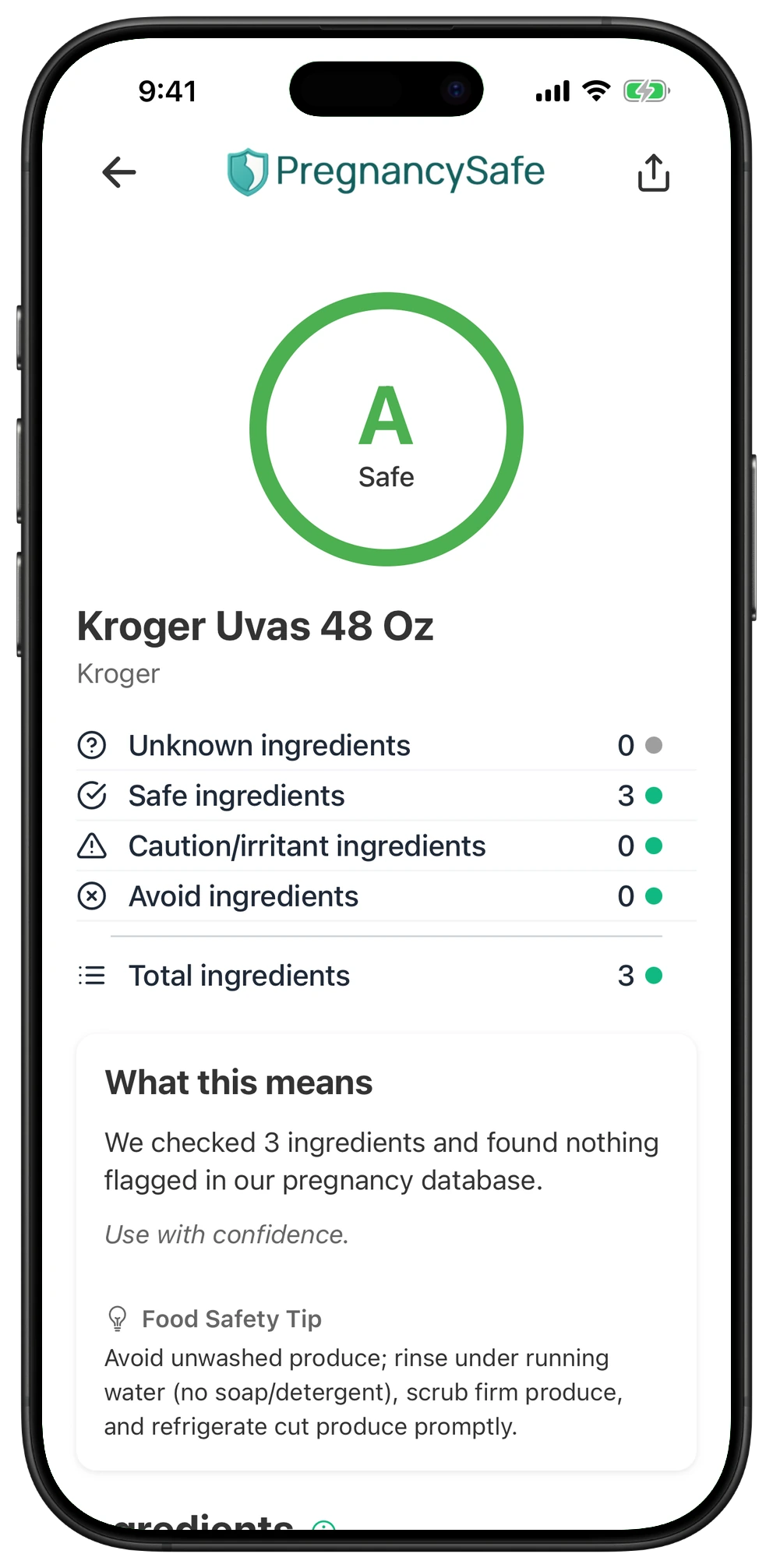
| A | Kroger Uvas | Kroger |
| A | Organic Green Seedless Grapes | Nature'S Promise |
| A | Red Grapes | — |
| A | Red Seedless Grapes | Sweet Vines Candy Hearts |
Your Questions Answered
Are you allowed to eat grapes when pregnant?
Yes, grapes can be part of your diet during pregnancy. Rinse fresh grapes under running water before eating or cutting them, and refrigerate cut grapes promptly. Ordinary servings are not a reason to avoid grapes because of pregnancy.
What fruits can I not eat while pregnant?
For ordinary fruit such as grapes, focus on washing, handling and storage rather than avoiding the fruit itself. Avoid eating unwashed produce, and keep pre cut fruit refrigerated and separate from raw animal foods. Different forms, including dried and sweetened fruit, have different nutritional profiles and should not be treated as identical to fresh fruit.
How should I wash grapes during pregnancy?
Rinse fresh grapes under running water before eating them or cutting them. Do not use soap, detergent or bleach. Washing reduces contamination but does not make grapes sterile, so clean preparation surfaces and separation from raw animal foods still matter.
Can grapes cause miscarriage or bring on labor?
There is no basis here for treating ordinary servings of grapes as a cause of miscarriage or a way to induce labor. Grapes are food, not a treatment or a labor induction method. The practical pregnancy precautions are washing them and handling and storing them safely.
Should I limit grapes because of their sugar?
Grape sugar is a nutrition consideration, not evidence that ordinary servings harm pregnancy. If your care team has given you a carbohydrate target, choose an amount that fits that plan. Whole grapes, grape juice and dried or sweetened grape products differ nutritionally, so check the form and serving information rather than assuming they are interchangeable.
Does an A grade mean grapes are guaranteed safe?
No. Our catalog contains four grape entries with A ingredient grades, but those grades do not measure contamination, handling or current label completeness. They are not a count of independently verified pregnancy safe products, and washing and storage precautions still apply.
How to Interpret These Ratings
Our ingredient and category rules generate letter grades from the information recorded in the catalog. Missing ingredients and broad category assignments can affect the result. These grades do not measure your dose, confirm a complete current label, or test a product for contamination.
A high grade is not a guarantee of pregnancy safety. A low grade is not, by itself, proof of harm from every use. Follow the product-specific guidance above, check the actual package, and ask your prenatal clinician about supplements, treatment decisions or uncertain exposures.