Is Dates Safe During Pregnancy? (Updated 2026 Guide)
Updated September 9, 2026
The Answer
Yes plain dates can be part of your pregnancy diet, with appropriate handling and portions tailored to your needs. Our catalog contains 80 A graded entries among 82 products, but ingredient grades are not independent pregnancy safety verification.
For ordinary servings of dates, the main considerations are food handling, the form you choose, and individualized portions if you have gestational diabetes. Wash fresh dates under running water before cutting, follow packaged dried dates’ storage instructions, and distinguish plain fruit from preparations containing red wine or other beverage alcohol. Evidence about labor outcomes does not establish a dosing schedule or guarantee that eating dates will induce labor.
Pregnancy Safe is 100% independent and research driven. No companies pay to promote or sponsor products.
Stress Less This Pregnancy
Check your exact dates in the app

✓ What's Safe
- • Choose plain dates when you want fruit without added sugar or alcohol containing ingredients.
- • Check whether your dates are fresh, dried, or part of a sweetened preparation; these forms differ nutritionally.
- • Wash fresh dates under running water before cutting or eating, and use clean hands and utensils.
- • Follow package storage instructions for dried dates and keep pre cut fresh fruit refrigerated.
- • If you have gestational diabetes, ask your care team how dates can fit into your individual portion and meal plan.
✗ What to Avoid
- • Avoid beverage alcohol, including red wine; choose alcohol free date preparations rather than assuming every date based dish is plain fruit.
- • Do not wash fresh dates with soap or bleach.
- • Do not leave pre cut fresh fruit unrefrigerated or allow it to contact raw meat, poultry, or seafood.
- • Avoid treating fresh dates, dried dates, and sweetened date products as nutritionally interchangeable.
- • Do not follow a fixed daily date regimen as a guaranteed way to start labor or replace recommended maternity care.
Most Common Ingredients in Dates Products
We analyzed 82 dates products. Here are the most common ingredients, ranked by how often they appear:
Ingredients to Watch Out For in Dates
These are the most common flagged ingredients across 82 dates products we analyzed.
red wine
Avoid
Red wine is a rich, fermented beverage made from dark colored grape varieties, often enjoyed for its complex flavors and cultural significance.
Has no established safe amount in pregnancy and is linked to fetal alcohol spectrum disorders and other adverse pregnancy outcomes.
Flagged in 1 of 82 products (1%)
Dates Products We've Analyzed
Our catalog contains ratings for 82 dates products. These are database grades, not independent safety certifications.
Catalog ingredient grades do not measure current-label completeness, pathogens, preparation, caffeine or clinical pregnancy suitability. These counts include unreviewed records and are not a percentage of independently verified safe products.
Pregnancy Safe Dates Products
Popular options from our catalog, prioritizing A and B ingredient grades, with C grade options used to fill remaining places. Within each group, products are ordered by searches in Pregnancy Safe, not retail sales. Read the cautions and guidance above; grades do not verify a complete current label or guarantee pregnancy safety.
| Grade | Product | Brand |
|---|---|---|
| A | Pitted Deglet Noor Dates | Hadley |
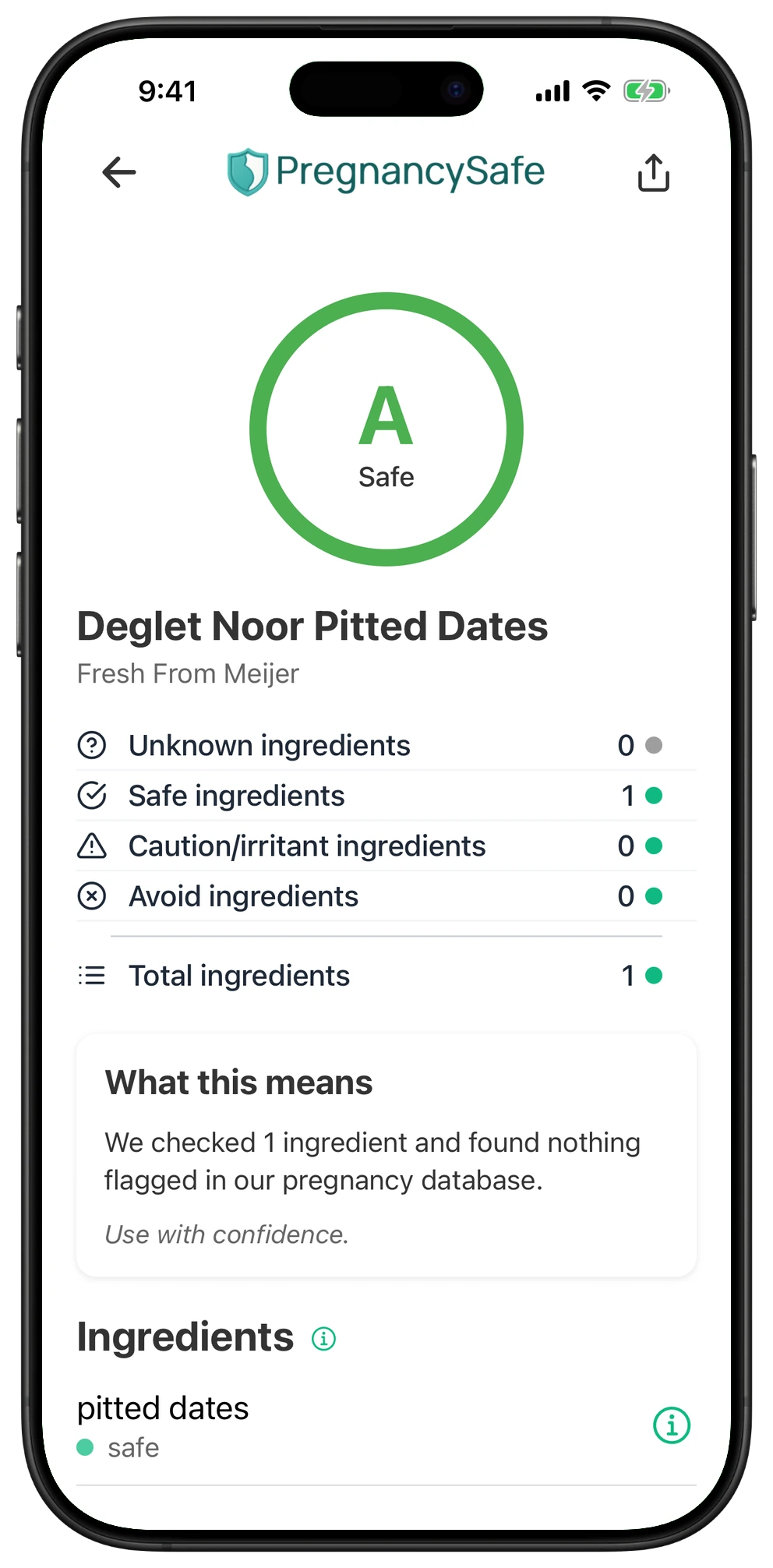
| A | Deglet Noor Pitted Dates | Fresh From Meijer |
| A | Fresh Medjool Dates | Sahara Gold |
| A | Organic Deglet Noor Dates | International Golden Foods Inc, Grown In Nature |
| A | Sahara Gold, Natural Dates Medjool | International Golden Foods Inc |
Your Questions Answered
Is it OK to eat dates during pregnancy?
Yes, ordinary dates can be part of your pregnancy diet. Choose a form that suits your nutritional needs and handle it appropriately: wash fresh fruit and follow storage directions for packaged dried dates. Prepared date dishes need their own ingredient check, particularly for added beverage alcohol.
Do dates induce labor?
Eating dates is not a guaranteed way to induce labor. Evidence about labor outcomes does not justify a specific dose or start date for that purpose. Enjoy dates as food rather than as a treatment, and follow your maternity team’s advice about induction.
How many dates should I eat each day while pregnant?
There is no universal pregnancy specific number or established labor induction dose to recommend. Your portion should fit your overall diet and the form you are eating, since fresh, dried, and sweetened preparations differ nutritionally. If you have gestational diabetes, get individualized portion advice rather than adopting a daily date challenge.
Can I eat dates if I have gestational diabetes?
Whether and how much to include should be individualized with your diabetes care team. Check the nutrition label and serving size on the actual package, especially for dried or sweetened products. An A ingredient grade does not tell you whether a portion fits your blood glucose management plan.
Do I need to wash dates before eating them?
Wash fresh dates under running water before eating or cutting them; do not use soap or bleach. Washing reduces contamination but does not sterilize fruit. For packaged dried dates, follow the package’s preparation and storage instructions, and keep pre cut fresh fruit refrigerated and separate from raw animal foods.
Does an A grade mean a date product is guaranteed safe during pregnancy?
No ingredient grades do not establish current label completeness, food handling, contamination status, or suitability for your individual pregnancy. Our catalog contains 82 products: 80 graded A, one B+, and one F, including records that have not been independently label reviewed. Read the current package and assess the actual ingredients and preparation; a lower grade alone is not proof that a product is harmful.
How to Interpret These Ratings
Our ingredient and category rules generate letter grades from the information recorded in the catalog. Missing ingredients and broad category assignments can affect the result. These grades do not measure your dose, confirm a complete current label, or test a product for contamination.
A high grade is not a guarantee of pregnancy safety. A low grade is not, by itself, proof of harm from every use. Follow the product-specific guidance above, check the actual package, and ask your prenatal clinician about supplements, treatment decisions or uncertain exposures.
References
- https://www.fda.gov/food/buy-store-serve-safe-food/selecting-and-serving-produce-safely
- https://www.nhs.uk/pregnancy/keeping-well/foods-to-avoid/
- https://www.cdc.gov/alcohol-pregnancy/about/index.html
- https://www.cdc.gov/fasd/about/index.html
- https://www.acog.org/womens-health/infographics/alcohol-and-pregnancy
- https://www.niaaa.nih.gov/publications/brochures-and-fact-sheets/alcohol-and-your-pregnancy
- https://mothertobaby.org/fact-sheets/alcohol-pregnancy/
- https://pubmed.ncbi.nlm.nih.gov/26482673/
- https://pmc.ncbi.nlm.nih.gov/articles/PMC9543418/