Is Crab Safe During Pregnancy? (Updated 2026 Guide)
Updated September 9, 2026
The Answer
Yes, you can eat thoroughly cooked crab during pregnancy, with safe handling and storage. Choose lower mercury seafood and count crab toward the recommended 8–12 ounces of varied seafood per week, rather than adding it on top.
For crab, thorough cooking and safe cold storage matter more than an ingredient grade: raw or undercooked seafood can carry pathogens. Choose seafood within FDA lower mercury guidance, vary species, and do not assume a broad seafood name establishes the mercury level of every species. Check the full label for allergens, especially with imitation crab, which is different from Atlantic red crab.
Pregnancy Safe is 100% independent and research driven. No companies pay to promote or sponsor products.
Stress Less This Pregnancy
Check your exact crab in the app

✓ What's Safe
- • Choose thoroughly cooked crab and follow the package’s cooking or preparation instructions.
- • Plan 2–3 four ounce servings of varied seafood from FDA Best Choices each week, totaling 8–12 ounces.
- • Check the specific seafood type against mercury guidance rather than relying only on a broad product name.
- • Choose crab that has been stored as directed, and follow refrigeration instructions before and after opening.
- • Read the current package to distinguish real crab from imitation crab and check all allergen information.
✗ What to Avoid
- • Avoid raw or undercooked crab, even when it is described as fresh, wild caught or low in mercury.
- • Avoid crab that has not been kept under the storage conditions required on its label.
- • Do not treat “pasteurized” or “wild caught” as permission to ignore handling and preparation instructions.
- • Avoid treating 8–12 ounces as a separate allowance for crab in addition to your other weekly seafood.
- • Avoid crab if you have a crab allergy, and do not assume imitation crab is an allergen free substitute.
- • Do not use an A grade as proof that crab is fully cooked, free of contamination or suitable regardless of preparation.
Most Common Ingredients in Crab Products
We analyzed 4 crab products. Here are the most common ingredients, ranked by how often they appear:
Crab Products We've Analyzed
Our catalog contains ratings for 4 crab products. These are database grades, not independent safety certifications.
Catalog ingredient grades do not measure current-label completeness, pathogens, preparation, caffeine or clinical pregnancy suitability. These counts include unreviewed records and are not a percentage of independently verified safe products.
Pregnancy Safe Crab Products
Popular options from our catalog, prioritizing A and B ingredient grades, with C grade options used to fill remaining places. Within each group, products are ordered by searches in Pregnancy Safe, not retail sales. Read the cautions and guidance above; grades do not verify a complete current label or guarantee pregnancy safety.
| Grade | Product | Brand |
|---|---|---|
| B+ | Premium Special Crab | Phillips |
| A | Wild Caught Atlantic Red Crab, Wild Caught | Rising Tide |
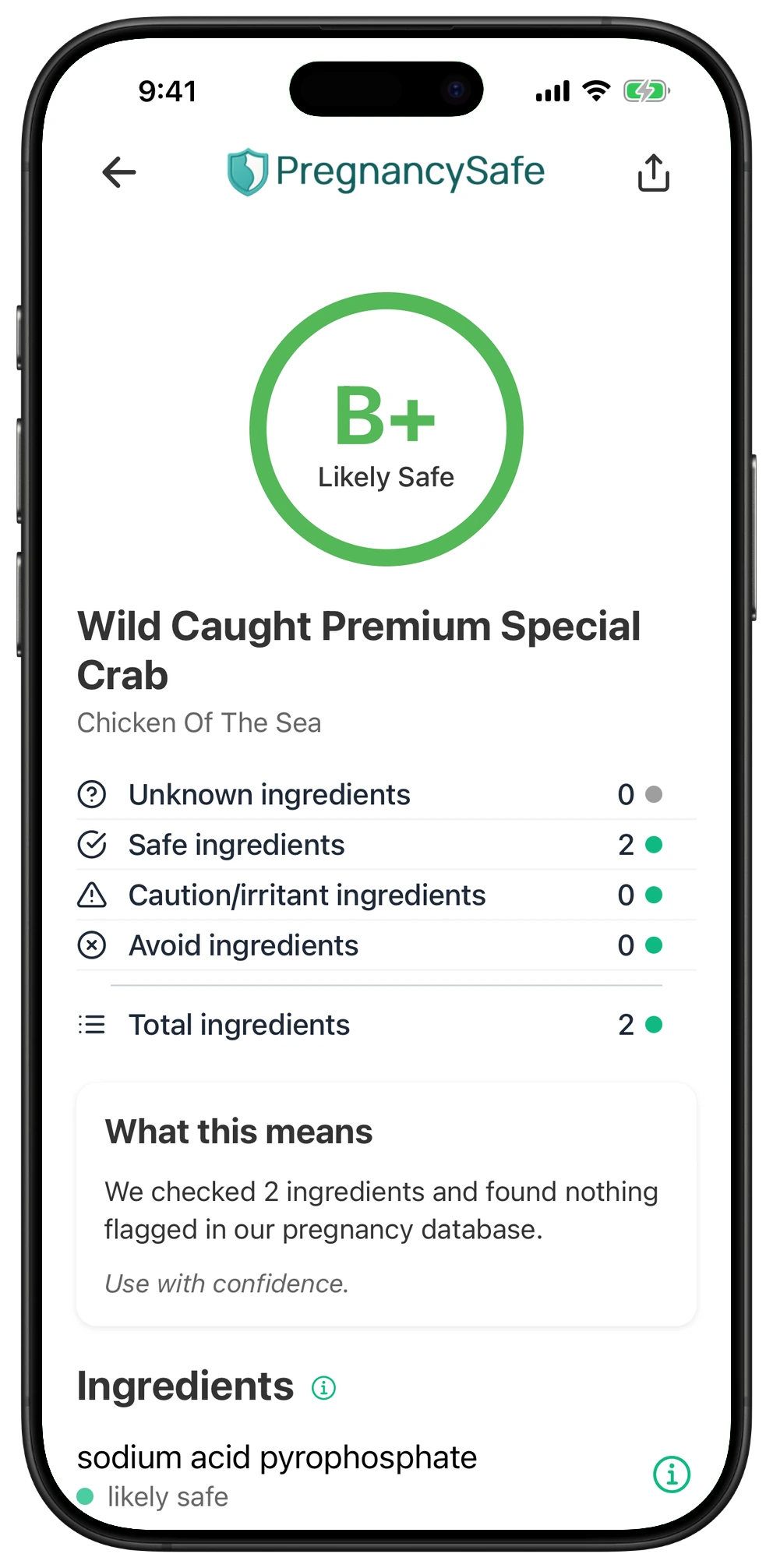
| B+ | Wild Caught Premium Special Crab | Chicken Of The Sea |
| B+ | Wild Caught Premium Claw Crab | Chicken Of The Sea |
Your Questions Answered
Can you eat crab while pregnant?
Yes, thoroughly cooked crab can fit into your pregnancy diet when it is handled and stored safely. Include it within your weekly seafood intake, choosing lower mercury options and varying species. Raw or undercooked crab is not a safer choice just because its ingredient list is simple.
What seafood is not allowed while pregnant?
Avoid raw or undercooked fish and shellfish because of the risk of harmful bacteria or viruses. Also avoid seafood in the FDA’s highest mercury Choices to Avoid group. Choose thoroughly cooked seafood from Best Choices for your usual 2–3 weekly servings, and check the specific seafood type rather than assuming every species has the same mercury level.
How much crab can I eat during pregnancy?
FDA pregnancy guidance recommends 8–12 ounces of lower mercury seafood weekly, usually 2–3 four ounce servings from Best Choices. Crab counts toward that total alongside the other seafood you eat. Vary your seafood choices rather than treating the full weekly amount as a crab only target.
Can I eat imitation crab while pregnant?
Check the exact package’s ingredients, preparation directions and storage requirements rather than judging it by its name. Imitation crab is different from Atlantic red crab and can contain fish, wheat, egg, soy or other allergens. Follow the relevant cooking and handling instructions, and do not assume imitation crab is safer than real crab.
Can you eat crab legs, crab cakes or crab rangoon while pregnant?
The key consideration is whether the crab dish is thoroughly cooked and safely handled, not its shape or recipe name. Follow preparation instructions for the entire dish rather than assuming the filling is ready because the outside looks cooked. Check the other ingredients for allergens and count the crab toward your weekly seafood intake.
Does an A grade mean crab is guaranteed safe during pregnancy?
No. Our catalog contains four crab products: one graded A and three graded B+. These are ingredient grades, not checks of doneness, pathogens, current label completeness or clinical pregnancy suitability, and the counts include unreviewed records. Read the current package and follow cooking, storage and allergen precautions regardless of grade.
How to Interpret These Ratings
Our ingredient and category rules generate letter grades from the information recorded in the catalog. Missing ingredients and broad category assignments can affect the result. These grades do not measure your dose, confirm a complete current label, or test a product for contamination.
A high grade is not a guarantee of pregnancy safety. A low grade is not, by itself, proof of harm from every use. Follow the product-specific guidance above, check the actual package, and ask your prenatal clinician about supplements, treatment decisions or uncertain exposures.