Is Ceviche Safe During Pregnancy? (Updated 2026 Guide)
Updated September 9, 2026
The Answer
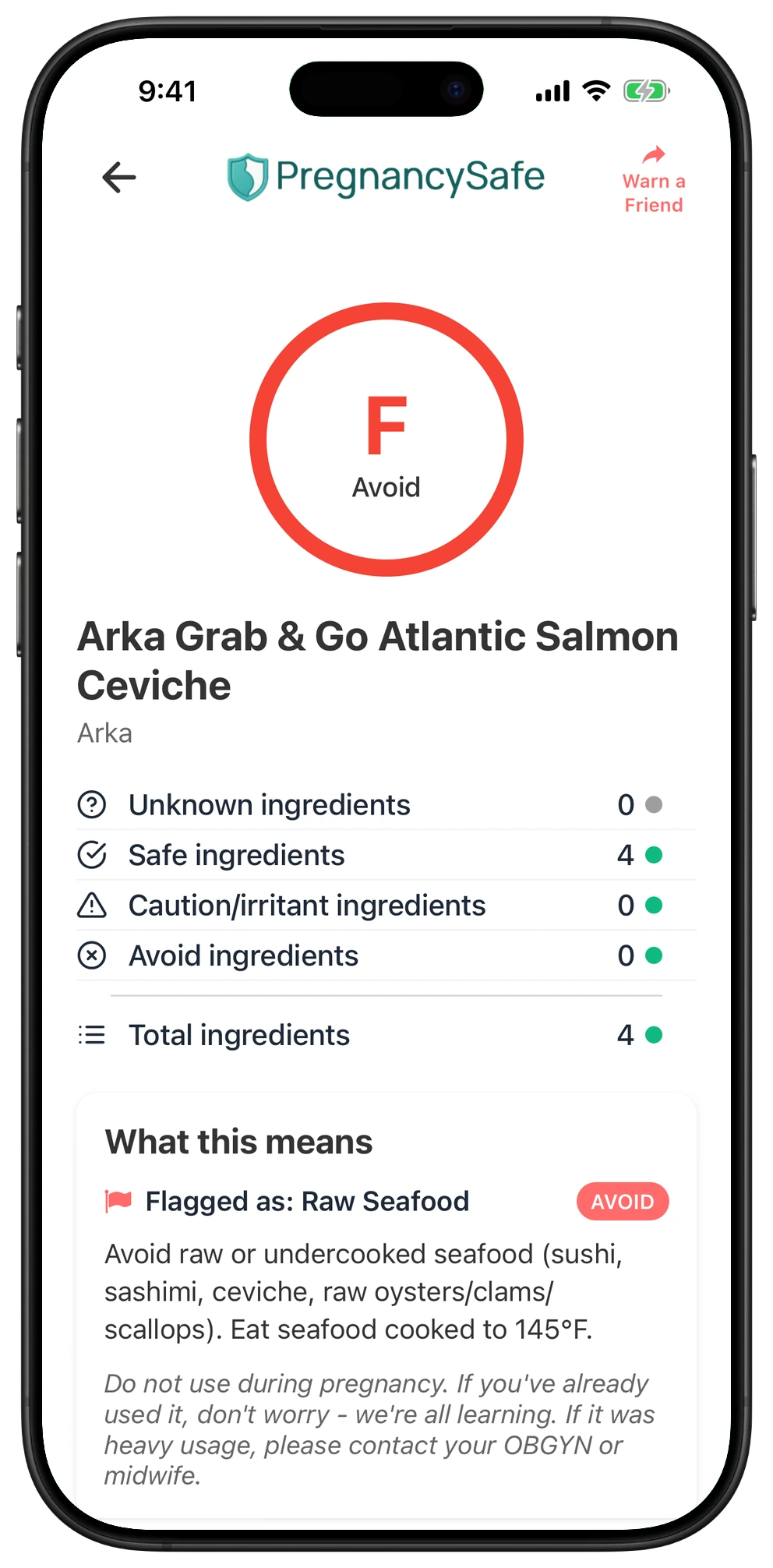
Avoid traditional ceviche made with raw or undercooked fish or shellfish during pregnancy; lime or lemon juice does not make it reliably safe. A ceviche style dish made with thoroughly cooked, lower mercury seafood and handled hygienically is a safer alternative.
The main concern is foodborne illness from raw seafood: citrus changes its texture without reliably killing pathogens, and freezing does not eliminate all bacteria or viruses. For a cooked version, cook seafood to 145°F, use clean produce and utensils, and keep the finished dish chilled. Choose a recipe without added alcohol; an ingredient listing alone cannot establish how much alcohol a serving contains.
Pregnancy Safe is 100% independent and research driven. No companies pay to promote or sponsor products.
Stress Less This Pregnancy
Check your exact ceviche in the app

✓ What's Safe
- • Choose a ceviche style recipe that cooks the seafood with heat before adding citrus and other ingredients.
- • Use a food thermometer to confirm seafood reaches 145°F rather than judging doneness from citrus induced color changes.
- • Select suitable lower mercury seafood and confirm which species a restaurant or seller uses.
- • Use clean produce and utensils, keeping cooked seafood separate from raw seafood and its juices.
- • Keep the finished dish chilled and ask how ready to eat versions were prepared and stored.
✗ What to Avoid
- • Raw or undercooked fish and shellfish, even when described as citrus cured or marinated.
- • Treating a longer lime or lemon soak as a substitute for heat cooking.
- • Assuming previously frozen seafood is safe to eat raw because freezing addresses some parasites.
- • Ready to eat ceviche when you cannot confirm whether the seafood was thoroughly cooked and kept chilled.
- • Recipes with added alcohol, particularly uncooked marinades where you should not assume the alcohol has been removed.
- • Using a product grade or the word “ceviche” alone to decide whether a dish is suitable during pregnancy.
Most Common Ingredients in Ceviche Products
We analyzed 7 ceviche products. Here are the most common ingredients, ranked by how often they appear:
Ingredients to Watch Out For in Ceviche
These are the most common flagged ingredients across 7 ceviche products we analyzed.
alcohol
Caution
Alcohol is a volatile, colorless liquid commonly used as a solvent, disinfectant, or intoxicating beverage.
No amount of Alcohol is considered safe. Avoid alcohol beverages entirely. Be extremely careful when using in cooking or even with small percentages.
Flagged in 1 of 7 products (14%)
Ceviche Products We've Analyzed
Our catalog contains ratings for 7 ceviche products. These are database grades, not independent safety certifications.
Ingredient grades cannot establish dose, preparation, label completeness, efficacy or pregnancy suitability. An A score is not an endorsement, and counts include unreviewed catalog records.
Your Questions Answered
Can pregnant women eat ceviche?
Avoid traditional ceviche containing raw or undercooked fish or shellfish during pregnancy. Citrus marination is not a reliable pathogen killing cooking step. A version made with thoroughly cooked, lower mercury seafood can be a safer alternative when prepared with clean ingredients and utensils and kept chilled.
Does lime juice cook ceviche enough to make it safe?
No. Lime or lemon juice can change seafood’s texture and appearance, but that is not the same as cooking it with heat. A firm or opaque appearance after marinating does not establish safety. Cook seafood to 145°F before using it in a ceviche style dish.
Is shrimp ceviche safe during pregnancy?
The preparation matters: shrimp marinated from raw should be avoided, just like raw fish ceviche. Choose a version in which the shrimp was thoroughly heat cooked before mixing with citrus and produce. Clean handling and chilling still matter after cooking. At a restaurant, ask whether the shrimp was cooked with heat rather than simply “cooked” in lime juice.
Does freezing fish make raw ceviche safe?
No. Freezing used to control parasites does not kill all bacteria or viruses. Previously frozen fish still needs thorough cooking for a pregnancy appropriate ceviche style dish. Do not use freezing plus citrus marination as a replacement for heat.
Can I eat vegetable ceviche instead?
A genuinely seafood free vegetable ceviche does not carry the raw seafood concern simply because it is called ceviche. Check the full ingredients, use clean produce and utensils, and keep it chilled. Avoid contact with raw seafood during preparation. The dish’s name or catalog grade alone cannot confirm its ingredients or handling.
What if I already ate raw ceviche while pregnant?
One past bite or serving does not mean you will become ill or that your pregnancy has been harmed. The advice to avoid raw ceviche is about reducing the chance of foodborne illness, not predicting harm from every exposure. If you feel unwell afterward or are concerned about the exposure, contact your prenatal care team for individualized advice.
How to Interpret These Ratings
Our ingredient and category rules generate letter grades from the information recorded in the catalog. Missing ingredients and broad category assignments can affect the result. These grades do not measure your dose, confirm a complete current label, or test a product for contamination.
A high grade is not a guarantee of pregnancy safety. A low grade is not, by itself, proof of harm from every use. Follow the product-specific guidance above, check the actual package, and ask your prenatal clinician about supplements, treatment decisions or uncertain exposures.